Camille LePrince: Between Photography, Research and Painting
© Thomas Ambrosi
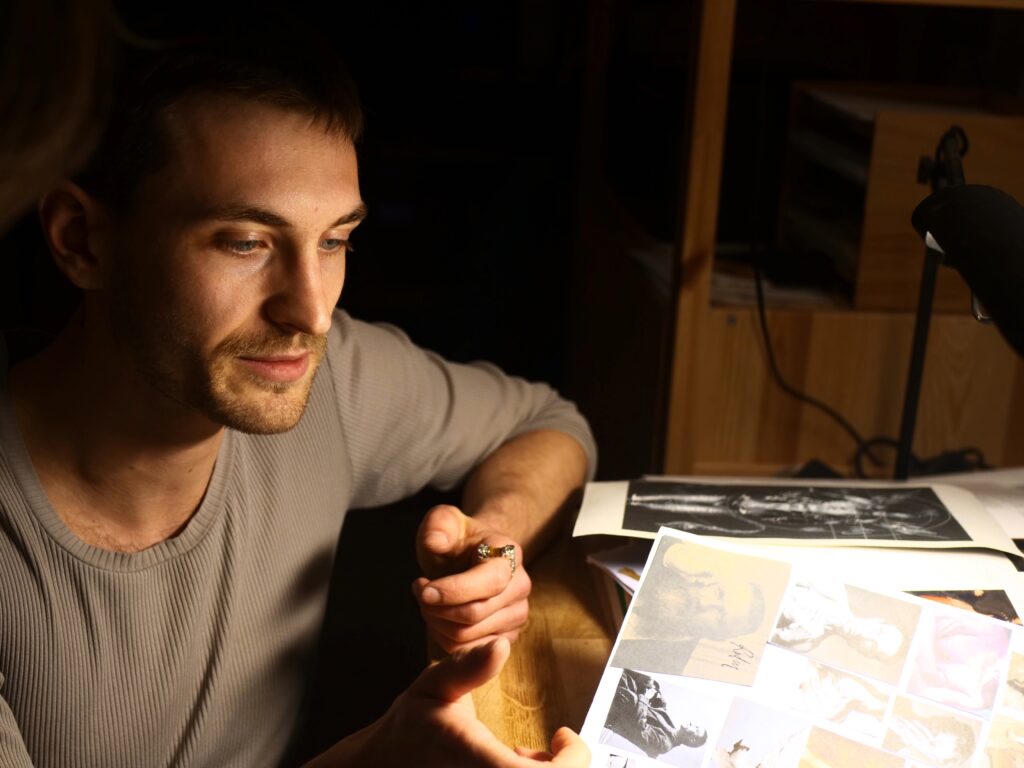
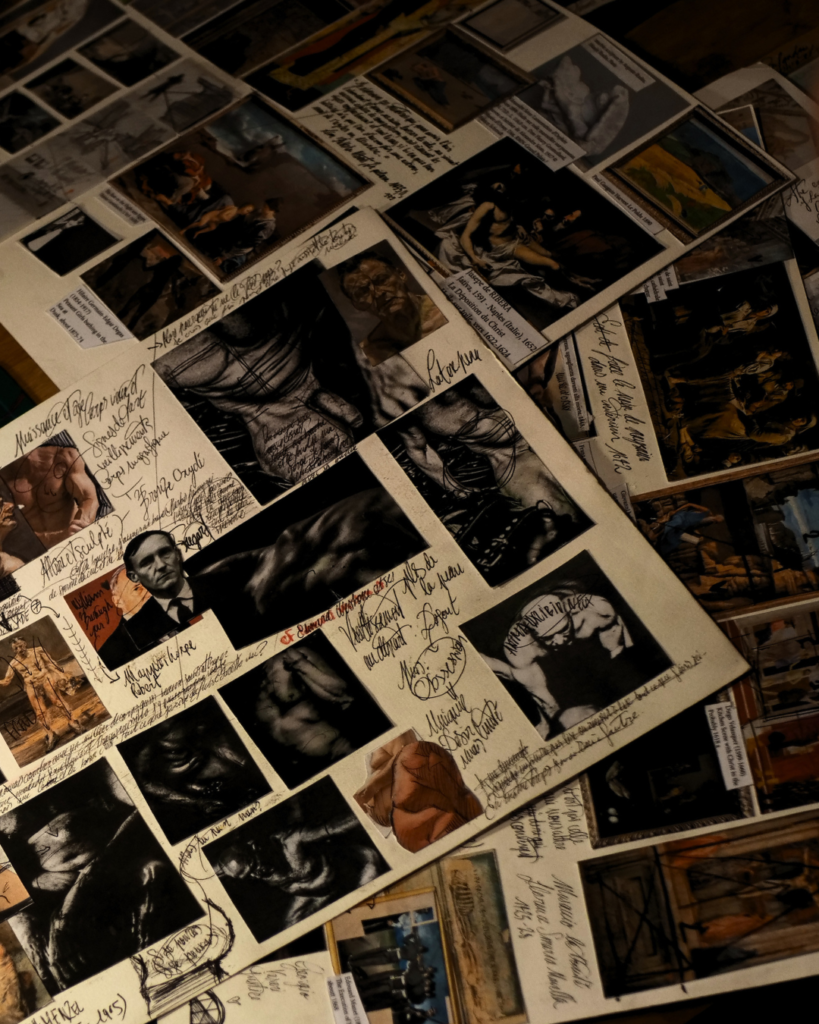
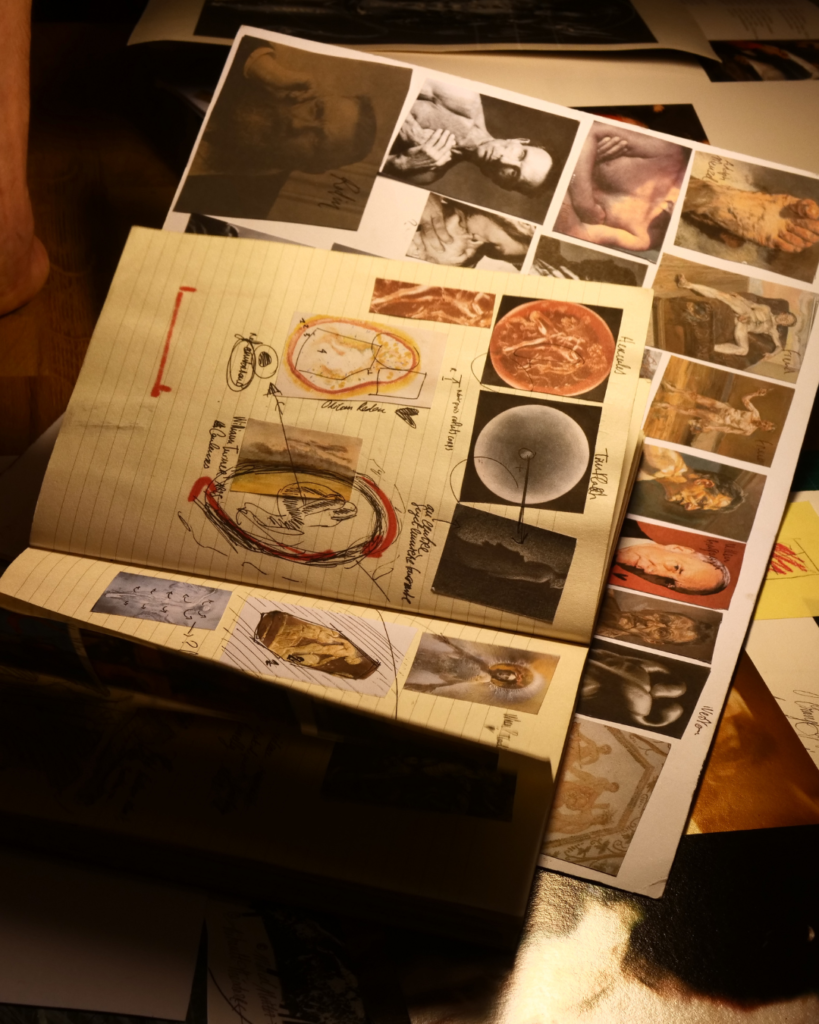
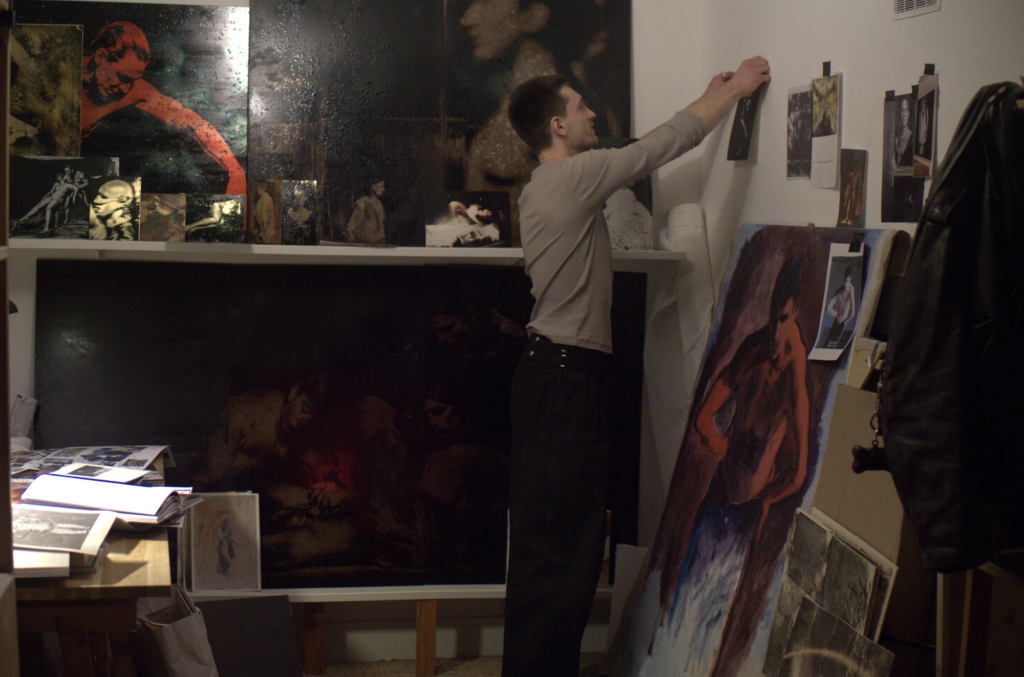
Educated initially in visual communication and multimedia before transitioning into photography, Camille LePrince has developed a practice defined by an intense and methodical approach to research. Based in Paris, his work unfolds through a process that begins long before the act of photographing. Each project is carefully constructed through notebooks filled with drawings, fragments of writing, and layered collages. These are tools that allow him to articulate the conceptual and emotional framework of the images to come. His mood boards, themselves visually striking, bring together references spanning painting, cinema, dance, and contemporary art, revealing both the breadth of his influences and the precision with which he navigates them.
Camille approaches the medium less as a tool for documentation. For him, photography emerges as the culmination of a deeper inner world. The image, though anticipated, is never entirely controlled; it is shaped by duration, movement, and the unpredictable nature of the moment.
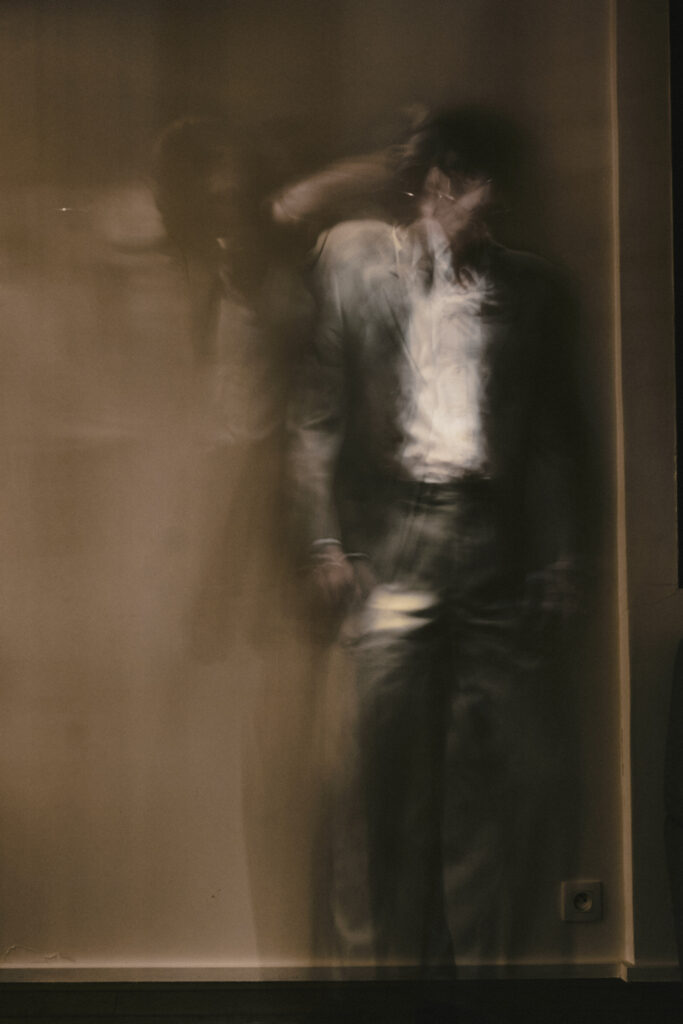
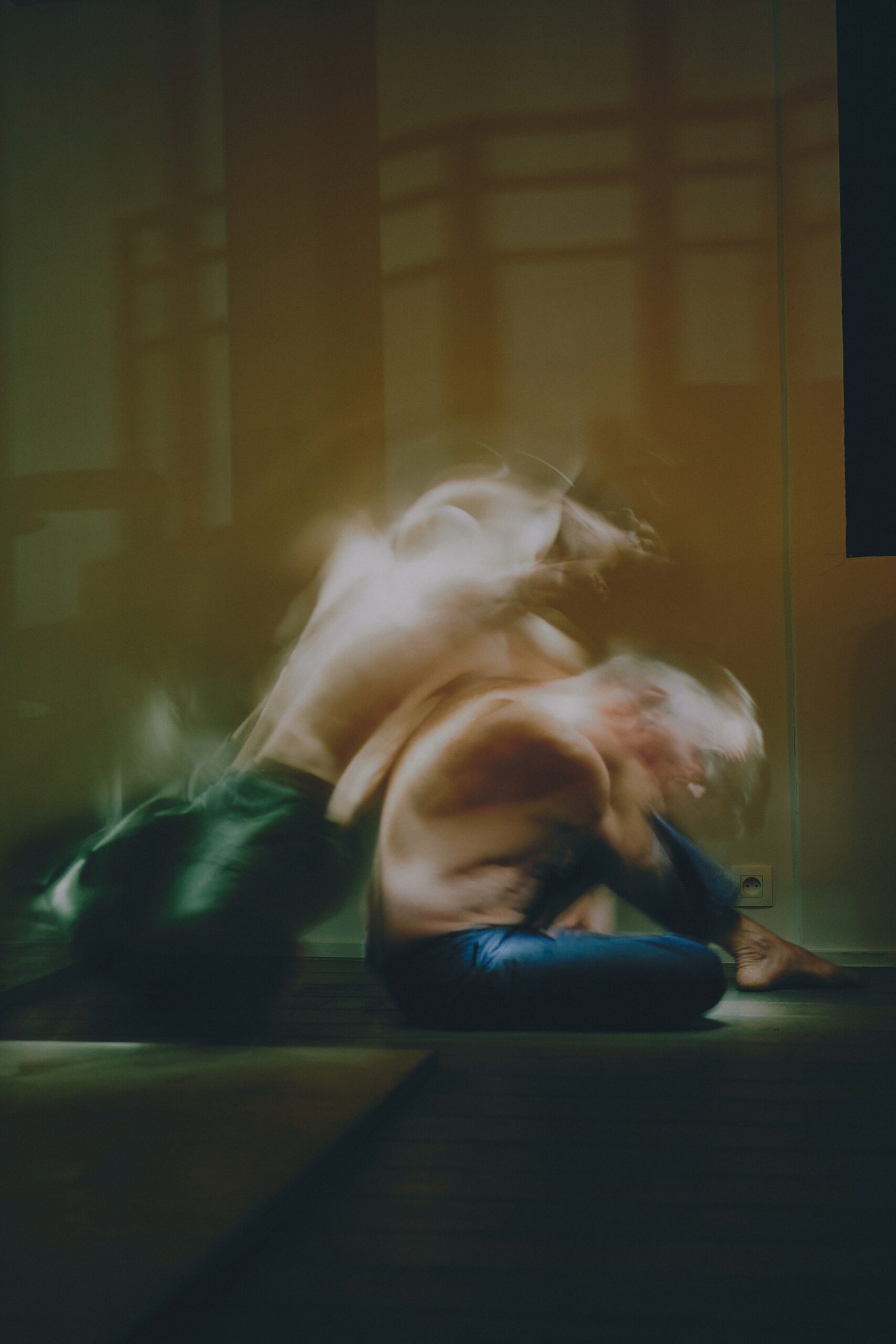
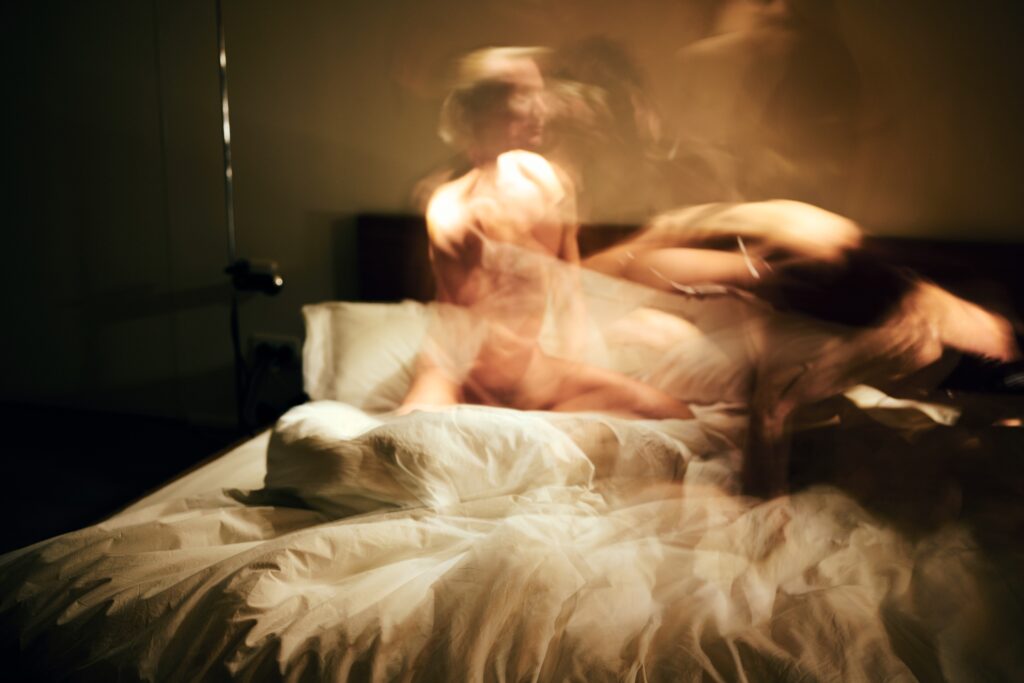
At the core of his work lies an ongoing exploration of the human body, not as a fixed or stable form, but as a field of forces, intensities, and transformations. Often working within the intimate setting of his studio, he creates images that feel at once physical and elusive. Blurred through long exposure, bodies appear in states of transition, dissolving into light and space, leaving behind traces rather than fixed representations.
© Thomas Ambrosi
© Thomas Ambrosi
Deeply informed by painting, his photographs retain a distinctly pictorial quality, visible in his attention to composition, gesture, and the sculptural use of light. References to artists such as Francis Bacon or Cy Twombly resonate subtly within his work. This dialogue with art history, combined with his engagement with contemporary practices, contributes to a visual language that feels both grounded and fluid.
Camille’s work has been exhibited across Paris in spaces such as La Fonderie and Galerie Amarrage. He has also published a book Le Paradis des Orages, bringing together his photographic projects. Yet his practice remains in constant evolution. His most recent series, developed over the last year, continues his investigation into time, movement, and intimacy through long-exposure images, marking a new stage in his ongoing research.
Let us introduce to you Camille LePrince.
© Thomas Ambrosi
How did photography first enter your life?
I feel like I’ve always sought to escape reality by inventing fantastical stories that I drew in notebooks. But it was at the end of middle school that I started taking photos and making videos. In high school, I enrolled in classes at the Grenoble fine arts annex, and that’s where I really worked on my photography.
Was there a moment when choosing photography felt obvious, or did it come gradually?
With experience, photography has become second nature, but I always go through drawing and collage before taking photographs.
Your images often feel close to paintings. What drew you specifically to photography rather than painting or another visual medium?
My research often focuses on painting, which is why my photographs have a pictorial influence. It inspires me in my compositions, my palette, and the representation of human bodies. With photography, that’s where I feel closest to what I want to preserve as a vestige/remnant of the subject.
© Camille LePrince
© Camille LePrince
Do you remember your early work, and how you felt about it at the time?
I remember the pleasure of experimenting and researching photos, videos, and urban exploration locations for staging. But I had a critical eye on my productions and felt impatient to progress.
How has your work evolved over the years?
I have always drawn on my emotions to create my photographs. My work on the human body is more intimate, linked to personal experiences. I try to develop a dreamlike world, a poetic language to be deciphered.
Your photographs have a very distinct atmosphere. How conscious are you of this when you’re working?
It is the desire to reveal one’s own perception of the world that creates a special atmosphere. I think you recognize a style when you recognize the presence of the photographer.
© Camille LePrince
Do you think in terms of images before shooting, or does the image reveal itself during the process?
Before shooting, I write, I draw… At this stage, I think more in terms of feelings and symbolic language than in terms of images. The shot is therefore prepared. But I don’t have complete control over what will happen in front of the camera; the image will be created based on what happens during an interval of time photographed.
Where do you find inspiration today?
I find inspiration in painting, particularly in the work of artists around me as well as established artists. To tell the truth, everything inspires me: everyday life, exhibitions, movies, novels, poetry…
Are there references, painters, photographers, films, places, that continue to influence your way of seeing?
Yes, very much so. I need a range of references to guide me, like a group of mentors. I’m thinking of Richard Serra, Cy Twombly, Joseph Beuys, Miroslav Tichy, Francis Bacon, of course. More contemporary artists include George Rouy and Marlene Dumas. Then there’s cinema: Pasolini, David Lynch, Lucas Guadagnigno… In the world of dance, Romeo Castellucci, Peeping Tom, Ulysses Dove, and others.
© Thomas Ambrosi
Can you describe your work process?
I would say that each creation is the result of writing and analysis. I use sketches, collages, or painting to understand what I want to express before photographing it. After shooting, I select the images that I find most moving. I remain vigilant at this stage of selection, as I may be seduced by an image I hadn’t anticipated. Preparation, anticipation, and the vagaries of the moment are complementary.
What role do patience and time play in your photography?
My work traces the passage of time, particularly in my latest series. For me, it is a kind of echo or scar of suspended time. It transforms a specific being or subject into a universal figure. The trace of the photographed object merges with the space and thus becomes one with it. The image no longer shows what has been, but what is in “potential,” in the making. Patience is important; in the creative process, ideas don’t come on demand. Sometimes I find it difficult to give shape to an experience; it can take me months to understand how to express it visually and share it. With patience and time, I want to reveal a transfigured reality.
What challenges do you face in maintaining a consistent and personal visual language?
I believe that the challenge lies in the work itself. Consistency comes gradually with work: research, production… You have to confront a certain degree of inconsistency, take that risk, otherwise your style or visual language becomes repetitive. Whereas, on the contrary, it should be open-ended. The challenge is to maintain a creative rhythm, to be constantly immersed in your work. It’s more of a necessity than a challenge.
How do you deal with doubt or moments when images don’t come together?
Doubt is a period of evolution; it is part of my research. These moments of questioning are difficult, but they are important periods that allow me to take a step back and see more clearly.
Many people describe your work as painterly. How do you feel about that comparison?
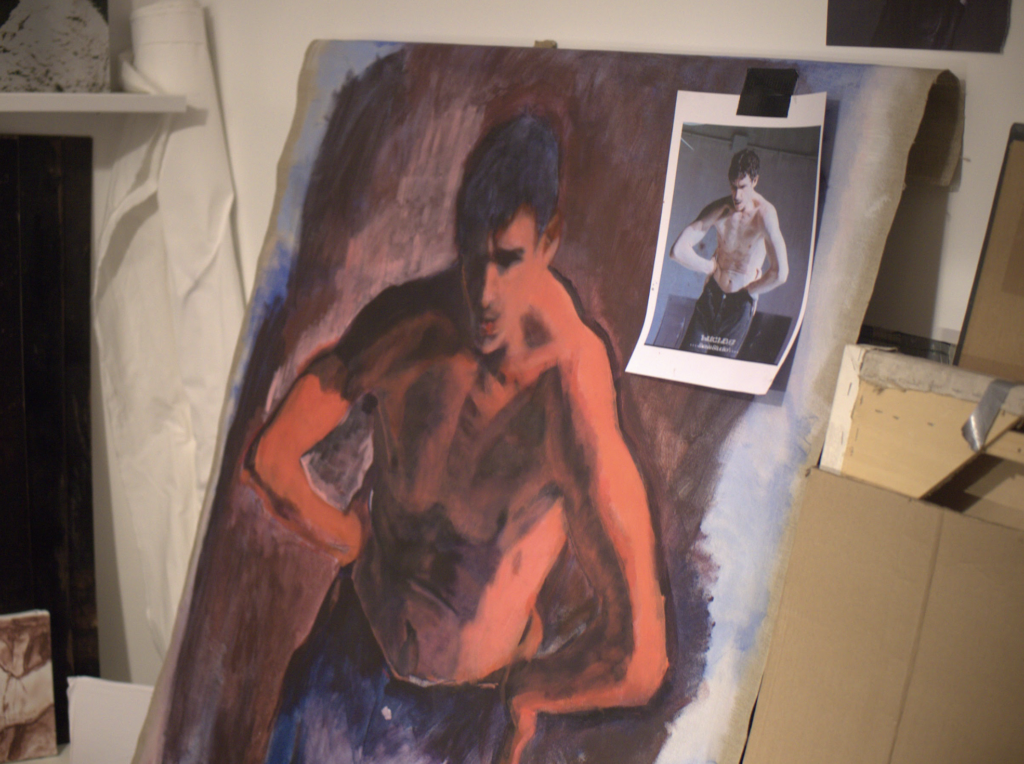
That’s a feeling I want to convey. I have a pictorial relationship with the photographic image. I don’t think of photography solely as a snapshot of a moment, but also as a means of transforming reality. I would say that taking a photograph is like a blank canvas. The body, light, and space are my tools for painting a universe close to my perception of the world. I recently took up painting because I felt the need to be in direct contact with what I want to express, to create entirely with my own hands. This allowed me to develop my practice, establishing a more physical and tangible relationship with the shot. I work on my images to try to give them a unique quality, like a painting. To restore the preciousness of memory and reminiscence.
Does painting influence the way you compose, use color, or approach light?
Yes, deeply. When I was a child, both my parents (separately, as they were divorced) took me to art museums. Before photography, I learned to see through painting. This shaped my perception of the body, as a presence or a material. Renaissance painting influenced my sense of composition and chiaroscuro. Painters such as Francis Bacon showed me that the body can convey psychological and emotional tension that goes beyond realism.
Painting has also taught me something essential: the body is a trace. It is movement, transformation, disappearance. It is sometimes represented by absence, by what remains after it has passed. In this sense, I feel close to what Roland Barthes writes about Cy Twombly. The idea of showing the gesture itself, the trace of the tool. In my work, the body becomes that tool. I try to show its passage through space, its pressure on the world, through a sequence of time. For me, light is material. With it, I sculpt the body in the same way that painting reveals a story from nothingness. Photography captures reality, but painting made me want to transform it, to push the body beyond its literal appearance and reveal something more abstract. I am not trying to document the body, but to unveil it.
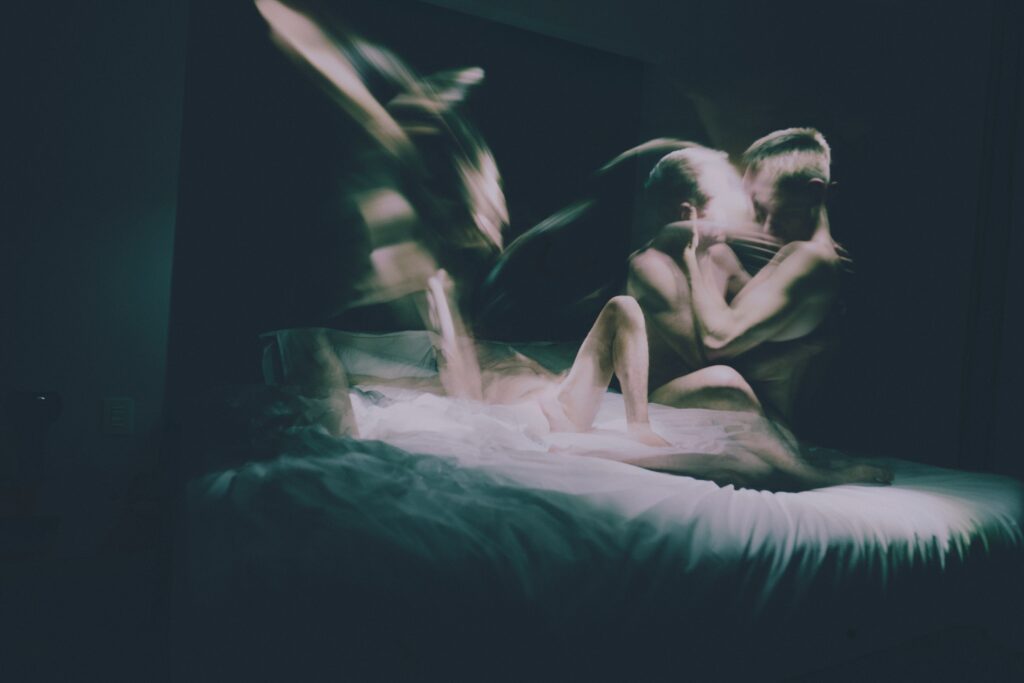
© Camille LePrince
What keeps you returning to photography?
It allows me to reveal an intensity that is impossible to completely grasp. I would say that it forces me to be fully present. It is a way of connecting with others, and their feedback touches me. It is through this medium that I am best able to convey what I want to express.
What does making images give you now that it maybe didn’t at the beginning?
In photography, as in painting, I seek a state of trance. It is my outlet, my journal. Photography has a power of fascination for me. The image allows me to replace my real relationship with the world with one that conforms to my desires, with the fantasy that this desire will be fulfilled for eternity. Photography gives me a sense of wellbeing.
What do you hope viewers take away from your photographs?
I want to share my perception of the world implicitly, leaving viewers free to imagine and connect with the image. That’s why my images are often blurred, to suggest a sense of sensitivity. Viewers participate in the image with their own imagination.
How do you see your practice evolving in the future?
My priority is working on the presentation of my projects. I am thinking about how to showcase my photographs. I am looking into new printing techniques and a series of outdoor photos taken during my travels. I also hope to be able to collaborate with stage directors or filmmakers in the future.
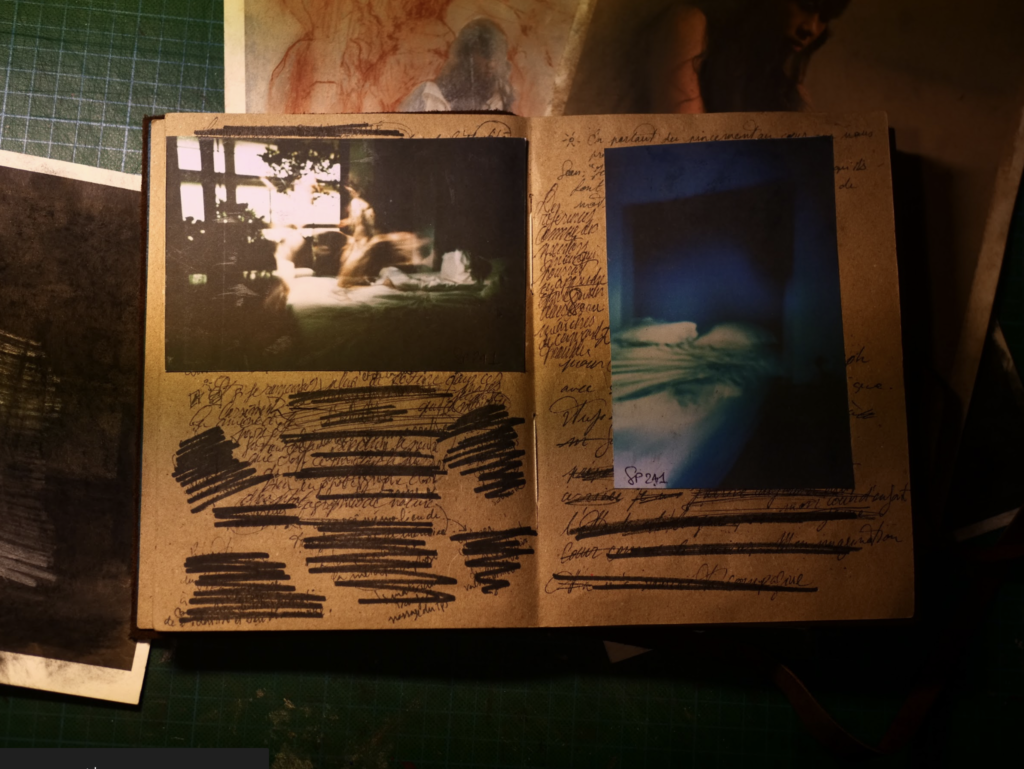
© Thomas Ambrosi
We would like to thank Camille for taking time to share his work, experiences and thoughts with us. Check out more of Camille’s work on:
Instagram: @camilleleprince_
Website: https://www.camilleleprince.net
We would also like to thank Thomas Ambrosi for the photographs. Check more of his work on Instagram: @thomasambrosi.dop