Romain Guédé: On Nights, Work, and Distance
© Elene Datusani
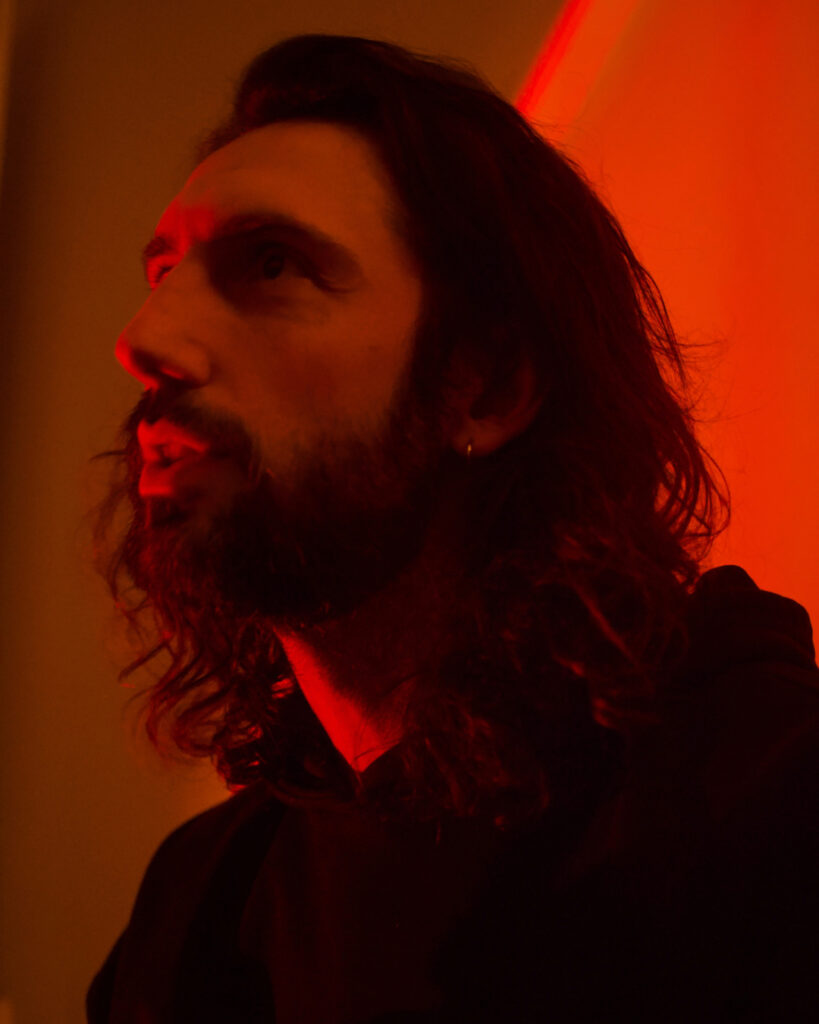
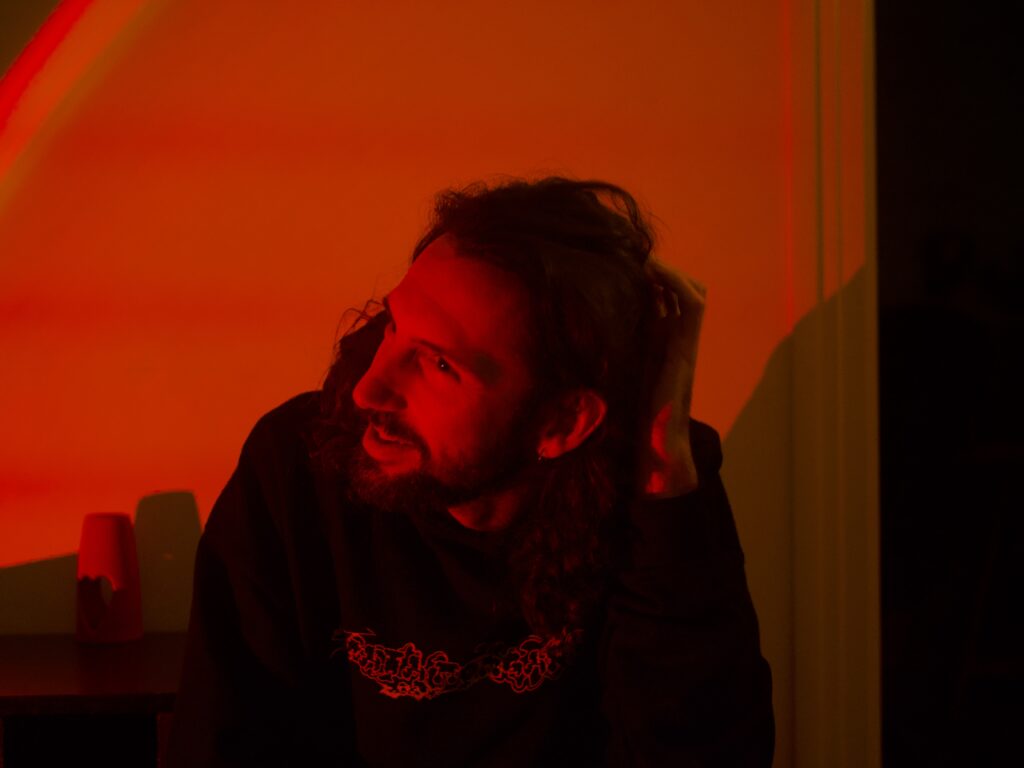
Romain Guédé’s photographic practice emerged from a position of distance that gradually turned into immersion. He began photographing ordinary parties at a young age, almost as a way of occupying a space where he felt more withdrawn than others. What started as a quiet, observational gesture evolved alongside his discovery of electronic music and alternative nightlife. There the act of photographing took on a different weight, not only as a personal reflex, but as a way of preserving scenes and communities that often exist on the margins.
His approach to nightlife resists a fixed position. Moving constantly through the crowd, he occupies a shifting role between participant and observer, immersing himself in the energy of the party before stepping back to capture it. This movement defines his images as much as the subjects themselves. The camera becomes both a point of connection and a distance, a tool that allows him to engage with people while remaining attentive to what unfolds around him. Over time, this approach has shaped a way of experiencing the night that is inseparable from the act of photographing.
At the core of his work lies an attention to the spaces and bodies that define contemporary nightlife, particularly within alternative and queer communities. His images are marked by immediacy, but also by a constant awareness of responsibility toward the people he photographs and the environments he moves through. As nightlife becomes more visible and its codes increasingly absorbed into the mainstream, Guédé’s work plays an important role in documenting what remains less accessible: moments of freedom, intimacy, and expression.
Let us introduce to you Romain Guédé.
Do you remember the first time you photographed a party or night scene?
I don’t have a specific memory of the first time. What I do know is that, when I was quite young, I gradually began taking photos at very ordinary parties with friends – far removed from the kind of nights I attend today. I think it was my way of keeping myself busy and finding a role for myself, as I’d often feel more withdrawn than those around me.
At what point did nightlife become something you documented seriously, rather than casually?
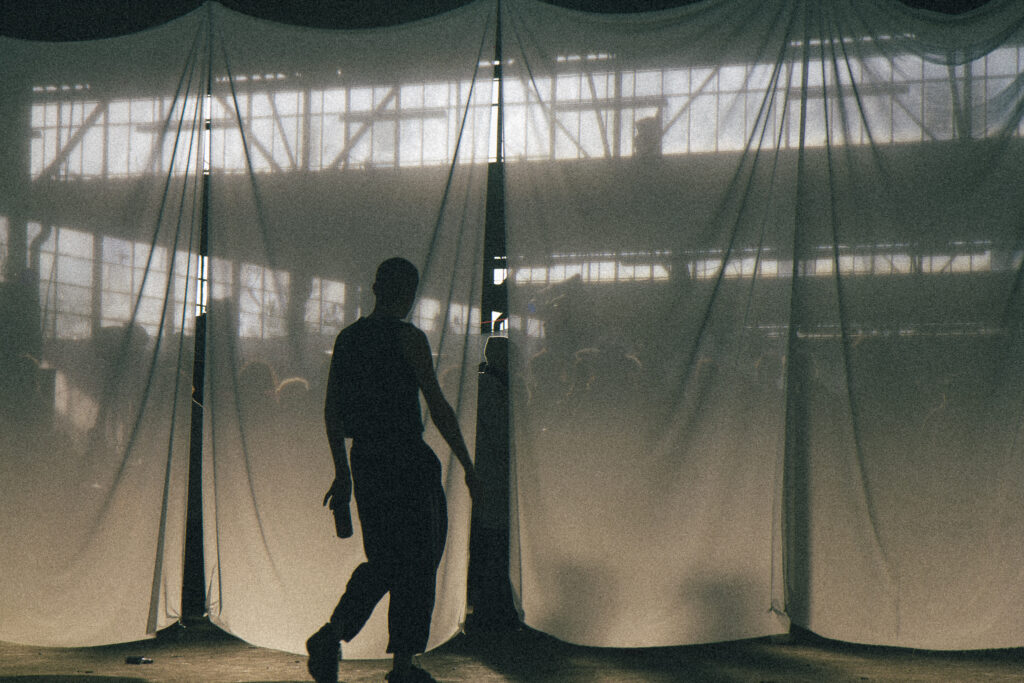
It wasn’t tied to one specific moment. It really happened progressively. At first, I was simply drawn to these nights out of curiosity, especially when they took place in unusual or temporary spaces. But through encounters, people’s feedback, and eventually seeing my images reused by the media to talk about electronic music culture, I started understanding the documentary value of my photos and how they had become part of a wider narrative around the scene. Looking at archival images from 90s raves reinforced that feeling too as it showed me how important it is to document these spaces and communities, especially their alternative and queer dimensions.
© Romain Guédé
When you’re working at a party, where do you place yourself? Are you inside the moment or slightly outside of it?
Since I’ve always been more analytical and observant, and had difficulty being fully present, I approached photography in much the same way – at a distance, to the side. Over time, I left that purely observational position and began dancing among people before photographing them. Sometimes I even create the moment I’m about to photograph, since people interact with me and the camera.
At the same time, I always keep a certain distance. I immerse myself for a while, then quickly step out to capture something else elsewhere. I enjoy this position, as a kind of free electron, moving everywhere in the party, but it also makes me question the way I experience these moments.
Photographing nightlife often comes with tension, many people are uncomfortable being photographed in these spaces. How do you build trust when working in clubs or at parties? Have there been moments where taking photos was met with resistance or anger, and how do you navigate those situations?
First of all, I completely understand why some people might be against the presence of photographers at these parties, and I think it’s important that there are strictly no-photo spaces (like Macadam in Nantes).
Over time, I’ve developed the habit of photographing with a red LED stick. It makes both me and my camera visible; it signals that a photographer is present rather than arriving by surprise. Often I dance a bit with people first, with my light on, before shooting. But I think what also matters is my attitude, what comes through in my gaze and in my interactions with people. Making it clear that you’re part of this world, that you’re having fun with them, and also leaving space for people to say no.
When I know I’m going to photograph someone very directly, I systematically ask for their verbal consent beforehand (which is sometimes counterproductive, actually “Ah, you shouldn’t have told me”).
And yes, of course it regularly happens that I face refusals, which is normal. I have three or four memories of people being angry. Those moments are always complicated for me because, since I try to be careful, I feel like I’ve betrayed people’s trust and it affects me deeply. I always need some time, and new positive interactions, before I can move on. I also try, when possible, to understand the other person’s point of view.
© Elene Datusani
You’ve photographed nightlife for years now. How has your relationship to the night changed over time?
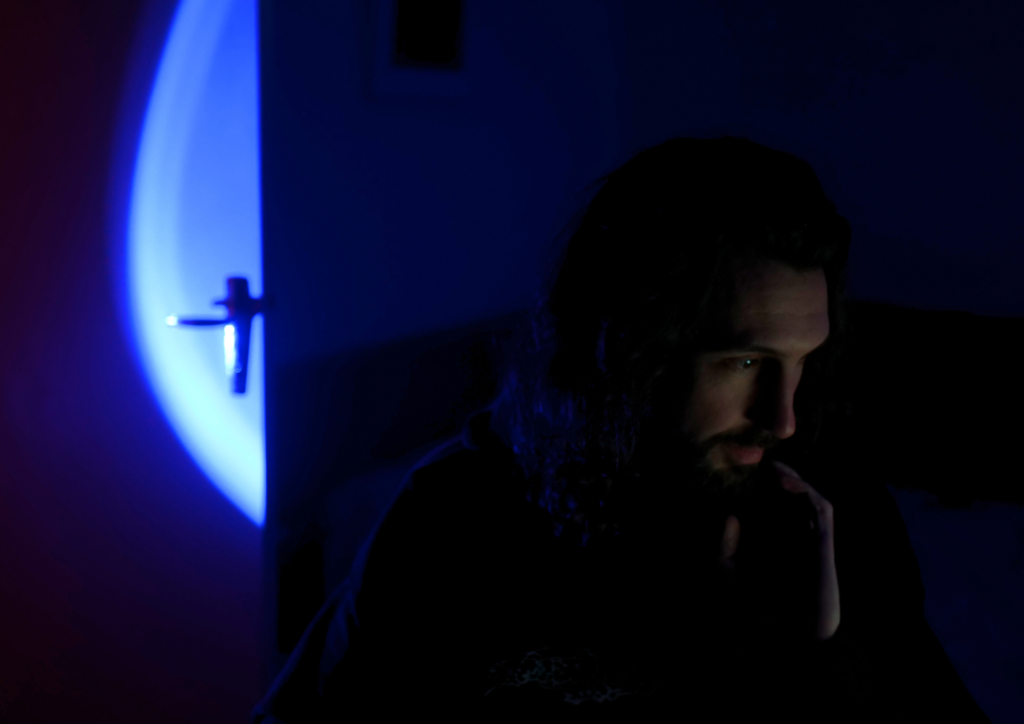
At the beginning, everything felt more separate as there were moments to party with friends, and moments to work. Over time, these boundaries started to blur: work, passion, partying, encounters. It’s something special. At first, I was very curious and often caught by surprise. That’s less the case now, even if it still happens from time to time. But I feel much more connected to this environment now, and a living part of it.
Does repetition make nights blur together, or does it sharpen your attention?
The risk for repetition is a valid concern. But, in a way, it’s had the opposite effect on me. I feel like it sharpened my attention to nuances: what sets one night apart from another, whether in the scenography, the people, or the music.
How do you separate your role as a photographer from the experience of the night itself? Are there moments when working prevents you from feeling part of what’s happening?
On one hand, I’ve always been someone who takes part in the party before photographing it. It helped me connect with people, since I’m rather introverted. It probably helps people feel more at ease when I photograph them. On the other hand, my personality, observant and always in control, means that I constantly step outside of what’s happening.
I experience things differently: I participate, but always through the lens of a photographer whose task is to capture what’s unfolding. This also means constantly interrupting the experience to make images.
Over time, I have the feeling I might have trapped myself in that position. By trying to be everywhere, to miss nothing, constantly moving through the space, I’m no longer in a typical party experience. I’ve lost the habit of enjoying a set fully without scanning the room for something to capture.
It now feels strange to imagine going out without making images – it’s become automatic.
Nightlife photography involves vulnerability, excess, and exposure. What do you think about responsibility when making images?
There are two moments where this question arises. First, during the night: thinking about the space you take up when you move through the crowd, close to people who often just want to live their moment, especially when you point a camera at them, which is very intrusive.
Then later, when you decide to publish the image. I’ve always tried to be very attentive by putting myself in the position of the people in the photos. That doesn’t necessarily make it right, but I rely a lot on intuition and feeling.
© Romain Guédé
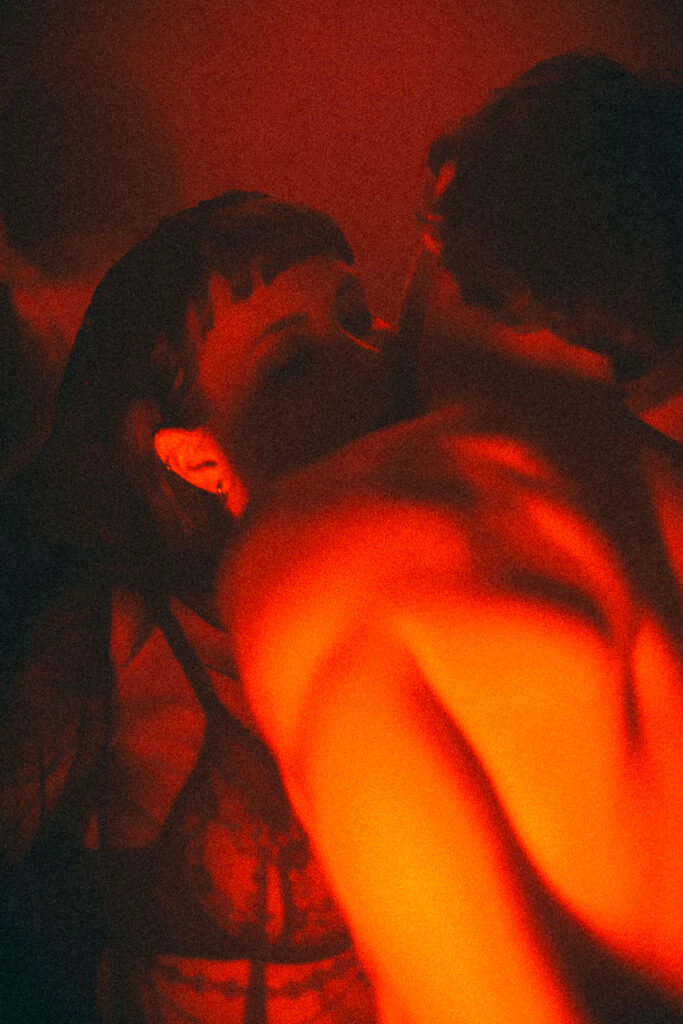
© Romain Guédé
Are there images you choose not to publish, even if they are strong visually?
It’s quite rare but yes, it can happen. A strong image is one thing, but you also have to consider what it conveys, and whether it’s something you want to share.
You also work in fashion and event documentation. How does photographing fashion events differ from photographing clubs or parties?
For me, it’s quite different. It’s an environment where I feel like a complete outsider, where I don’t fully grasp the codes. At fashion events especially, there’s a pressure to find your place among many photographers, which I find challenging. It’s less about immediacy, energy, or intimacy. It’s more about capturing looks in a composed way. It’s also much more stressful as you have to ensure not to miss certain people, and deliver a strong series of images in just a few seconds.
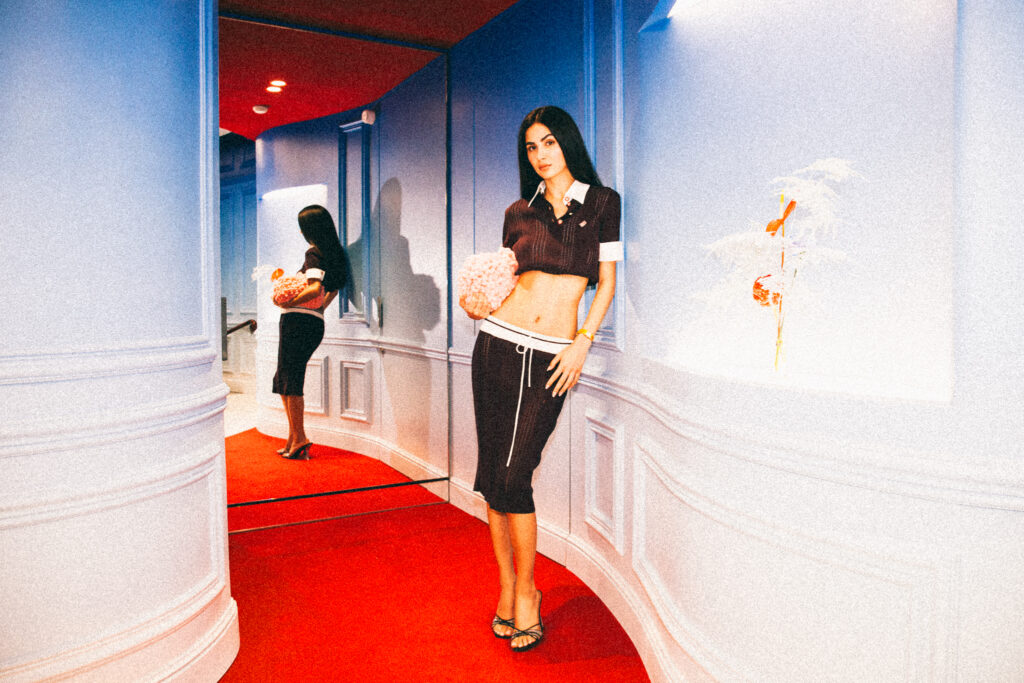
© Romain Guédé
Does the presence of a commission change the way you look or move?
It’s not so much the fact of being paid that has an influence, since I am also paid in the evening, but rather the environment itself. I think it’s something that suits me, the ability to adapt. The expectations are different, so my gaze changes. I have to pay more attention to celebrities, outfits, and produce a lot of images quickly while staying very precise.
Your images often feel immediate but composed. How much of your work is instinct, and how much is decision-making?
It’s definitely both. I pay close attention to framing, whether capturing a broader atmosphere or someone posing. And, at the same time, I rely completely on instinct when capturing fleeting moments such as someone dancing. Also, since I shoot digitally, I have the freedom to choose the most balanced image afterward, and I occasionally reframe slightly.
Do you ever think about style while shooting, or does that emerge afterward?
I have certain habits: the lenses I use, small effects with mirrors or reflectors, the way I position myself, how I hold my light. Whilst these create some degree of consistency, I would not say it’s something I actively seek.
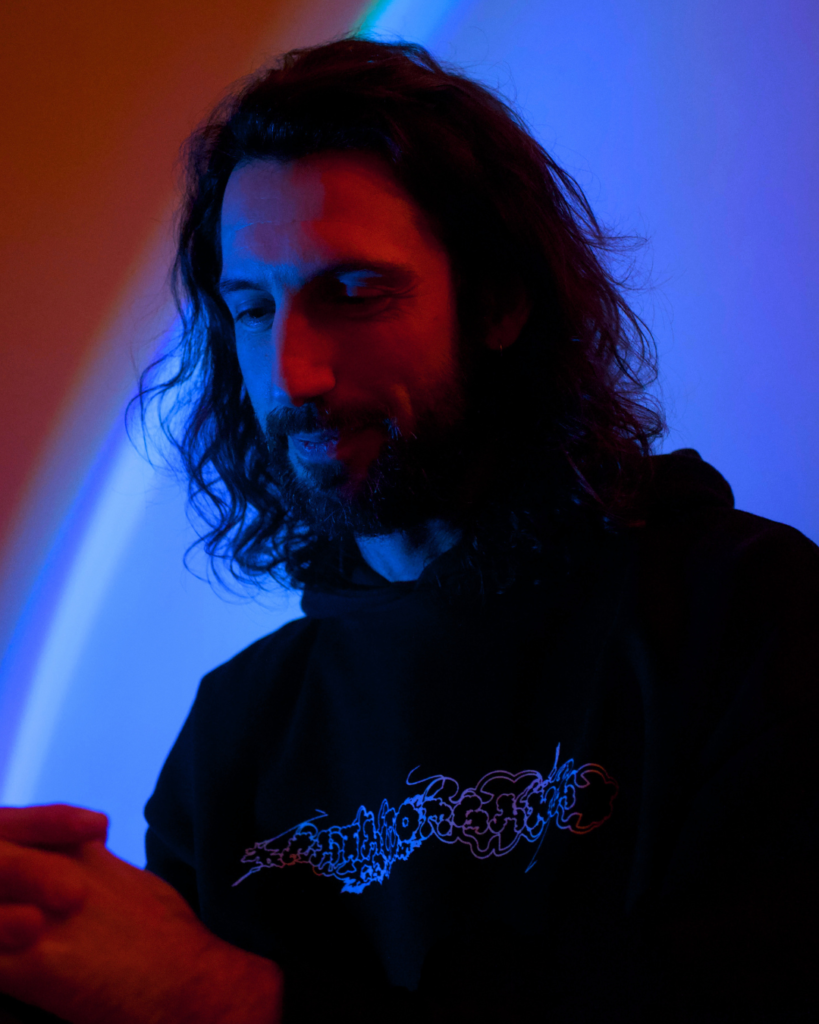
© Elene Datusani
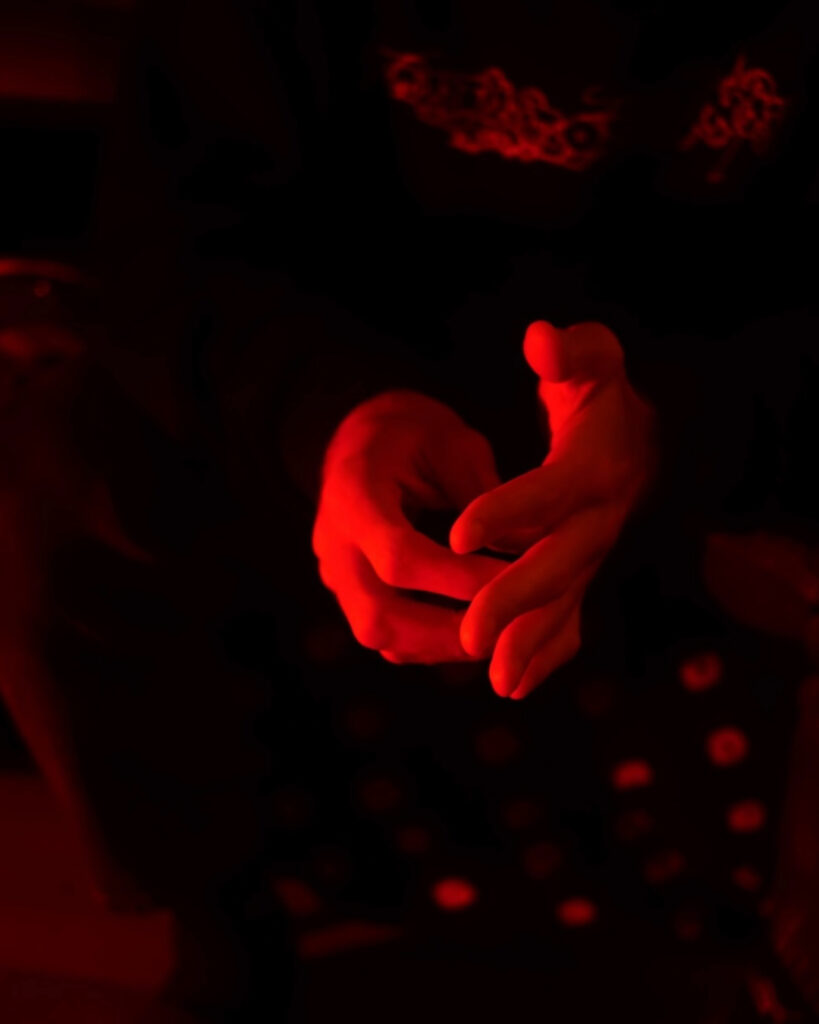
© Elene Datusani
Nightlife is intense and repetitive. How do you deal with physical or creative exhaustion?
For a few years now, I’ve been questioning my relationship to nightlife, and in recent months I’ve changed my approach. I’ve begun to feel the need to party less, especially as my sleep issues have made my exhaustion increasingly harder to manage.
I’ve adopted new habits: going out less often, making sure I’m well-rested beforehand, taking naps, arriving only when I’m booked, having a quiet evening before events and drinking maté.
I don’t really see myself as a creator, more as someone documenting with an aesthetic touch. I’m not trying to reinvent things each time; it’s more of a formula that I adapt. So I don’t feel much creative burnout, but I do feel overwhelmed by screens and endless photo editing.
What keeps you motivated to continue photographing these spaces?
It is true that there can be a certain repetition, and it’s become harder to be deeply affected by a night after having experienced so many of them. But in return, there’s a sense of attachment to the environment and to the people I see regularly. I’ve become attached to this role, to documenting nights, highlighting alternative scenes and underrepresented communities. Over time, that has become far more important than simply “making beautiful photos.”
When you look back at your images, what do you think they say about the culture of the night?
That spaces of freedom and release can exist. At least, I hope they show another side of nightlife, one that’s less visible, less accessible. When I first arrived in Paris, the events and locations I attended were mostly mainstream. I mostly went to more standard bars and parties. I’m very happy to have discovered a more alternative side of nightlife, both musically and socially.
What do you hope someone who wasn’t there understands when they see your photographs?
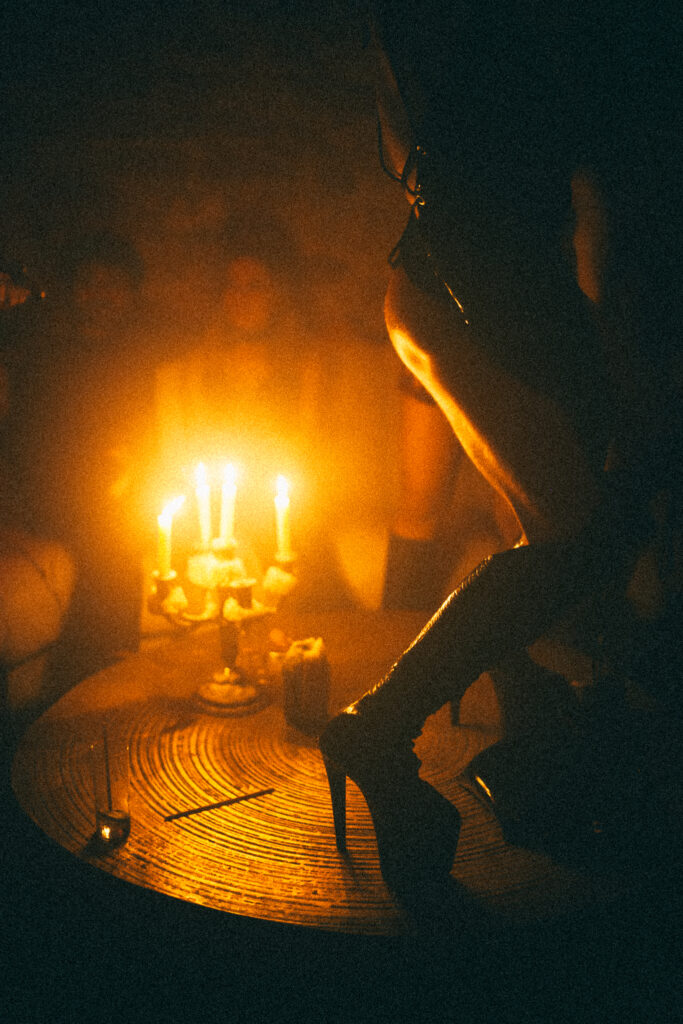
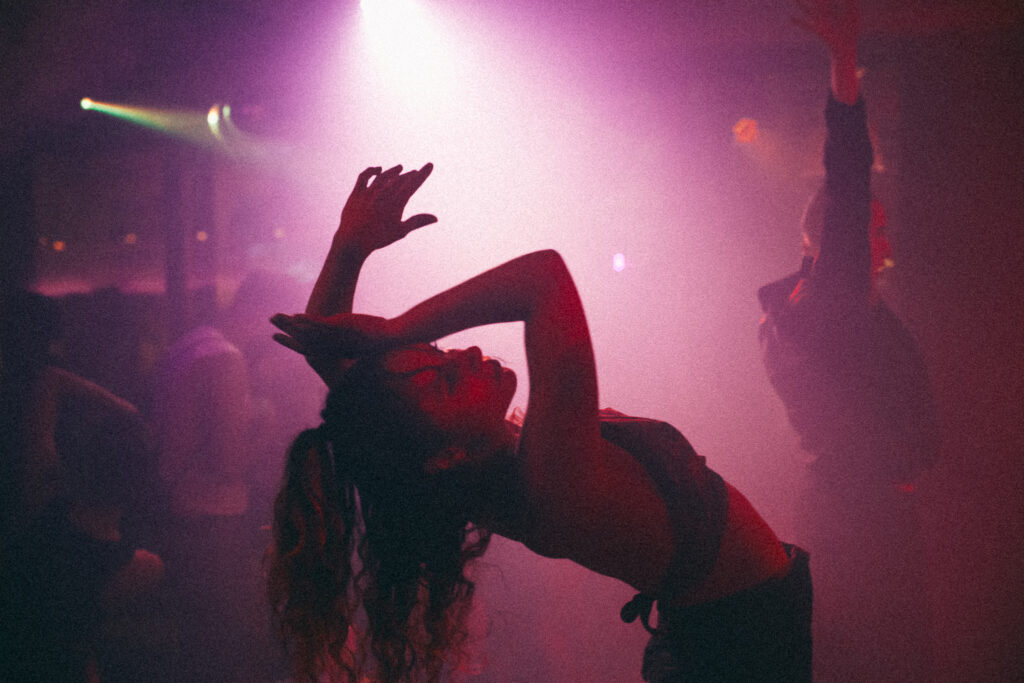
I hope they show diversity across people, locations/atmosphere, even if it’s centered on electronic music. Taking, for instance, events like sex-positive parties, shibari, BDSM, I realise how completely unfamiliar I was ten years ago with all of this. Seeing it, accessing it, opened my mind to new ideas and desires. Likewise, I hope my photographs contribute to bringing on the spotlight and celebrating the queer community.
© Romain Guédé
Do you see yourself continuing to photograph nightlife in the same way in the future?
As I mentioned, my relationship to nightlife is evolving. I’m more distant now, less in the energy of the party, and less often in parties themselves. But I can’t imagine leaving it entirely. I like this world, and it’s also a source of income. I’m starting to get work outside nightlife, but it still doesn’t make up the majority of my projects. Maybe, I’ll just be a bit less “everywhere,” as people often tell me.
What questions are you still trying to answer through this work?
I’m not sure I’m trying to answer any specific questions through my work. But, as techno culture becomes increasingly mainstream and its codes get reused in ways that can feel detached from their original values, I do feel a growing urge to celebrate the alternative, less visible, and sometimes political side of it, which I find most compelling and beautiful.
© Elene Datusani
We would like to thank Romain for taking time to share his thoughts, feelings, creative endeavors, and some of his photographs with us. Follow Romain’s work on Instagram: @romain.guede
Thanks also to Elene Datusani for the photographs. Follow her on Instagram to see more work: @elene.dt
Written and edited by Sopho Kharazi: @sophokharazi