Tensione Collective: Where Tension Becomes Release
With our new editorial series Inside Collectives, we invite you to step into the worlds of diverse art collectives shaping today’s cultural landscape. We begin with a closer look at Tensione Collective.
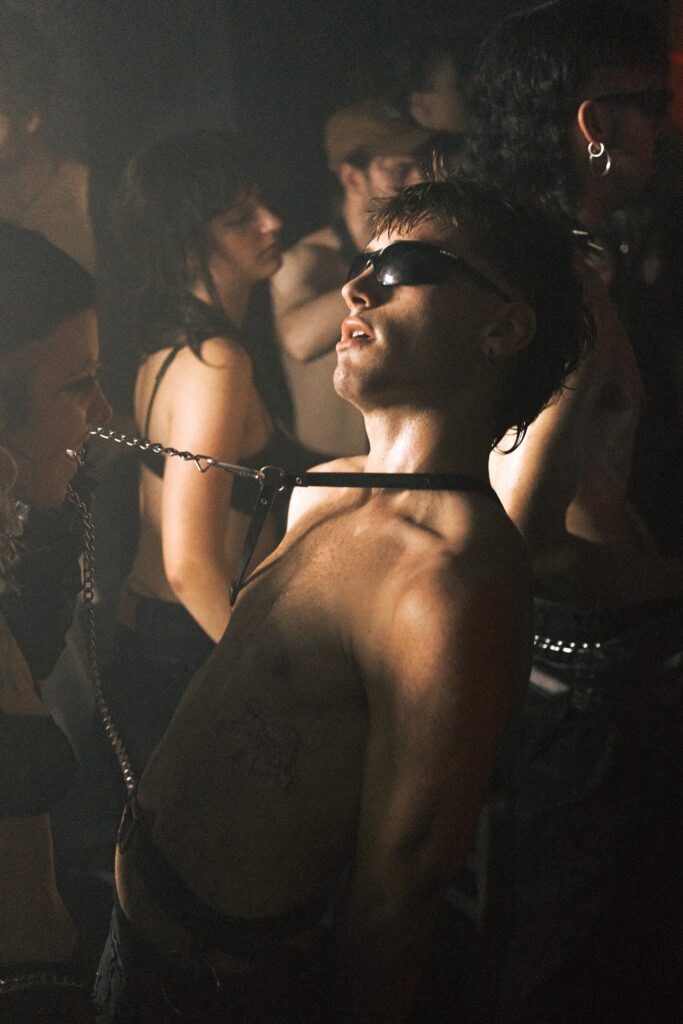
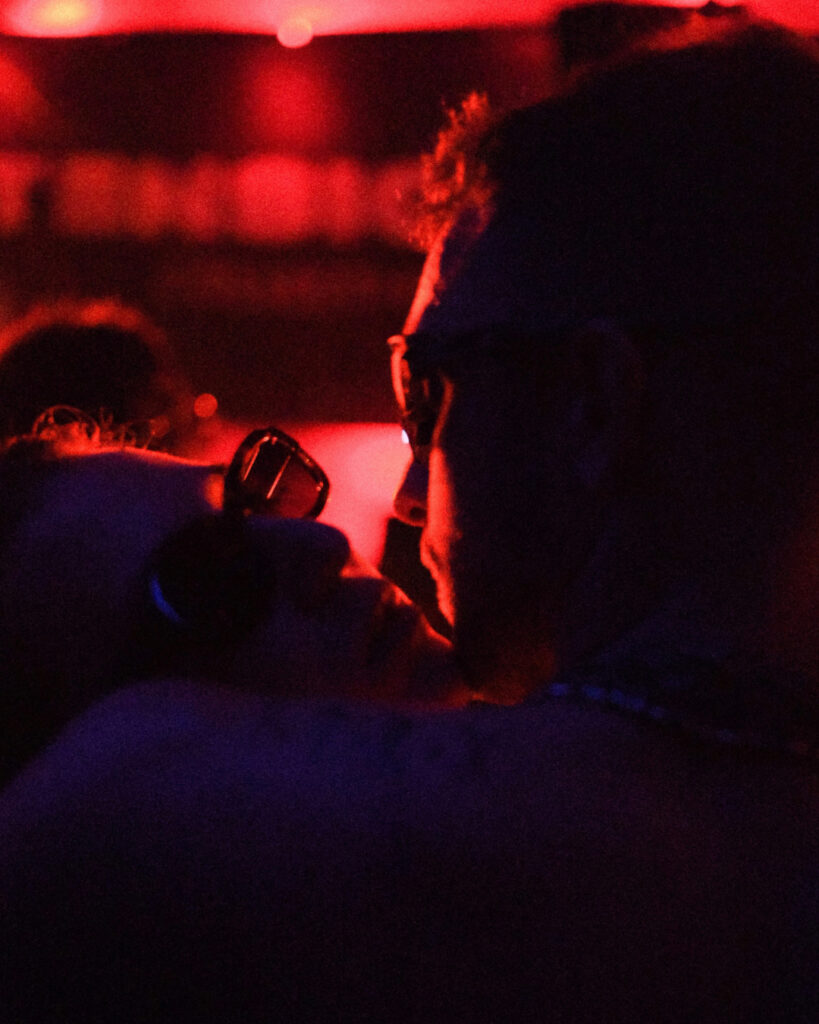
I first encountered Tensione Collective during a night out at Altrove in Milan, and it felt less like discovering something new and more like slowly being pulled into a different rhythm. The evening unfolded through the majority of sets played on vinyls, beginning in the smaller room where the music was softer, almost introspective, gently easing you in. Moving into the main room, the sound deepened and darkened, becoming more intense and physical. The space itself was dim, washed in dark red light that seemed to absorb everything into it. There was something raw and immediate in both the sound and the atmosphere. Nothing felt distant or performative. People weren’t just listening. They were fully immersed, moving as if the music had dissolved any boundary between body and space. It created a sense of collective presence, where the night didn’t just happen around you, but through you.
During that night I met Daraio, a member of the collective who was playing in the main room. He was the one who told me about Tensione Collective and this is how the idea of the interview was born.
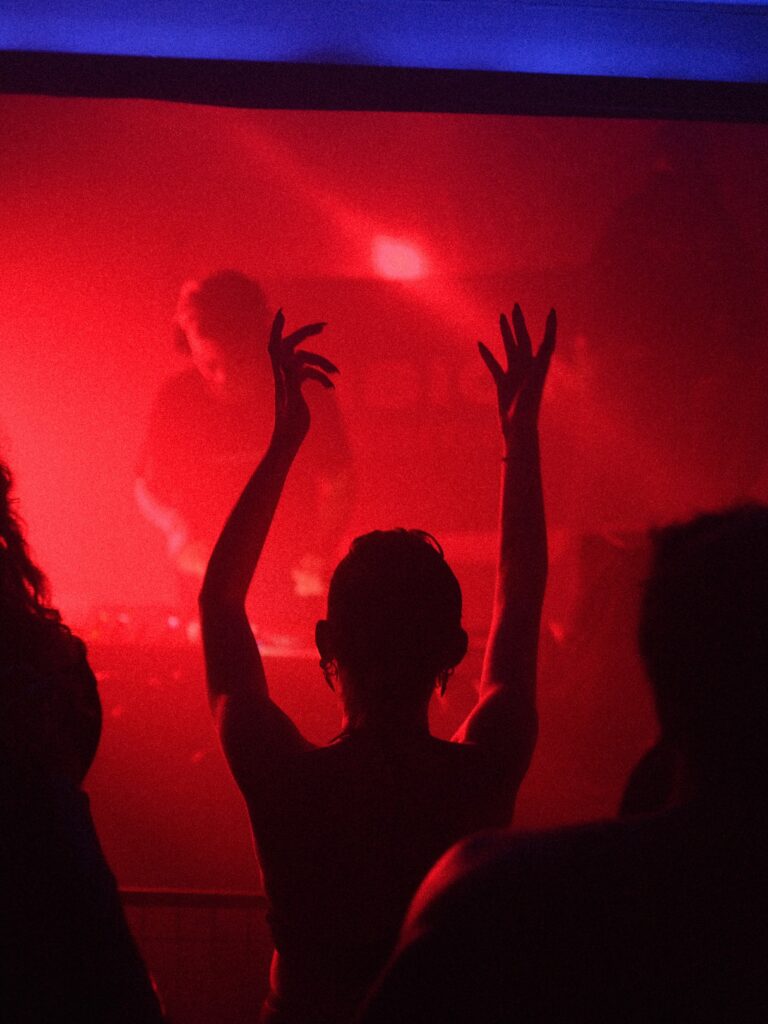
© Francesco Speranza
Tensione Collective was founded in 2019 in Southern Italy as an independent project dedicated to music, club culture, and contemporary artistic experimentation. More than just a collective, Tensione is a cultural platform in constant evolution, built around the idea of community, sharing, and the transformation of space.
The members of the collective come from different backgrounds: music, visual arts, design, cultural production, event organization, and sound research, united by a shared desire to create something that was missing in their local context.
Before the project began, many of the collective’s members were already involved in local underground scenes, independent artistic practices, and self-organized processes connected to music and events. From the very beginning, they imagined Tensione not only as a series of parties, but as an open space for cultural exchange. Alongside the events, they organize workshops focused on DIY instrument building, DJing, and music production, creating opportunities for people to approach sound and experimentation in a direct, collective, and accessible way.
Over time, the project has naturally expanded beyond its original context, connecting with international scenes and communities that share a similar vision. This ongoing exchange continues to shape their practice, keeping it open, adaptive, and constantly in dialogue with new environments and forms of expression.
Curious to understand what shapes this kind of atmosphere, I spoke with the collective to look beyond the dancefloor and into their process.
When did Tensione Collective first take shape?
Tensione Collective was born in Southern Italy from the need to create a space for connection, something that had always been difficult to find in our area. Before becoming a collective, we were simply people united by the same drive: to create authentic experiences through music, art, and shared moments.
Growing up in the South meant dealing with a lack of independent cultural spaces and a nightlife scene that never truly reflected our vision. So, we began building our own spaces from the ground up, turning unexpected locations into places of real connection.
We came from different backgrounds (music, visual arts, design, events, and cultural production) but we all shared the desire to create something that still didn’t exist in our environment.
Why the name Tensione? What kind of tension are you referring to?
The name Tensione Collective comes from an idea that has always existed at the core of our collective and our ritual: the invisible force generated when different energies come together and resonate within the same space.
For us, “tension” is not something negative. It is a state of intensity, attraction and transformation. Every person involved, artists, dancers, friends, strangers, contributes their own energy, and together these fragments create the emotional charge that gives life to the project. At the same time, the name also reflects the need for release. Our gatherings were born as moments where people could dissolve the pressure accumulated in everyday life and reconnect with a sense of balance, freedom and collective peace. In that sense, Tensione exists in the space between chaos and harmony, the moment just before everything explodes, and the silence arises immediately after.
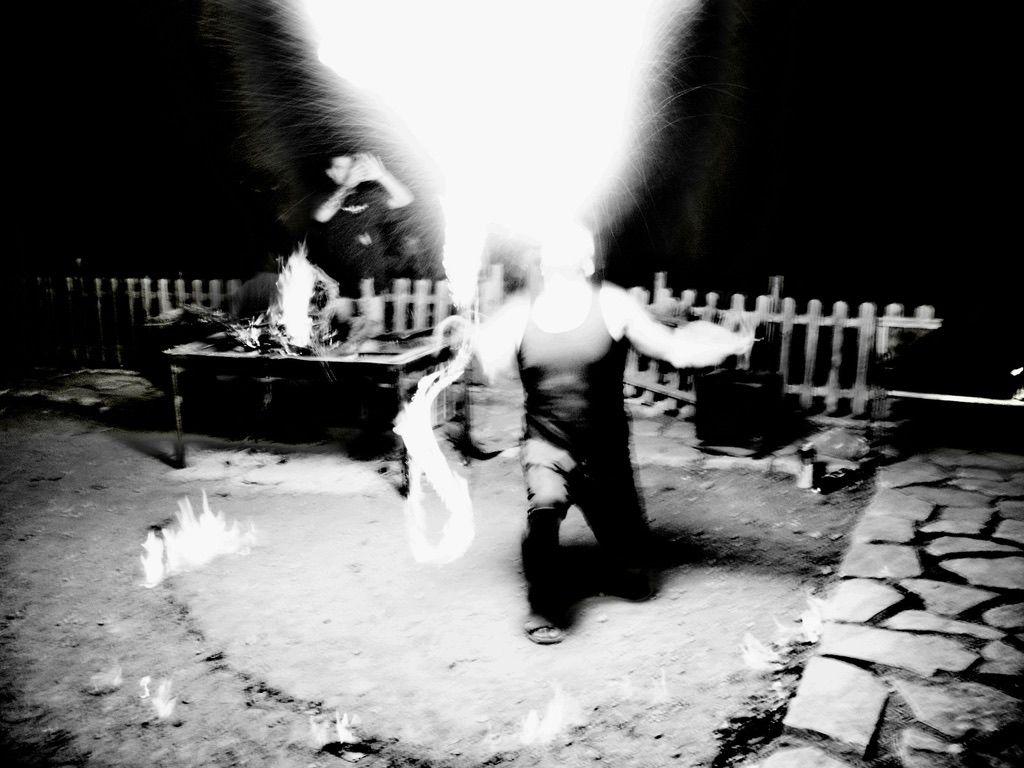
© Pietro Maria Vincenti Trabace
At the beginning, what did you think this would be and what did you not expect it to become?
At first, there was no real idea of the future or any ambition for expansion. Tensione Collective was born from an instinctive, almost necessary impulse: to create something that felt alive to us, without expectations or a defined strategy. Over time, though, the project naturally evolved into a point of reference for our local scene, eventually attracting the attention of clubs and cultural realities across Europe, not only because of our idea of partying, but because of the atmosphere, musical sensitivity, and cultural language we were building around it.
From the very beginning, we never curated lineups to simply satisfy the crowd. On the contrary, we always tried to present artists, sounds, and performances that felt necessary to us, even when they seemed far removed from more immediate or mainstream dynamics. What interested us was creating surprise, shifting perception, and exposing people to something they never expected they could love.
We think the trust that grew around Tensione comes precisely from this approach. Not only from the audience, but also from festivals, institutions, and local administrations that, over time, entrusted us with public spaces, historic buildings, and places traditionally far removed from club culture. Spaces that, until then, no one would have imagined could become environments for contemporary gathering, music, and collective experimentation.
Do you see Tensione Collective as a nightlife project, an artistic platform, or something else entirely?
We see Tensione Collective as a cultural container where different energies, practices, and artistic languages converge into a shared experience.
Nightlife is only one part of it. Music, visual arts, spatial design, performance, workshops, and collective rituals coexist and continuously influence one another, creating experiences that move between club culture, contemporary art, and temporary community building, not only through nightlife, but also through daytime gatherings, workshops, and communal moments.
What interests us most is the possibility of transforming a “non-place” into a living and safe environment: giving new meaning to abandoned, forgotten, or unexpected spaces through sound, human connection, and shared presence.
In this sense, Tensione is less about organizing parties and more about creating temporary worlds: spaces where different people, aesthetics, and emotions can coexist freely, even if only for a moment.
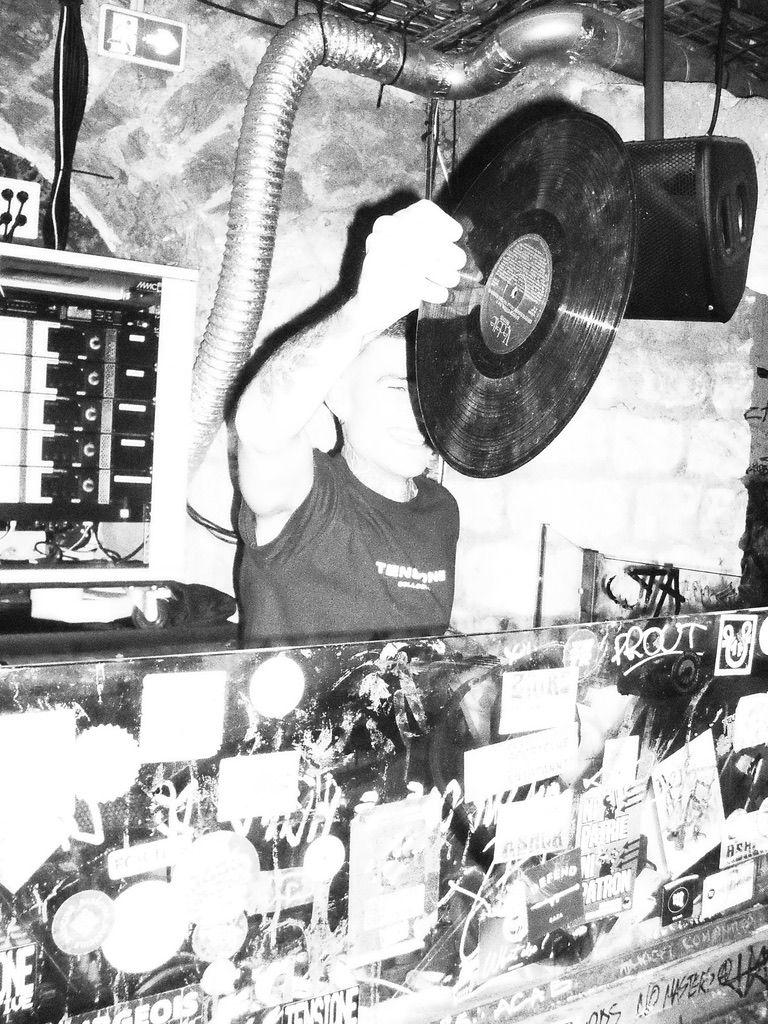
© Pietro Maria Vincenti Trabace
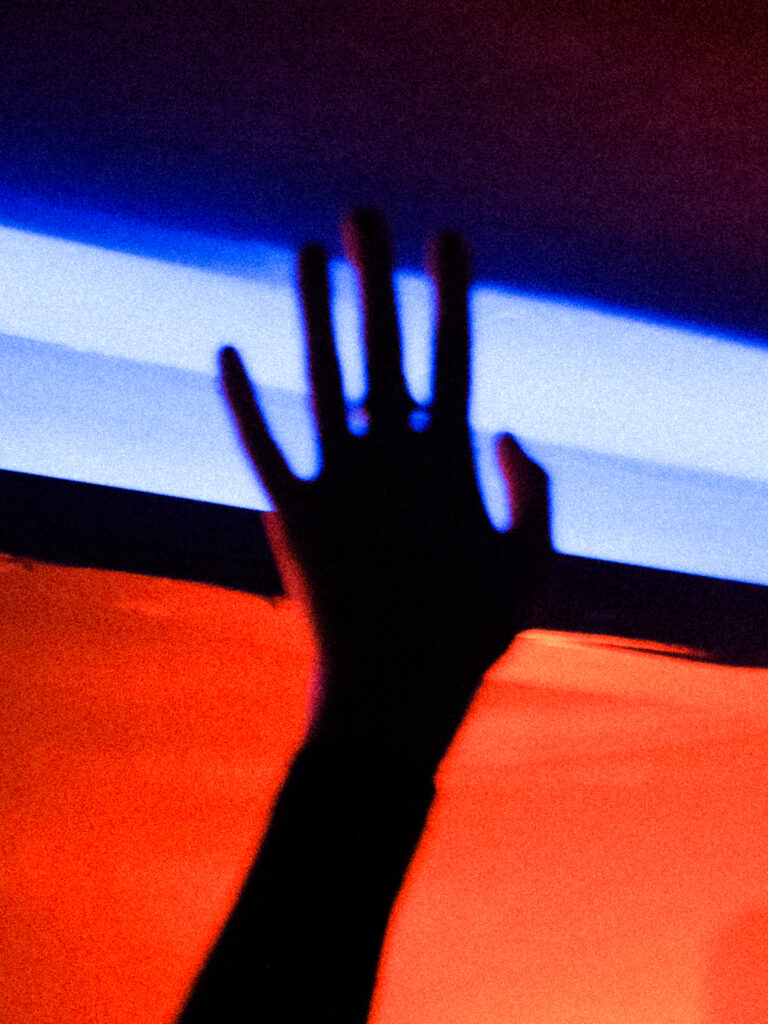
© Francesco Speranza
Are there references, musical, visual, or cultural, that influence what you do?
From the beginning, Tensione Collective was never inspired only by music, but by entire cultural worlds built around it. As teenagers, we were deeply influenced by the early ’90s rave movement, where parties felt like much more than entertainment. They were temporary spaces of freedom, places where people could meet, connect, experiment and exist outside of everyday structures, even if just for one night.
At the same time, we were drawn to the DIY spirit that shaped that era: self-built sound systems, modular synth experiments, improvised jam sessions where electronic and acoustic musicians shared the same space without hierarchy. Sound was treated as something physical and collective, something to build together rather than simply consume.
Visual and spatial experiences also played a huge role in shaping our vision. Collectives like the Mutoid Waste Company showed us how abandoned industrial materials and post-apocalyptic aesthetics could become living environments for gathering and expression. Places like Virus represented another important reference point: raw, experimental spaces where nightlife, art and social tension naturally coexisted.
Musically, we have always felt close to the uncompromising energy of Detroit techno, as well as Northern European electronic scenes that approached sound, architecture and community as interconnected elements of the same experience. What connects all these influences is the idea that culture can temporarily transform reality. That an abandoned or anonymous space can become something alive through sound, presence and human connection. This is still what guides Tensione today, not out of nostalgia, but as an active way of creating experiences and bringing people together.
Do you usually collaborate with already established artists, or do you also give space to the emerging ones?
We have always tried to prioritize emerging artists, offering them a genuine space for expression and visibility. At the same time, we have often built lineups where emerging talents and internationally established artists share the same booth. The idea has always been to create a horizontal dialogue, where quality is not defined by notoriety but by artistic research and expressive strength. For us, there is no hierarchy based on fame. What matters is the music, the intention behind it, and the way it can communicate with people.
Do you consider yourself primarily an Italian collective or do you not wish to put constraints on geographical scope of your work?
At the moment, every member of Tensione Collective is based in a different place, and each location inevitably shapes their perspective and influence. Rather than defining ourselves through a single geography, we exist as a network of small points of convergence across several European cities. This dispersion allows us to share and continuously expand our sound beyond borders, while also giving each member the space to evolve through the environment they are currently living in. The city becomes part of the process, a constant source of inspiration and transformation. At the same time, we still feel deeply connected to where we come from. That connection is what pushes us to step outside our comfort zone, bring our energy into new spaces internationally, and support emerging artists from our scene. One of the things that matters most to us is creating opportunities for them to play in clubs and contexts they may have never imagined reaching, while also bringing visibility to the place and community that shaped us.
© Francesco Speranza
Do you usually collaborate with already established artists, or do you also give space to the emerging ones?
We have always tried to prioritize emerging artists, offering them a genuine space for expression and visibility. At the same time, we have often built lineups where emerging talents and internationally established artists share the same booth. The idea has always been to create a horizontal dialogue, where quality is not defined by notoriety but by artistic research and expressive strength. For us, there is no hierarchy based on fame. What matters is the music, the intention behind it, and the way it can communicate with people.
When did you first notice the crowd becoming recognizable from night to night?
We started to notice the crowd becoming recognizable night after night when a real community began to take shape: people who were not only attending the events but actively supporting and contributing to them. Over time, many became an integral part of the experience itself, sharing ideas, offering input, and naturally taking on an active role in shaping the atmosphere of the parties. What made this shift particularly meaningful for us was the sense that the project was no longer something delivered by a group, but something collectively built in real time. The boundaries between organizers and audience started to dissolve, and what emerged was a shared responsibility for the energy of the space. For us, the most important aspect has always been creating a safe environment where everyone can feel comfortable being themselves. This sense of safety, openness, and mutual care is what we value the most. What distinguishes someone as part of the Tensione crowd is not a fixed identity, but a shared attitude, a natural respect for the space, for others, and for oneself. Over time, this has also shaped the way the crowd evolves from night to night: it’s less about repetition of the same faces and more about the continuity of a mindset. Even when new people join, they tend to align quickly with this collective sensitivity, which is what keeps the atmosphere consistent, yet always alive and changing.
What has been the most memorable event for you so far? Why?
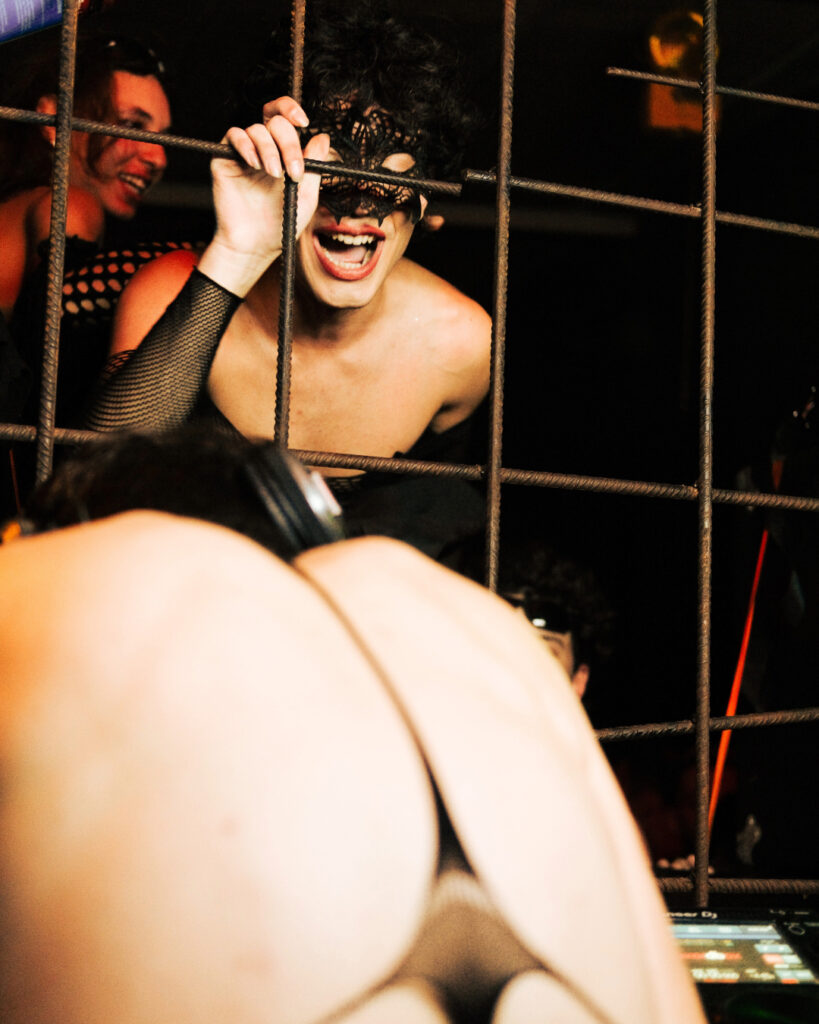
There have been many memorable parties, because from the very beginning our vision was never centered around the conventional idea of a venue, but around the transformation of “non-places” into temporary collective rituals. What made these experiences unforgettable was not only the architecture, the music or the visual dimension, but the invisible atmosphere generated between people and space. Every participant seemed deeply aware that what was happening could exist only in that precise moment and nowhere else. That awareness created an intense collective energy, where everyone contributed emotionally to the environment.
One of such events took place near a gigantic, abandoned cement factory dating back to the early 1900s which is a monumental industrial presence overlooking the Adriatic Sea. Around this immense concrete structure, we built a gathering suspended between two opposing landscapes: the raw post-industrial identity of the factory and the crystalline horizon of one of Puglia’s historic nude beaches. Visual installations were projected onto the architecture, transforming the cement structure into a shifting body of light and movement, as if the building itself had briefly awakened.
Other unforgettable moments emerged inside a former military bunker later transformed into a radio station during the 1960s, or within 18th-century historical palaces, Palazzo Stola, in the historic center of Taranto, filled with frescoes and architectural details carrying immense cultural memory… For that occasion, the building became a layered performative environment where live music, experimental performances, body art, visual installations and collective actions unfolded simultaneously across different rooms of the palace. Rather than following a fixed format, the entire experience evolved organically through interactions between artists, audience and architecture, allowing the palace itself to become an active part of the ritual.
In each case, the objective was never simply to occupy a space, but to enter dialogue with it, allowing sound, bodies and architecture to temporarily coexist in a new form.
At the center of our philosophy is also the idea of impermanence and care. The ritual does not end with the music. Every installation, every intervention and every trace of the event is dismantled with the same attention with which it was created. One of our core principles has always been to leave each place restored, respected and often even cleaner than when we first encountered it.
© Francesco Speranza
© Francesco Speranza
What has been the most difficult moment so far in managing the collective?
One of the most complex realities we have faced has been the increasing repression surrounding independent cultural gatherings in Italy. Over the years, many of the spaces that hosted alternative forms of aggregation were progressively shut down, while new legal measures introduced harsher consequences even for temporary events organized on private land with consent.
Coming from the South, we often found ourselves in a landscape where many existing nightlife structures were tied to systems and dynamics completely distant from our values. From the beginning, our intention was never simply to “organize parties,” but to create autonomous spaces where people could express themselves freely through music, art and collective presence. That is why we started building our own temporary venues inside abandoned or forgotten places: industrial ruins, historical structures, isolated landscapes, transforming non-places into temporary cultural environments.
As restrictions intensified, we were forced to rethink our entire methodology. The gatherings became more discreet, more carefully curated and more community-oriented. Access was often regulated through questionnaires and selection processes, not out of exclusivity, but out of the necessity to preserve a certain energy, mutual respect and collective responsibility within the space. In many ways, these limitations pushed us to become even more intentional about what we were creating. The party stopped being only an event and became a form of cultural resistance, spatial reclamation and temporary autonomy.
Have you had doubts about continuing at any point?
There have definitely been moments of exhaustion and uncertainty, especially when external pressure made it increasingly difficult to sustain independent spaces and collective practices in the way we envisioned them. But every time doubt appeared, it was balanced by the realization that what we were building had already become larger than ourselves. Seeing people travel across countries, connect through these temporary rituals and recognize themselves inside the environments we created reminded us why Tensione had to continue evolving. In a context where authentic collective experiences are becoming increasingly rare, continuing felt less like a choice and more like a necessity.
Is there a direction you consciously want to avoid?
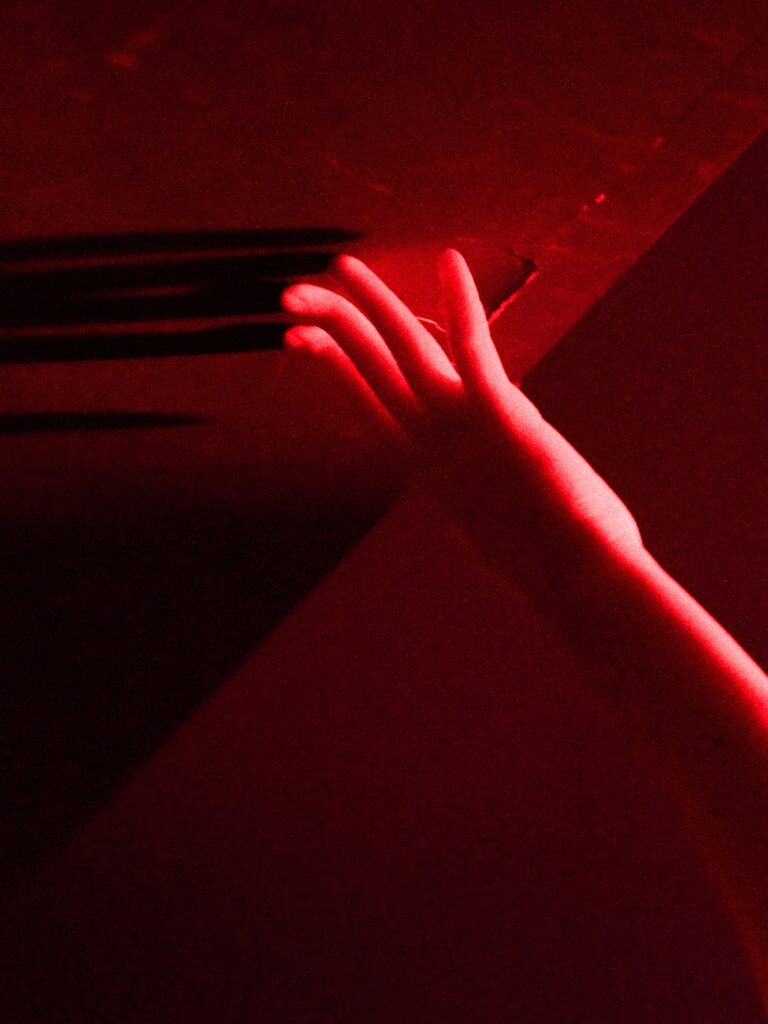
Through years of experience, we have developed a much clearer understanding of what resonates with us and what does not. Even if we remain apolitical in terms of affiliation, we are deeply guided by a personal and collective sense of what feels right and what does not. This clarity directly informs the decisions we make as a group. We try to stay aligned with what allows us to express ourselves authentically. If a direction, collaboration or format does not feel honest to our identity, we prefer to step away from it rather than force something that would dilute our essence. The priority is always to remain in a space where what we do feels intrinsically meaningful to us.
© Francesco Speranza
What would feel like a meaningful next step for the collective?
A meaningful step forward for Tensione Collective is the transition we are currently in the process of completing: establishing Berlin as our operational base. This move is not about distancing ourselves from our origins, but about placing ourselves within a more connected and international ecosystem, one where we can continue to support and amplify both established and emerging artists from around the world, especially those who deserve a meaningful first platform to express themselves. Being based in Berlin also strengthens the development of our workshop practice, particularly our sessions focused on DIY instrument building and DJing. Here, we find a broader and more aligned audience, one that naturally resonates with the cultural language we are trying to cultivate. This allows us to further expand the educational and experimental dimension of the project.
Looking ahead, the next major step we are working toward is the launch of our own record label: a platform that will help us formalize and archive our sonic identity, while also opening space for the artists and sounds we believe in and want to support.
More is coming soon.
Thank you so much for taking time and sharing with our readers your visions, ideas, challenges, and experiences. We wish you all the best in your future endeavors and see you at your next party!
We would like to sincerely thank you for inviting us to be part of this interview and for the space to share our vision. It’s been a pleasure to connect and exchange with you.
Follow Tensione Collective on Instagram @tensione_collective and Soundcloud tensione_collective
Thanks to Francesco Speranza (@analochico) and Pietro Maria Vincenti Trabace (@quattrocentotredici) for the photographs.
Editorial prepared by Sopho Kharazi.