The Map that Covered the Territory
You know the old parable, though you may not remember where you read it. In one empire, a guild of cartographers made a map so perfect that it grew to the exact size of the province. Generations inherited this map, until it was finally abandoned for being useless: it was left in the desert, in tatters that occasionally served as a shelter for animals. Jean Baudrillard, who borrowed this parable from Borges, changed one detail: in his contemporary version, it is no longer the map that decays over the territory, but the territory itself decays over the map. The simulacrum is no longer a copy that reminds us of an original. It becomes the very thing we believe in, even before an original exists at all.
This is not merely a philosophical exercise. Baudrillard formulated this idea in 1981, largely as an analysis of television and mass media, but four decades later, it describes with even greater precision a field Baudrillard may never have considered: architectural visualization. At first glance, this field seems purely technical – the calculation of light, the simulation of materials, software precision. In reality, it is one of the most radical, and at the same time, least noticed simulacra of our time.
Baudrillard distinguished four stages of the simulacrum. In the first, the image reflects a deep reality, where the map faithfully represents the territory. In the second, it masks and distorts that reality – the image lies, but something real still stands behind the lie. In the third stage, the image masks not reality itself, but the fact that reality does not exist at all – it plays the role of reality in an empty place. And in the fourth, most extreme stage, the image bears no relation to anything. It is a pure simulacrum in need of neither an original, nor the absence of an original.
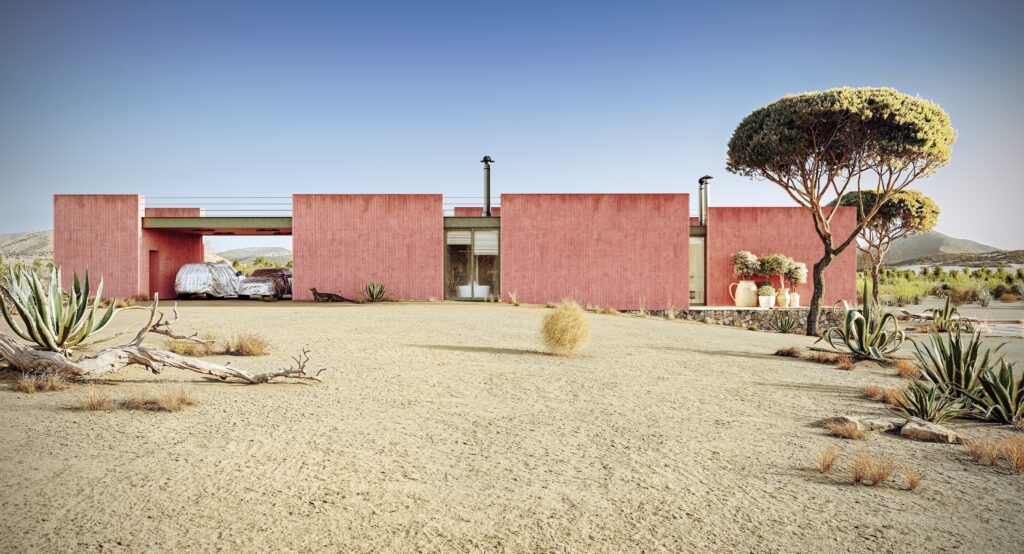
© 2190.studio, Private House, Laboratory of Architecture #3, Bazaleti, Georgia
In this sense, architectural visualization is a curious exception within the long history we call representational art. Painting tries to depict what already exists – a landscape, a face, an interior. Photography tightens this relationship further: a camera, by definition, requires something to reflect light in front of it, here and now. Cinema offers the first great exception, invented worlds that never had physical existence before the moment of filming. The architectural render takes yet another step forward: it is not only invented, it also claims to represent a specific, named, geographically located future: this street, this corner, this balcony on this particular floor. It plays the role of a document for an event that has not yet had time to happen, and, unlike cinema, it does not even declare this outright. There is something almost dangerous in this and, at the same time, something deeply human. Because, ultimately, this is how we have always lived: through stories that preceded experience, through maps that shaped our expectations of a place before we ever visited it, through legends that formed how we were meant to feel in places we had never been. The only difference is that today this process is faster, more precise, and in terms of expressive quality, unexpectedly artificial. Where once the creator of a map or a legend was separated from its reader by generations, today a single person, at a single screen, creates an entire small world overnight, one that hundreds of potential buyers, residents, and passersby will see the very next day.
Whoever creates these images therefore stands in an unusual position. They have a choice to be a technician who simply fulfills a task, or to be someone who consciously plays within this paradox, understands it, and treats it with a sense of responsibility. It was precisely this line we tried to find when we spoke with Sergi Kvaratskhelia, founder of 2190.studio, a Tbilisi-based architectural visualization studio.
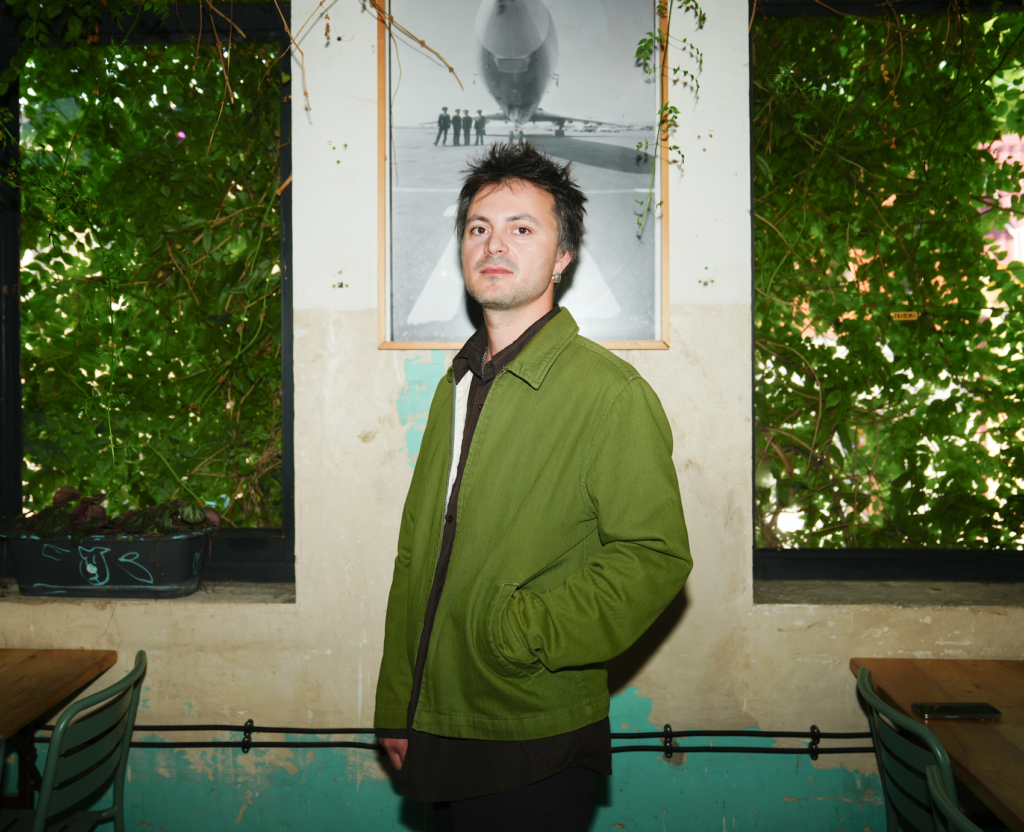
When you say a render “comes alive” – that moment when it stops describing a building and starts creating the sense of an independent existence – do you feel that what you make no longer relates to the building it supposedly depicts?
For me, it concerns both at once, and that is probably the hardest part of this work. An image needs a building as its pretext – a plan, a façade, a material – but when it works well, it lives a little further away than that pretext itself. You notice that the people looking at the image don’t ask themselves, “what is this building like”, but they ask, “what would my life be like there, in the morning, when I stand by the window.” At that moment, the image is no longer merely a document describing walls and rooms. It becomes a small, independent world with its own weight and its own pull, the same kind a good photograph or a well-written sentence has.
Does this mean your work is sometimes more “real” than the built result itself? Or, more precisely, is there a hierarchy for you between what gets built and what you paint?
I don’t think in terms of hierarchy “more real” or “less real.” I think more in terms of different times. A built building exists in a specific time and environment, with its own imperfections, wear, and the life that actually happens within it. My image exists in the time of potential; it shows one version of what could happen. Both are real, just in different senses. The problem begins when someone forgets that these are two different times and it’s my responsibility to help ensure that distinction isn’t lost, even when the image is extremely convincing.
Do you want the viewer to know that this is an image or, on the contrary, do you want that awareness to disappear entirely while they’re looking at it?
This is a difficult question, and I think my answer has changed over time. Early in my career, I wanted to fully convince viewers. I wanted people to forget that this was a render. I tried to fix every flaw, every imperfection, as if perfection were the final goal. Now I think the most interesting work exists between the two: Now I think the most interesting work exists between the two: convincing the viewer enough to emotionally connect them with the space, but don’t make it so “perfect” that they forget it still belongs to the world of possibility. Perfection, in fact, often betrays itself, as nothing in the real world is perfect.
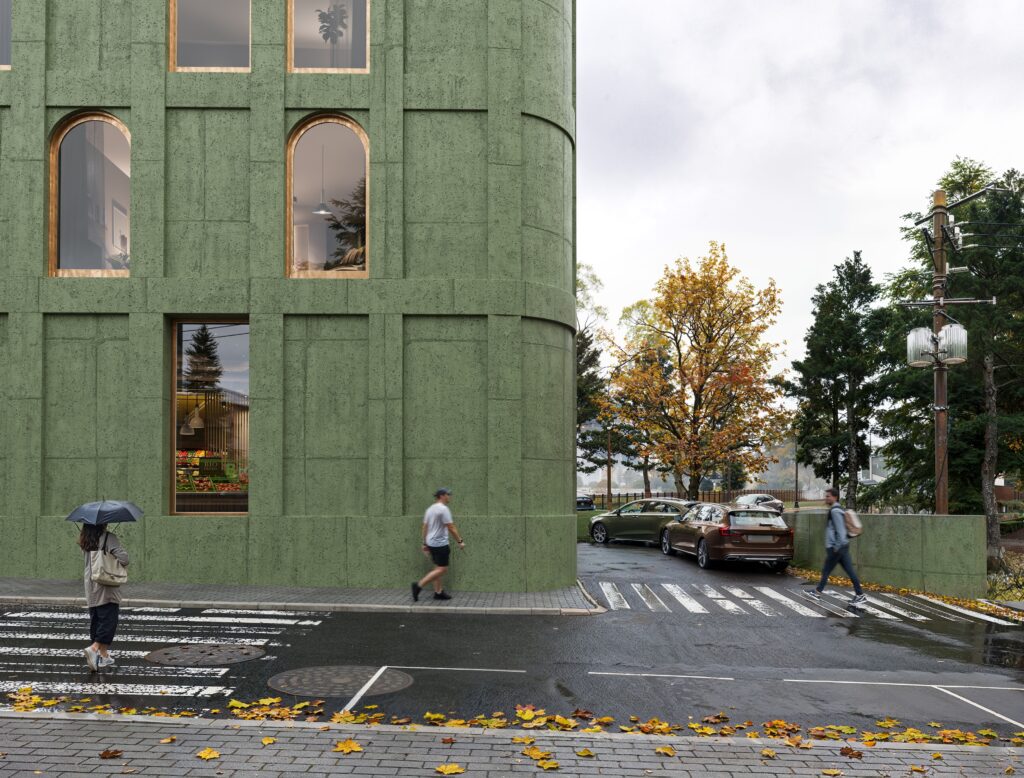
© 2190.studio, Residential, Zear Architecture, Kutaisi, Georgia
If every render disappeared tomorrow and only built structures remained, what, in your view, would be lost in how we experience a city?
Perhaps we would lose that transitional stage in which a building still belongs to everyone, before it becomes someone’s specific property. As long as a space is unbuilt, it remains open to everyone who imagines it. It’s the only moment when a thousand people can imagine the same building a thousand different ways, before reality fixes it into a single version. Perhaps that is the most valuable thing our work offers and, perhaps, the thing that disappears the fastest.
A large part of your work is seen by thousands of people through developer websites, social media, brochures, but often no one knows who created the image. Does this bother you, or do you experience this different, almost invisible form of authorship naturally?
I can answer this in two ways. On the one hand, yes, there is a certain loneliness in creating something that thousands of people look at, yet no one asks, “who drew this.” On the other hand, I think this is exactly where a kind of purity in our work lies. We don’t create art that points back at itself. We create something meant to disappear from the viewer’s awareness, leaving behind only a feeling of the building, space, and anticipation. This is authorship that succeeds precisely when it hides itself.
This partly answers the question of how your generation today is changing what “creating the real” means in art, from painting to photography. Where do you see yourself on this long line?
I think every new medium that tried to create “the real” painting, then photography, and then film faced the same questions we face now. Each one, in its own time, changed what people considered “sight,” and each had its opponents – people calling this new medium a creator of a “lie” when comparing it to the previous one. The difference in our case is that we don’t create a copy of the past or the present, but a version of the future – something that hasn’t yet had time to acquire its own history, its own life, its own wear. This grants our work a strange kind of freedom, but also responsibility as we don’t create a memory of the past, but an anticipation that no one has yet experienced, and which, nonetheless, is already shaping the decisions people make today.
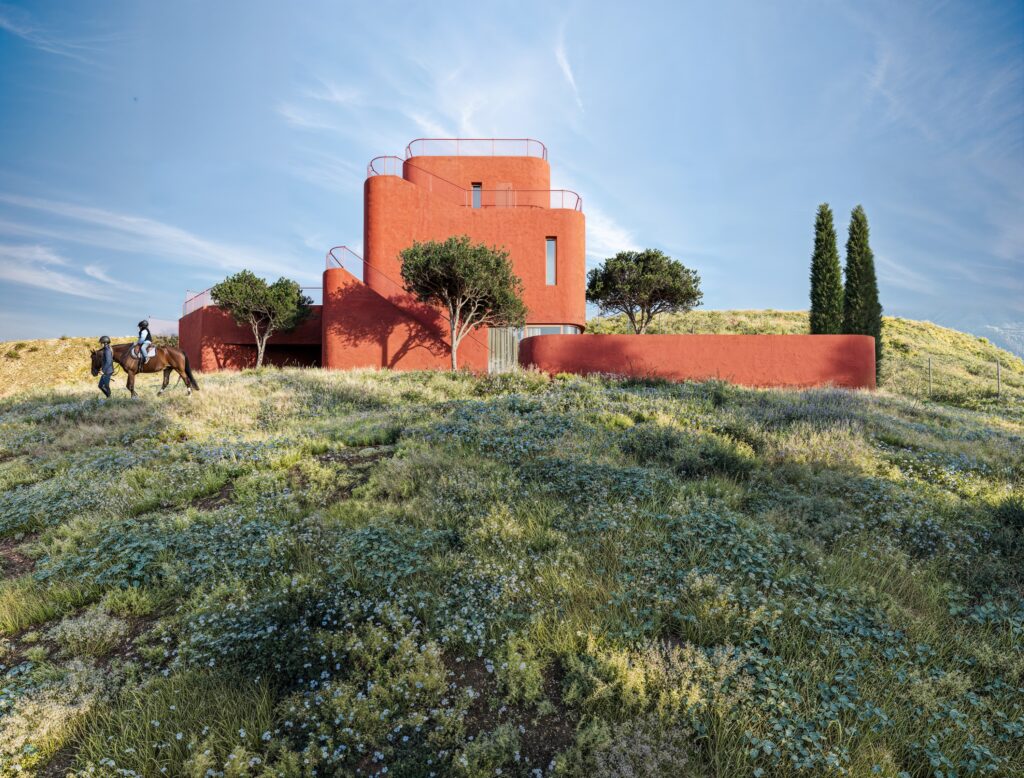
© 2190.studio, Private House, Laboratory of Architecture #3, Okrokana, Georgia
Baudrillard, who hovers openly over this entire text, was never entirely pessimistic about the simulacrum – he described a condition more than he condemned it. For him, the danger was not the image itself, but forgetting that it is an image. Perhaps this is exactly where the line stands between a responsible simulacrum and an irresponsible one, not in whether we create images of the future, since no civilization could ever exist without doing so, but in whether we remember that the people for whom these images are made carry a future far more complex, more alive, more contradictory than any single frame, however masterfully executed.
The map that covered the territory in Borges’s parable eventually fell apart anyway. It became a shelter for animals, a part of nature rather than its enemy. Perhaps this is the best outcome we can strive for: not an image that replaces reality or permanently rules over it, but an image that honestly admits it is only one possible version of the future, temporary, forgiving of itself, ready to yield its place to whatever is eventually built. Such an image no longer promises us the future. It simply forgives us for not yet knowing what it will look like and, in the midst of that forgiveness, helps us imagine, a little more honestly, a little more boldly, what has not yet arrived.
Thanks to Sergi Kvaratskhelia for taking time and sharing his thoughts about this interesting topic.
Follow 2190.studio on Instagram: @2190_studio
Check out 2190.studio’s official website: https://www.2190.studio
Thanks to Megi Ebanoidze for the photographs. Follow her work on Instagram: @__artemmiss__
About the Author
Ani Tenieshvili is a Tbilisi-based writer and creative artist working across media, culture, and visual communication. Her writing explores themes of love, emotional awareness, and social reality through an analytical lens, drawing on psychology and lived experience.
Follow her on Instagram for more content: @ani_tenieshvili_