Rethinking the Dancefloor: FREGA Project on Accessibility, Inclusion and Belonging
FREGA Project started in 2018 with an idea by Gabriele Capponi and has since grown into a project shaped by three founders: Gabriele Capponi, Mattia Koväl and Pre Silent, who share a belief in the transformative potential of electronic music. What started within the nightlife scene has developed into a space for experimentation, community and a different way of imagining participation in culture.
At the centre of the FREGA Project is a simple but radical question: who is nightlife actually designed for? Rather than treating accessibility as a technical adjustment or an obligation added after, FREGA approaches it as part of the creative process itself, something that should inform the way an event is conceived, from its physical environment and communication to transport, production and the dancefloor itself. Its work extends beyond the festival through DJ workshops, music therapy, collaborations with clubs and cultural institutions, and initiatives aimed at creating greater opportunities for people who have historically been excluded from cultural and social spaces.
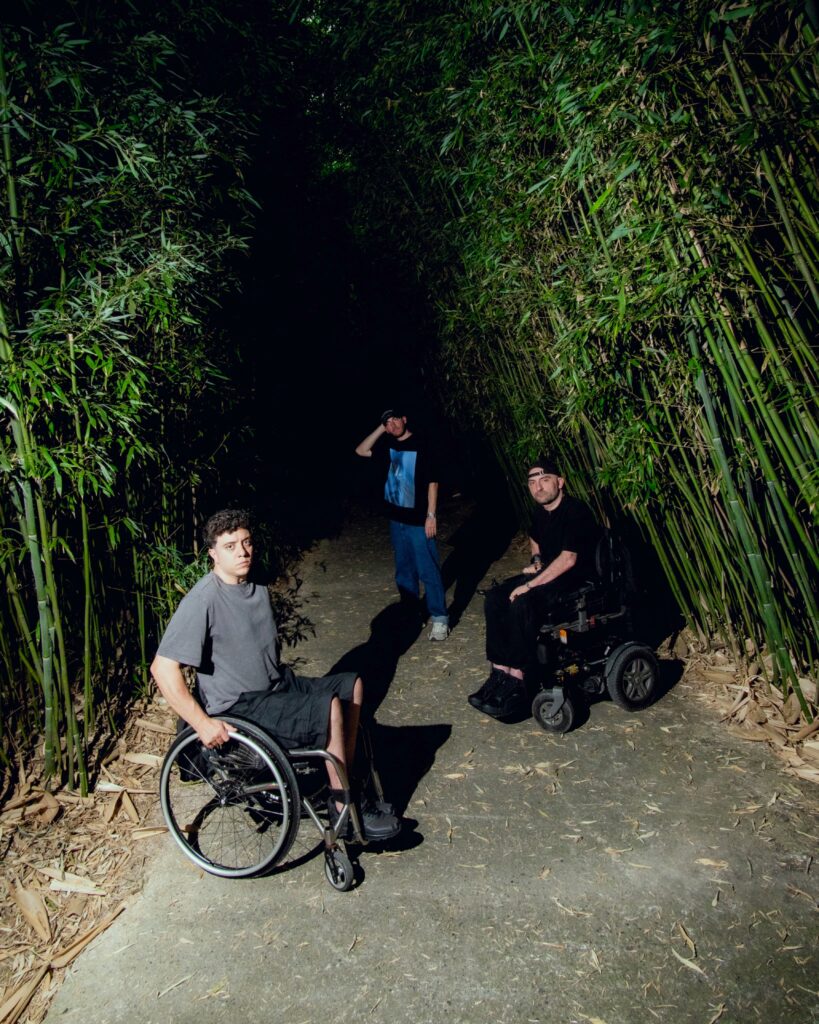
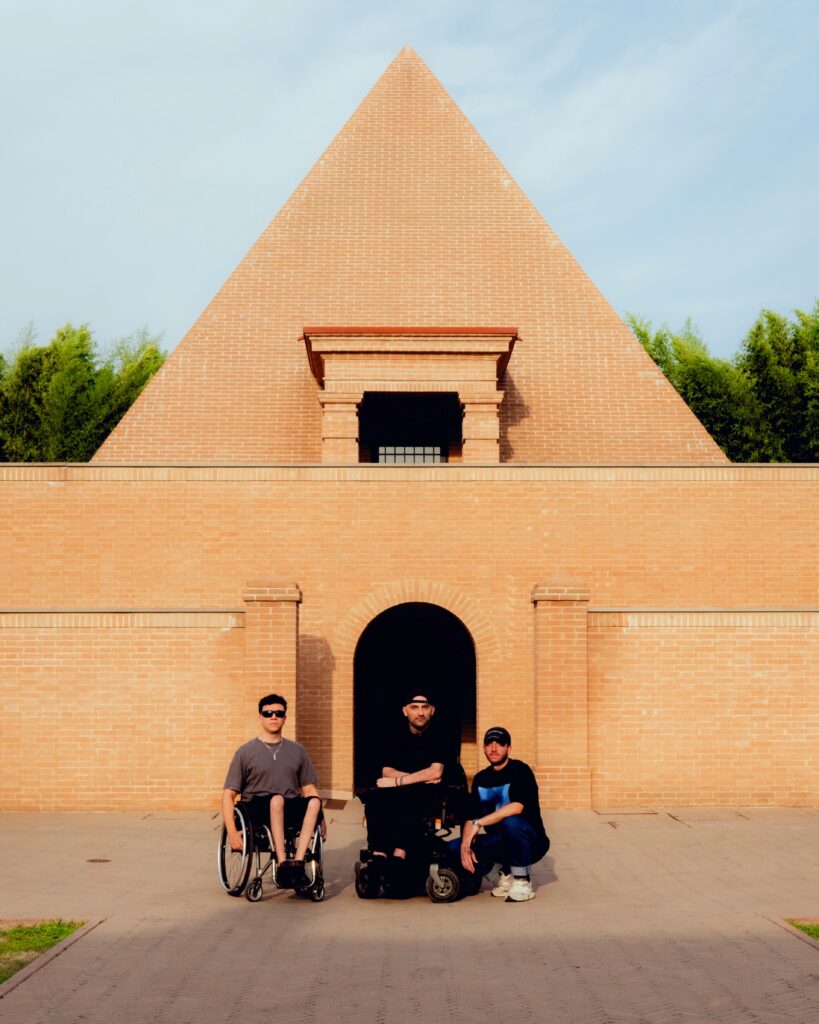
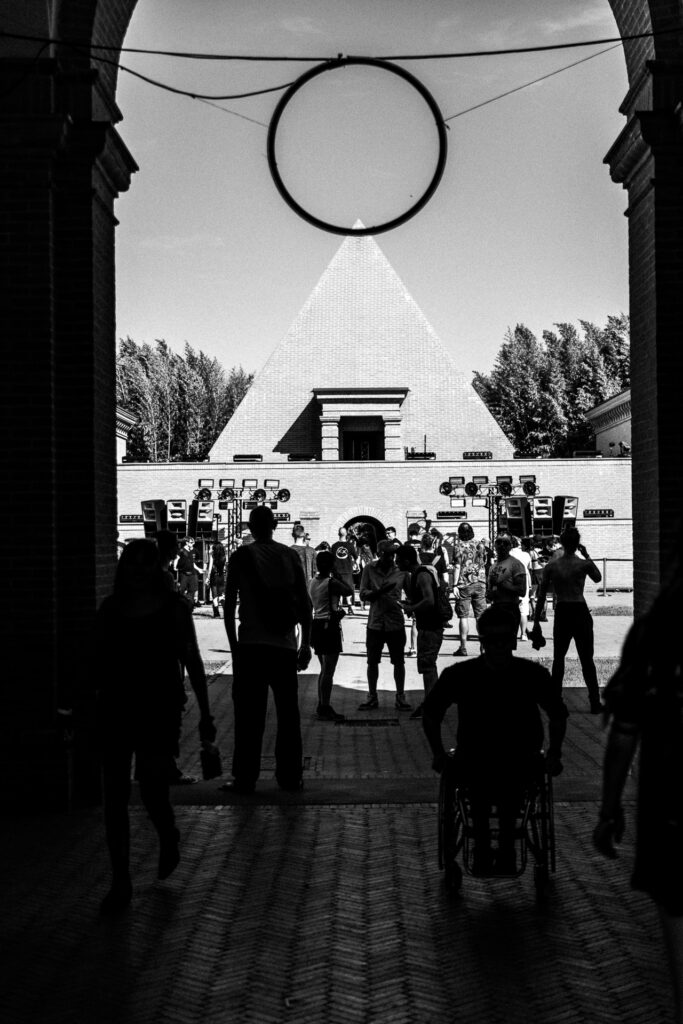
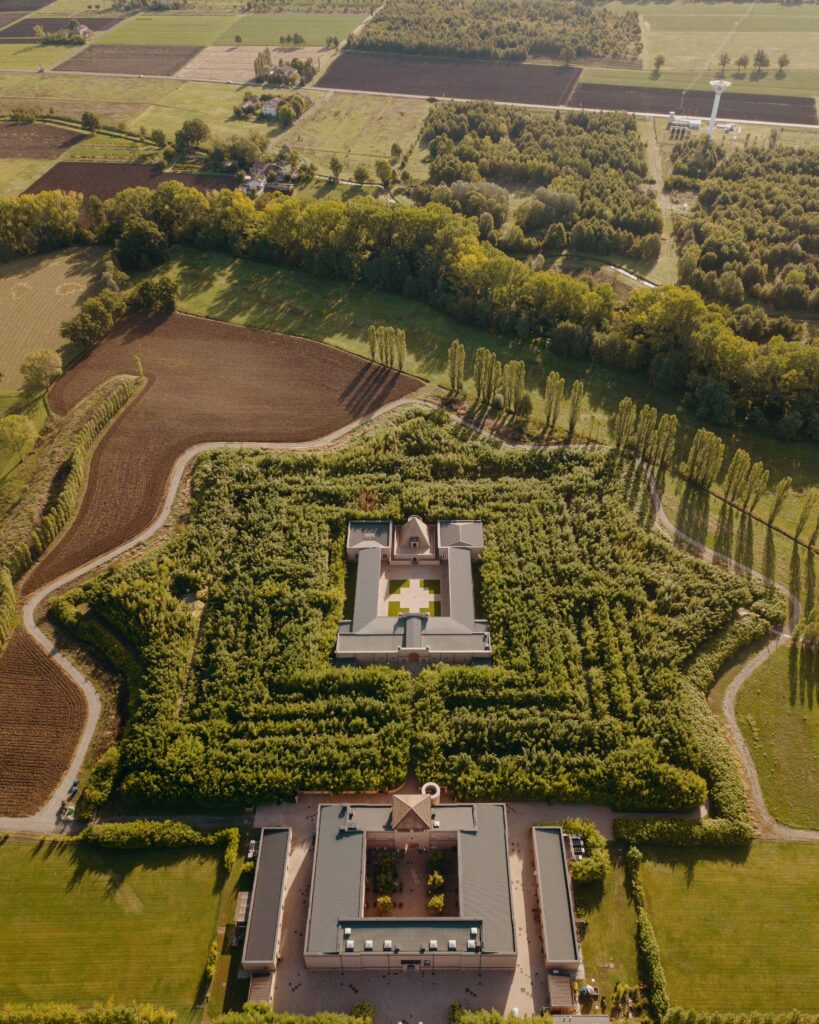
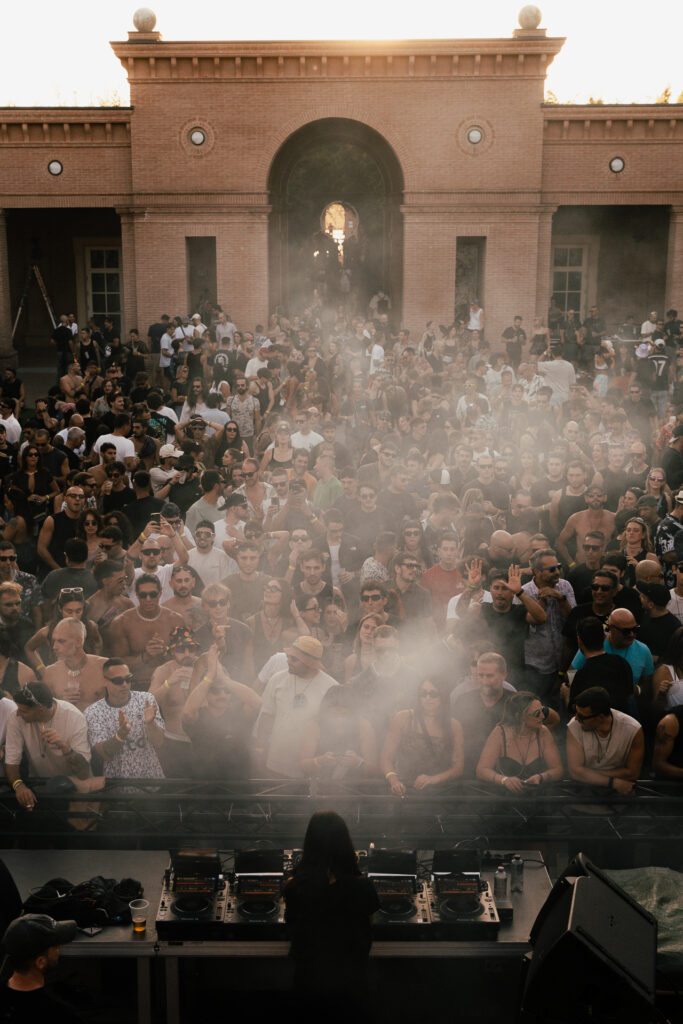
This philosophy comes together most visibly at the Frega Festival which transforms the seven-hectare grounds of the Labirinto della Masone in Fontanellato, surrounded by more than 200,000 bamboo plants, into an unconventional setting for electronic music. The choice of a labyrinth, a place traditionally associated with getting lost, feels particularly fitting for a project interested in challenging assumptions about how cultural spaces should work. At its core is FREGA’s idea of a Dancefloor Sensibile: a dancefloor understood not simply as a place to listen and dance, but as a shared environment where different bodies, experiences and ways of participating can coexist.
In the following conversation, FREGA’s three founders reflect on the experiences that shaped the project, the gap between talking about inclusion and actually practising it, and what it might take to make accessibility an ordinary part of nightlife rather than an exception.
© XXX
© XXX
FREGA feels deeply rooted in lived experience rather than concept. Can you take us back to the moment where the idea first became unavoidable?
You’re right. FREGA FESTIVAL wasn’t born from a concept. It was born from a contradiction. We’ve always believed that electronic music is one of the most democratic forms of culture. On a dancefloor, people don’t ask where you come from, what you do for a living or what language you speak. For a few hours, everyone shares the same space.
But the more we immersed ourselves in nightlife, the more we realised that this idea of equality wasn’t entirely true. Many people were still excluded, not because they didn’t want to be there, but because the space itself had never been designed with them in mind. That realisation changed everything. We stopped asking ourselves how to make nightlife more accessible and started asking a different question: what would nightlife look like if accessibility wasn’t an afterthought, but the starting point?
That question eventually became FREGA.
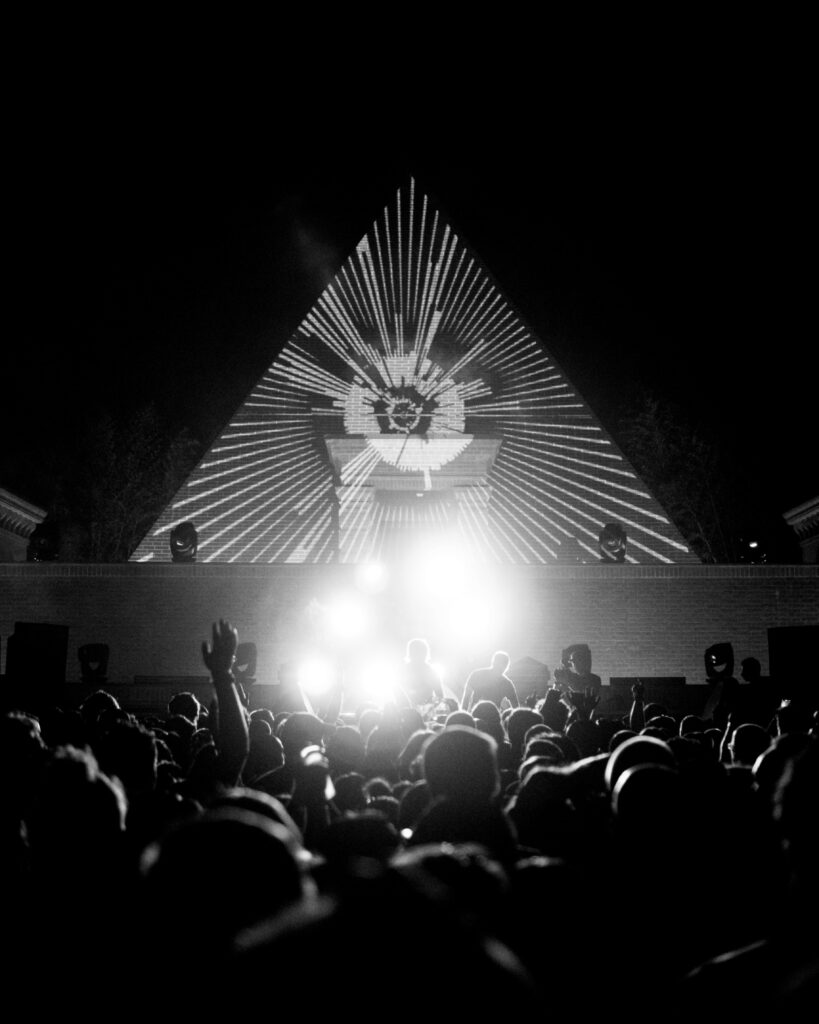
Today, the festival is only one expression of that idea. The DJ workshops, the music therapy, the collaborations with clubs and festivals, and even decisions such as removing the stage this year all come from the same belief that accessibility is not a service but a way of designing culture.
We don’t see FREGA as a project about disability. We see it as an attempt to rethink the relationship between people, music and space. If we succeed in making nightlife better for those who have historically been excluded, we believe we make it better for everyone.
Was there a specific situation in nightlife that made you realise: this space is not built for everyone?
Yes. What struck us wasn’t a single inaccessible venue, but a recurring pattern.
We realised that accessibility was almost always approached as an exception. Instead of being part of the design process, it was treated as something to solve only when a problem appeared.
If someone with a disability wanted to attend an event, organisers would often ask, “What do you need?” It’s a well-intentioned question, but it comes too late. The real question should be: “Why wasn’t this experience designed to include you from the start?”
That shift in perspective changed the way we look at nightlife. We stopped thinking about accessibility as a checklist of technical solutions and started seeing it as a design philosophy. Every decision, from communication and ticketing to transport, spatial planning and audience experience, has the potential either to include someone or to exclude them. The problem isn’t that people with disabilities don’t belong in nightlife. The problem is that nightlife has rarely been designed with enough different bodies, needs and experiences in mind. That’s the conversation we wanted to start.
How would you define the FREGA Project today? Is it a collective, a movement, an advocacy platform, or something that resists categorisation?
FREGA probably sits somewhere between all of those definitions, but fully belongs to none of them. We’re not simply an event organiser, because the festival is only one part of what we do. We’re not an advocacy organisation in the traditional sense either, because our goal isn’t just to raise awareness. We believe cultural change happens through experience. For us, nightlife is more than entertainment. It is a cultural space where people meet, build relationships and feel part of a community. If that space excludes someone, then it’s not just an accessibility issue, it’s a cultural one. That’s why FREGA operates on different levels at the same time. We organise festivals, run DJ workshops and music therapy programmes, collaborate with clubs and institutions, and work with artists who believe electronic music can also be a tool for social change. Before becoming organisers, we were clubbers, DJs and artists ourselves.
FREGA wasn’t born outside the scene looking in. It was born from within the culture we love and continue to be part of. Today, FREGA is the result of three founders with different artistic backgrounds who found common ground in the belief that electronic music can be more than entertainment.We use music as a cultural tool to create experiences, build communities and contribute to a more accessible nightlife.
There’s a growing tendency in nightlife to use the language of inclusion without implementing it. What, for you, distinguishes real inclusion from branding?
Today it’s very easy to talk about diversity, accessibility and community, especially on social media. What’s much harder is allowing those principles to shape the way an event is actually designed and turning them into real actions. Real inclusion starts with a mindset, but it doesn’t stop there. It happens through decisions that aren’t immediately visible. It’s the transport you’ve organised before people arrive. It’s information that’s easy to find. It’s staff who know how to respond to different needs. It involves people with different needs and lived experiences in the design process from the very beginning, rather than simply asking for feedback once everything is finished. Of course, feedback matters, and we listen to it constantly. But our responsibility is to do our very best before the event even begins, and then continue improving through experience and the voices of our community.
For us, accessibility isn’t an add-on. If it only appears in a communication campaign, then it probably isn’t part of the project. It has to influence the budget, the logistics, the architecture, the production and even the artistic choices. That’s the difference between inclusion and branding. Branding changes what people hear about your event. Inclusion changes what they actually experience when they’re there.
Clubbing is still largely designed around a very specific kind of body. What does it mean to redesign a dancefloor starting from different bodies?
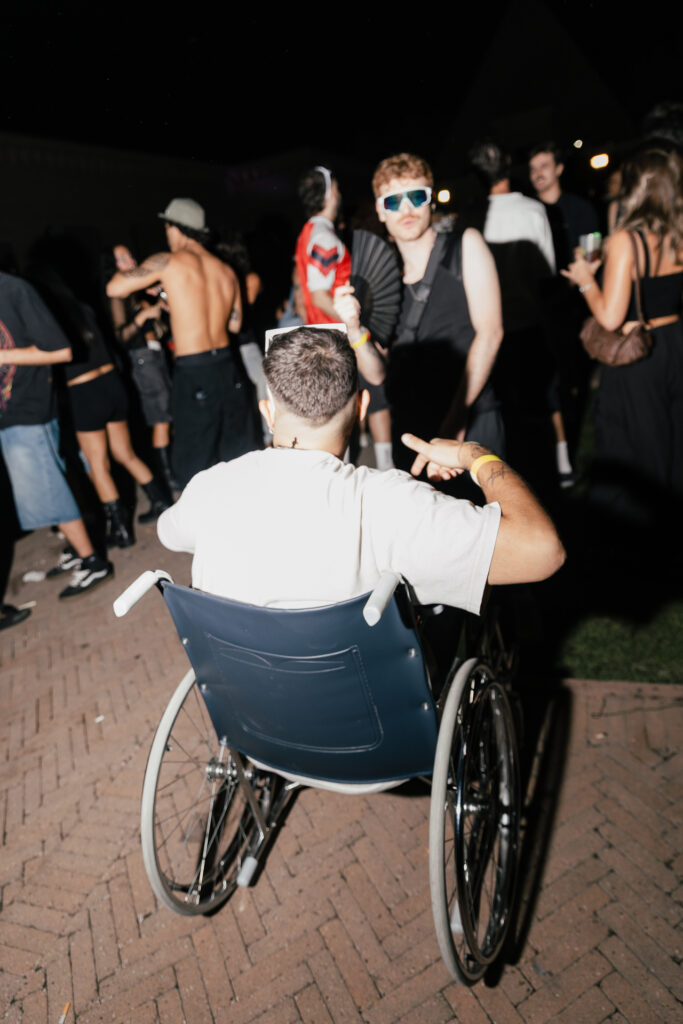
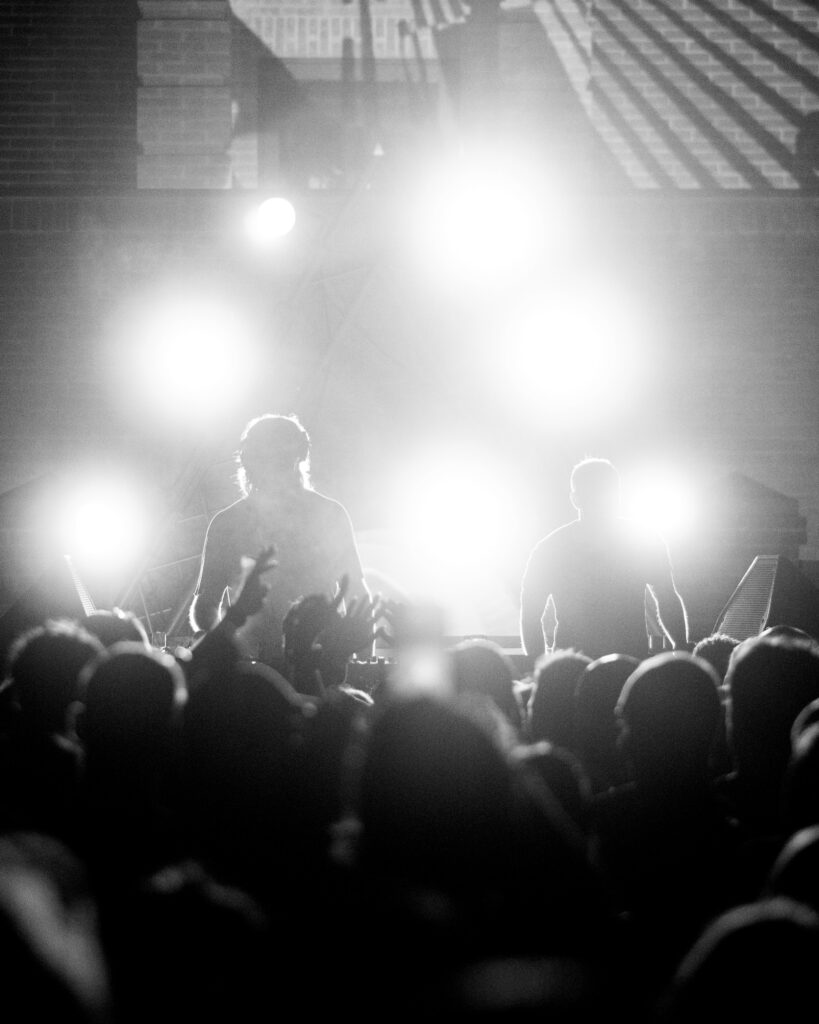
When you begin designing from different bodies, you don’t create a separate experience for a minority, you create a better experience for everyone. Clearer spaces, more intuitive circulation, better communication, accessible transport, trained staff and more thoughtful environments benefit far more people than we often realise. This approach has also changed the way we think about the dancefloor itself. We no longer see it simply as the area in front of the DJ. We see it as a shared social space where everyone should be able to feel present, comfortable and equally part of the experience. Ultimately, accessibility is not about designing for disability. It’s about recognising that there is no such thing as a “standard” body. The more diverse the people we design for, the more human the experience becomes.
© XXX
© XXX
When did FREGA stop being an idea and start feeling like a community?
There wasn’t a single moment. It’s been happening gradually, and it still is. Every event, every project and every edition brings new people who decide to become part of this journey. At first, people came because they were curious about the line-up or the project itself. Over time, we started seeing the same faces coming back, bringing friends, volunteering, sharing ideas and becoming part of what FREGA was growing into. That’s when we realised we weren’t just organising events anymore. We were building something people genuinely wanted to be part of.
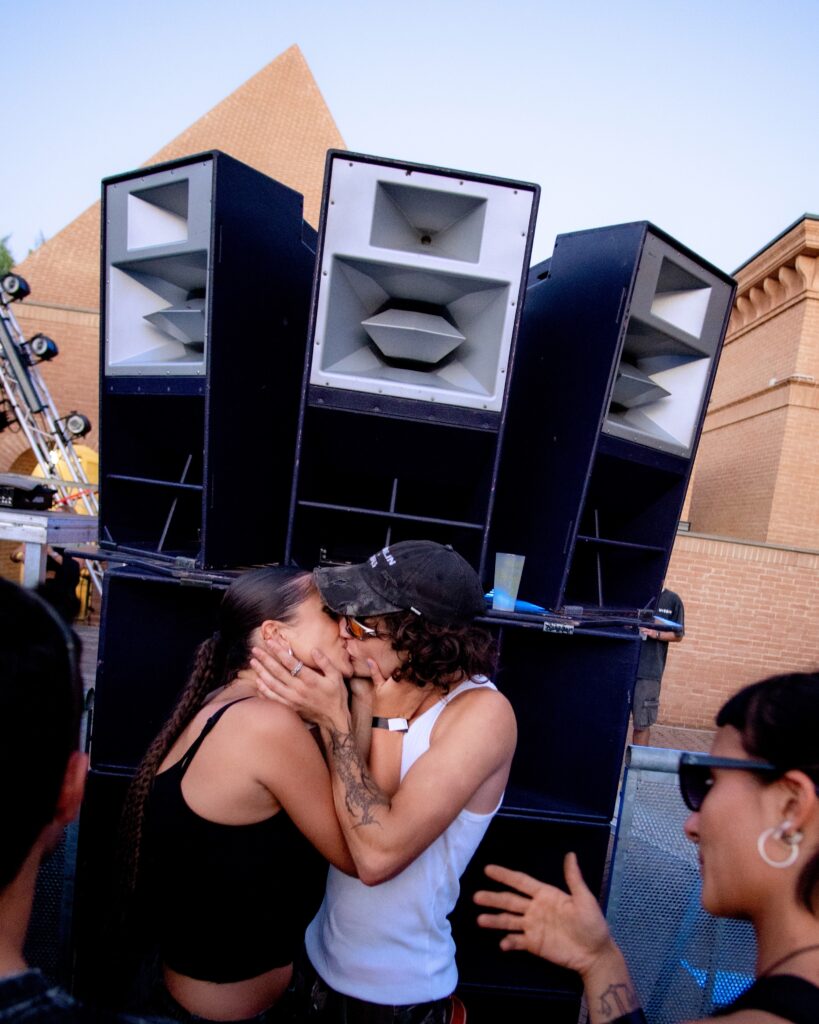
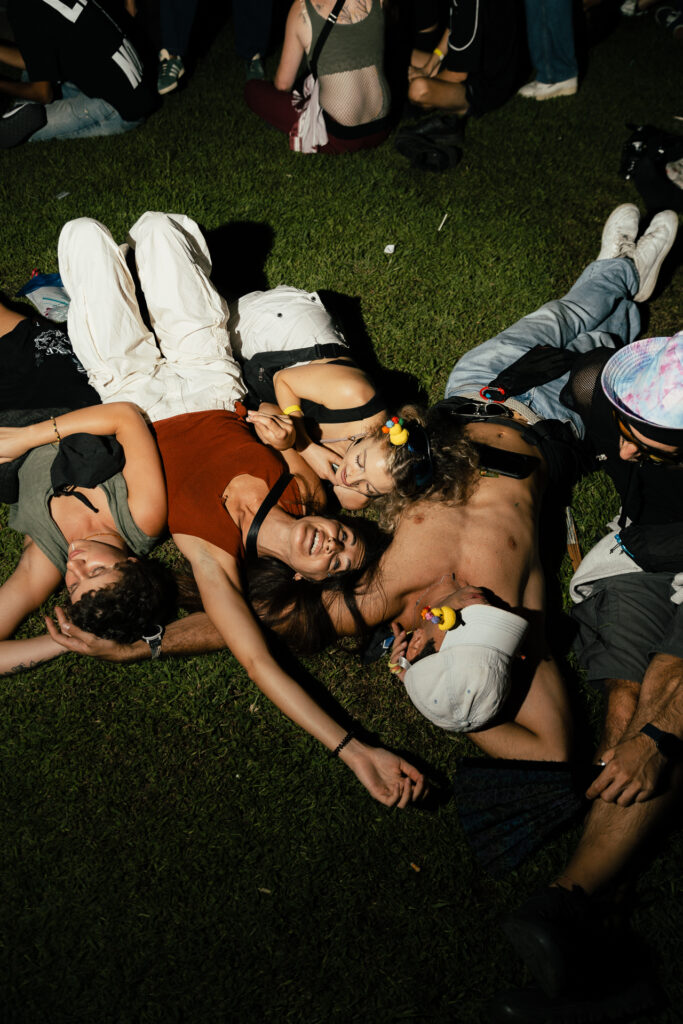
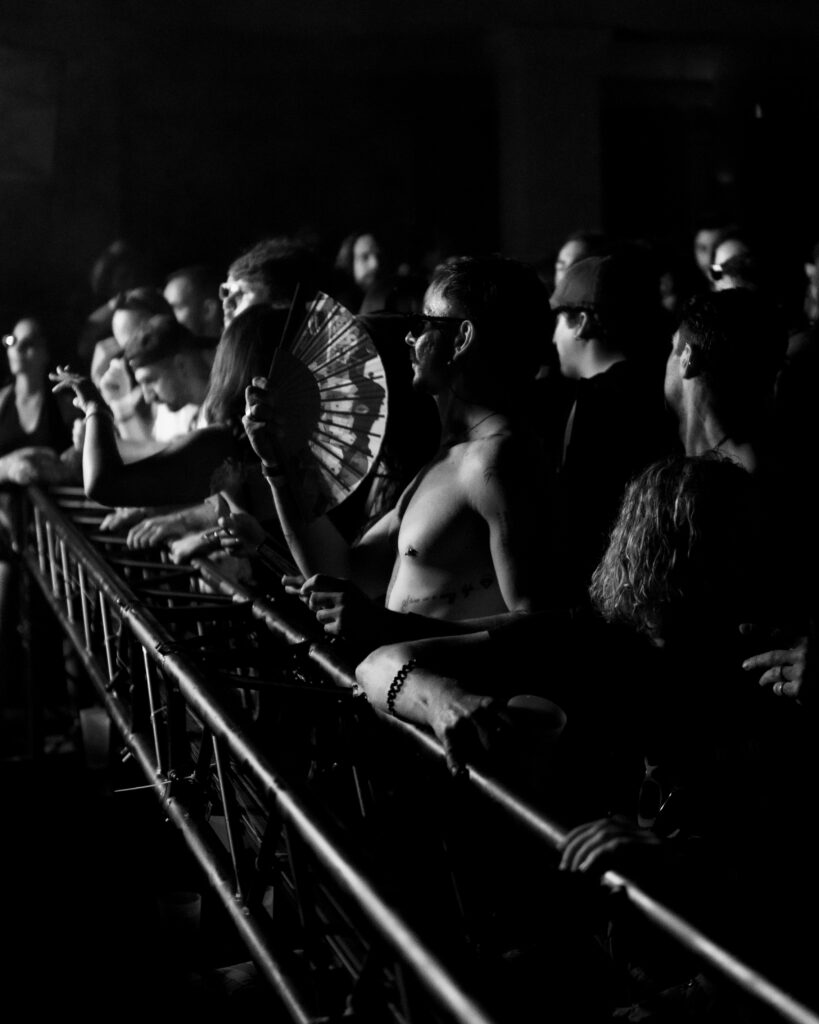
What makes us most proud isn’t the size of our community, but its diversity. On the same dancefloor you’ll find people who have been part of the electronic music scene for decades alongside someone attending their very first event. Professional artists, families, people with and without disabilities, all sharing the same space naturally. One of the most beautiful things for us is seeing people who might never have met anywhere else connecting through music, without labels or barriers. That’s when you realise you’re not just organising an event anymore, you’re creating the conditions for a real community to emerge. If FREGA feels like a community today, it’s because people no longer see it as our project. More and more, they see it as theirs.
FREGA Festival takes place inside a labyrinth which is a space historically associated with disorientation. What does it mean to host an accessible experience in a place designed to make people lose their way?
The paradox is exactly what fascinated us. A labyrinth is traditionally a place where you’re meant to lose your sense of direction. Accessibility, on the other hand, is often associated with clarity, orientation and predictability. Bringing these two ideas together forced us to rethink what accessibility really means. For us, accessibility doesn’t mean removing complexity or making every experience identical. It means making sure everyone has the possibility to experience that complexity with the same freedom and autonomy. The maze becomes part of the journey, not an obstacle to overcome. That’s why we think accessibility is never about simplifying a place. It’s about designing the tools, information and support that allow every visitor to explore it on equal terms. In a way, the labyrinth has become a metaphor for FREGA itself. We don’t want to erase the uniqueness of a space in order to make it accessible. We want to prove that even the most unexpected places can become inclusive when accessibility is considered from the very beginning.
© XXX
© XXX

What would an ideal future nightlife ecosystem look like if your ideas were fully realised?
Ideally, projects like FREGA would no longer be necessary. Not because the work is finished, but because accessibility would no longer be seen as something innovative. It would simply be part of how nightlife is designed.
We imagine a future where clubs and festivals don’t ask whether they should be accessible, but how they can create better experiences for the widest possible range of people. Where accessibility is considered alongside sound, lighting, architecture and artistic direction, not as a separate conversation, but as part of the same creative process.
We also hope to see more people with disabilities represented across every level of nightlife, not only as members of the audience, but as DJs, artists, promoters, technicians, photographers, designers and decision-makers. Inclusion doesn’t end at the entrance of a venue; it should be reflected in the people who shape its culture.
If one day accessibility becomes so deeply embedded in nightlife that it no longer needs to be pointed out, we’ll know we’ve achieved what we set out to do.
Special thanks to Gabriele Capponi, Mattia Koväl and Pre Silent for taking the time to speak with us and for sharing the experiences, ideas and work behind FREGA.
Follow FREGA Project on Instagram: @frega.project
Visit FREGA Project’s website: https://www.fregaproject.it/
Visit FREGA festival’s website:https://fregafestival.it/
We would also like to thank XXX (@XXX), Fabiana Amato (@fabiana__jpeg) and Mattia Acito (@matacito) for the photos.