A Short Introduction to Blaxploitation Soundtrack Albums

Before you dive into this article, treat yourself to the playlist with music we’ll discuss.
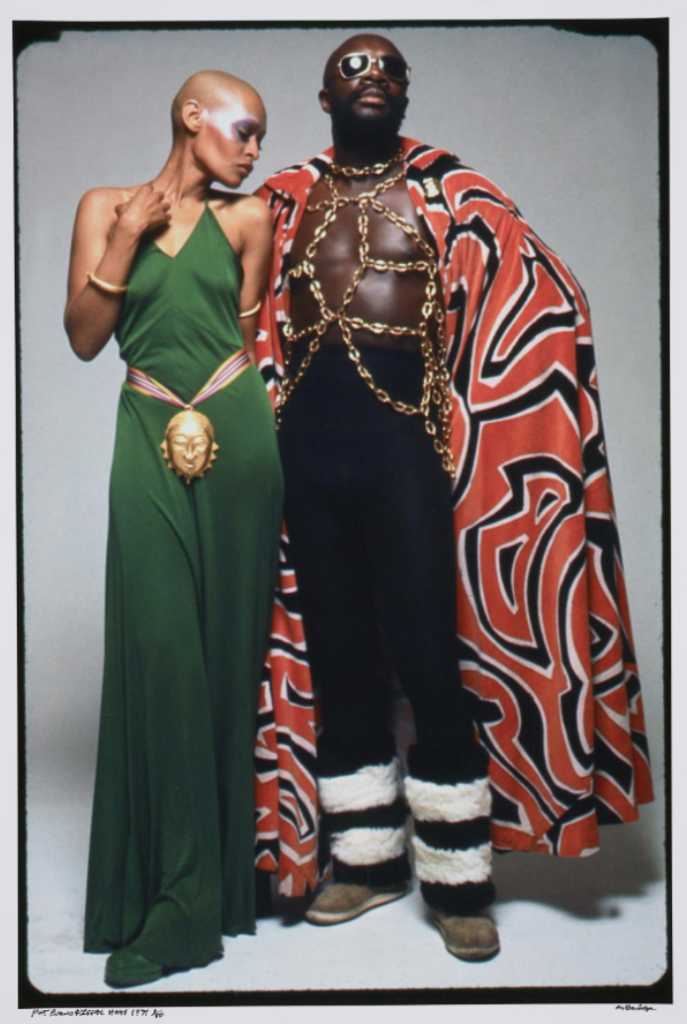
Collection of the Smithsonian National Museum of African American History and Culture,  © Anthony Barboza
There was once a short-lived phenomenon spanning different mediums that changed pop culture forever. Imagine you could find the source of countless classic hip-hop samples, a major missing piece in your idea of film and music history, and an abundant trove of music and film recommendations all at once. All neatly laid out and explained in this almost bite-sized introduction. You’re welcome!
 
Let’s drop some names: Marvin Gaye, Curtis Mayfield, James Brown, Isaac Hayes, Roy Ayers, Bobby Womack… These aren’t just the greats of soul and r’n’b but also authors of classic soundtrack albums to films of a sub-genre called Blaxploitation. Whether you realize it or not, you’ve encountered some of said music, or influences of the entire affair. The artists I mentioned are only a tease. A tidy list of top ten or twenty albums wouldn’t do, as the entire point is that there’s a whole world you may be inclined to explore. But let’s explain the basics first.
 
You may have heard of exploitation films. They flourished especially when Hollywood was still catching up with the counterculture of the 1960s. Americans could then seek an edgier alternative to mainstream releases, usually available in ”grindhouses” or drive-in cinemas. What was being so ominously exploited was a trend or a provocative theme: sex, drugs, cannibals, sharks, whatever stuck. There are dozens of sub-genres christened, for example, sexploitation, jawsploitation (for films spawned by the success of Jaws), nazisploitation, or brucespolitation (for kung fu flicks inspired by the legend of Bruce Lee, often starring unrelated actors such as Bruce Li, Bruce Le, Bruce Lie, and even Lee Bruce).
 
Hence, the term blaxploitation. Perhaps you’ve noticed that the color of one’s skin is hardly a trend. Well, to Hollywood it was a sort of a novelty, as racial minorities were scarcely and poorly represented in mainstream films up until then. Yet, with the zeitgeist you might recall, in the early 1970s, for the first time ever, making films for and about Black people started to seem like a profitable and fashionable idea.
The term blaxploitation is much wider than other sub-genres. A stereotypical blaxploitation film was about Black gangsters, pimps, and sex workers, all wearing incredible outfits and often more sure of themselves than anybody you’ve ever met. On top of that, it was often made by white directors and producers, rendering the ”exploitation” part of the name extra relevant. Then there were also films by Black directors, including some that were pretty much art films, perhaps earning the ”exploitation” label only by pushing the boundaries of what could be shown on screen. In this context, blaxploitation is more of an era.
 
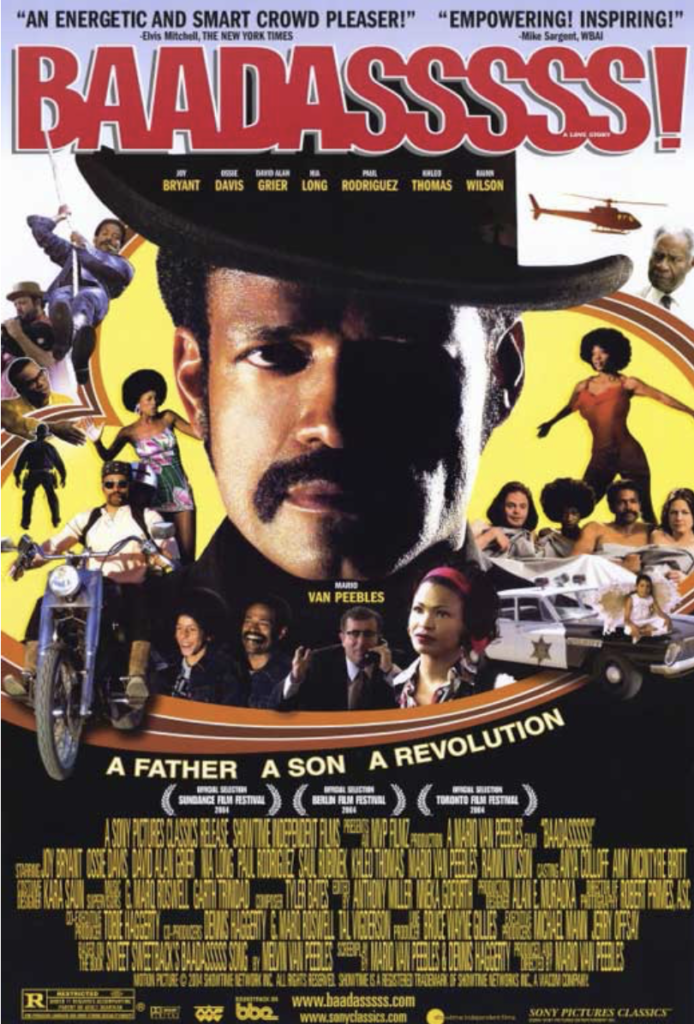
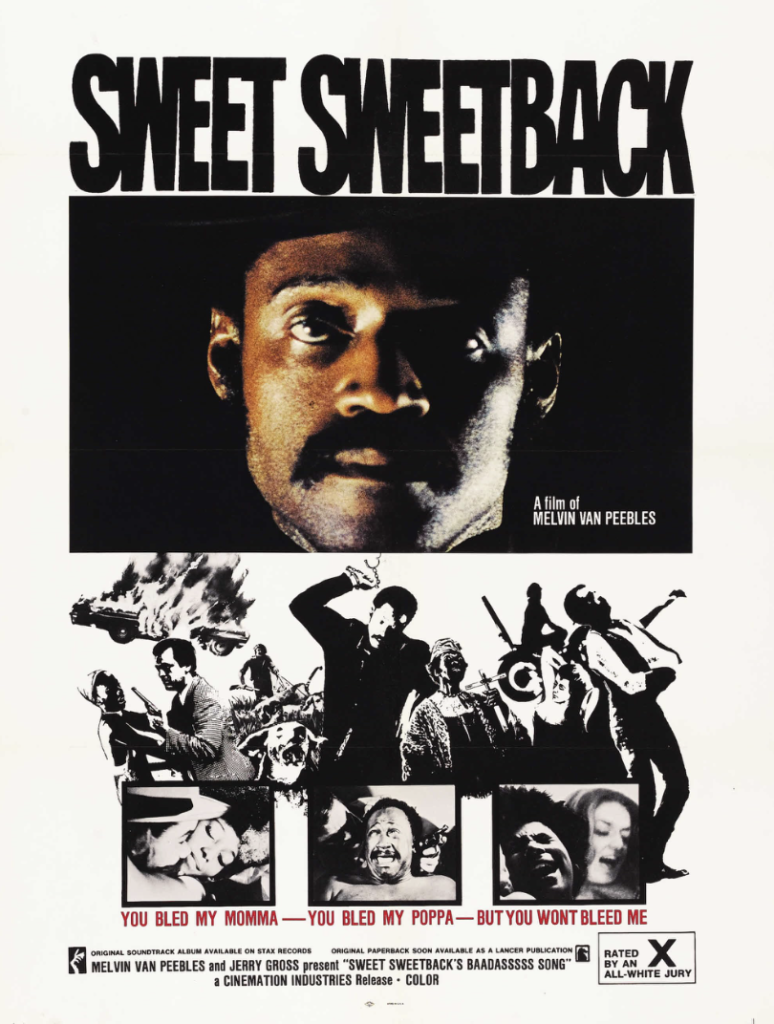
Now, we’re ready to talk about the films and their music. Some say the genre started with an extremely profitable, provocative, yet funny art-film called Sweet Sweetback’s Baadasssss Song (1970). I don’t recommend it as a starting point, as it may feel like a cryptic inside joke, and the same goes for the soundtrack. It’s about an orphan raised by sex workers who as an adult performs a sex show with a drag queen until he gets into trouble with police, and starts to (literally) run across America (okay, maybe the joke isn’t quite so cryptic when you summarize it like that…). Its director, an important Black artist Melvin Van Peebles, left a groundbreaking directing contract with Columbia to write, direct, star and co-finance this film. The making of it is a crazy story, and there are films and books about it. 

Posters of Sweet Sweetback’s Baadasssss Song and the film about its making, Baadasssss! (2003), made by Van Peebles’ son, Mario. Mario also starred in Sweetback as the young version of his father’s character, losing his virginity to a prostitute in a controversial scene.

You may recognize fragments of Van Peebles’ song ”Come On Feet” from Quasimoto’s song of the same title.

But let’s focus on the music. It was written by Van Peebles himself on a kazoo, and performed by a then-unknown band Earth, Wind & Fire. What’s most notable is that, lacking money to promote the film, Van Peebles figured he would release the soundtrack first, and this way gain recognition for the project. At the time even hit musicals had LP’s with their music released months after the films’ premieres. So basically, this alternative artist came up with a corporate wet-dream of a synergic marketing strategy. Let’s try to appreciate it. The producer Robert Stigwood built an extraordinary career doing exactly that, cross-promoting event films and hit soundtracks that defined the 1970’s, such as Saturday Night Fever, Tommy, and Grease. The prolific kazoo composer, Van Peebles, ended up publishing many more albums, including two soundtracks to his musicals.
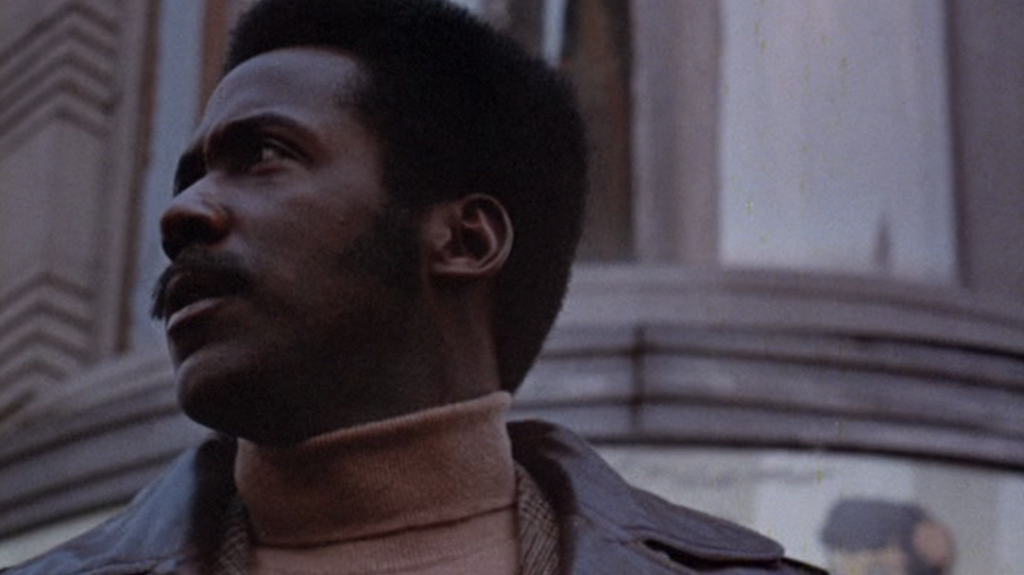
Still from “Shaft” (1971)

One of the most important soundtracks came from a film that was long due. Because why wasn’t there a Black detective yet? Then came Shaft (1971), whose titular hero was a handsome and infinitely cool private “dick” sporting black turtlenecks and leather coats. Isaac Hayes was hired to write the soundtrack while his label Stax was in serious trouble due to disadvantageous old contracts. That quickly changed, as both the film and the album became huge hits. Moreover, the theme song, which was not unlike the ones for Bond films, won an Oscar. It makes all the sense, as it’s great, but it may seem curious that a song with an opening line “Who’s the black private dick that’s a sex machine to all the chicks?” became all that celebrated in the mainstream decades ago.

Yet, I left out an important detail. You should google Shaft’s director Gordon Parks. Before venturing into filmmaking, he was a highly renowned photographer, often documenting Black life. His work is widely exhibited to this day, and Steidl Verlag publishes several albums with it yearly. 

Interestingly, many of his iconic photographs were referenced in a music video of Kendrick Lamar’s ELEMENT. See more here.

So, if you’re starting to see the picture I’m trying to suggest, making this piece of mass entertainment was deemed a worthy pursuit even by a prime artist and intellectual such as Parks, because the Black audience deserved an inspiring “bad mother” of a hero of their own. It was also an occasion to celebrate Black spirit and culture of individuality and flamboyance (Hayes’ performance at the Oscars surely celebrates it). Last but not least, the entire genre lets us into neighborhoods and communities not many films do. You can see New York like you have never seen before. 
 
But let’s move on. It just so happens that the man’s son, Gordon Parks Jr., directed another classic of the genre, Superfly (1972). We are here for the music, though, so what’s most important is that along came the biggest masterpiece of this whole soundtrack genre, done by Curtis Mayfield. 
 
There’s a notable discrepancy between the film and the music. The protagonist of the film is a Harlem drug dealer Youngblood Priest (very fly, in fact), who tries to outsmart everybody around him, raise a fortune and skip town. As the audience, we’re inclined to see him succeed (there’s a huge discourse about the genre’s glorification of crime life which I can’t get into). Yet, while the film features mostly instrumental versions of Mayfield’s songs, on the album you’ll also hear brilliant lyrics sung by him.
 
If you listen even just to Pusherman, which you’ll probably recognize, you’ll get the point. The album focuses on somber social realities which make it clear that Super Fly’s “game” has its losers, or rather victims. And this time we’re on the side of people whose lives and families are destroyed by gang activities and drug trade. Of course, all this social critique is set to incredibly rich and textured soul music. Its range is mind-blowing, as it can go from spry cinematic funk of Junkie Chase to a heartfelt ballad like Think.
 

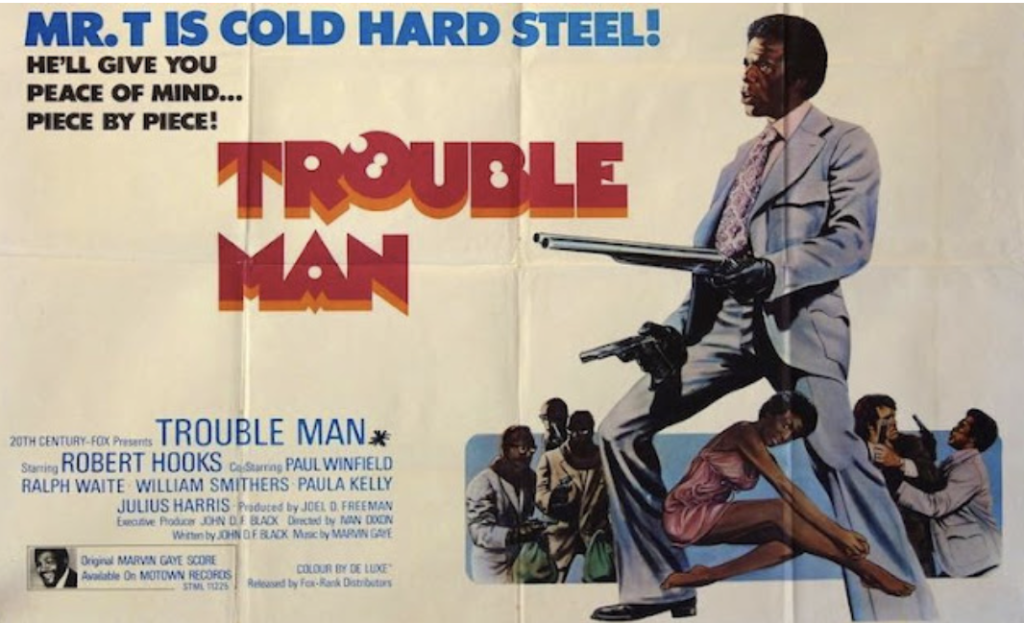
Just as rich and textured is the musical landscape of Marvin Gaye’s soundtrack to Trouble Man (1972). The titular Trouble Man, usually known as Mr. T, is not a gangster but a club owner, detective, and authoritative figure always willing to help his community. He navigates a labyrinthine plot against him while never losing his cool.  What’s not substantiated by the album’s sparse lyrics, is that it largely expands on the film’s emotional register, and can feel like a spiritual successor to Gaye’s seminal work of socially-conscious soul, What’s Going On, carrying its spirit sonically.
The unforgettable groove of “Blind Man Can See It” was sampled on almost 60 songs, including Das EFX’s anthem “They Want EFX.” Talk about an earworm!

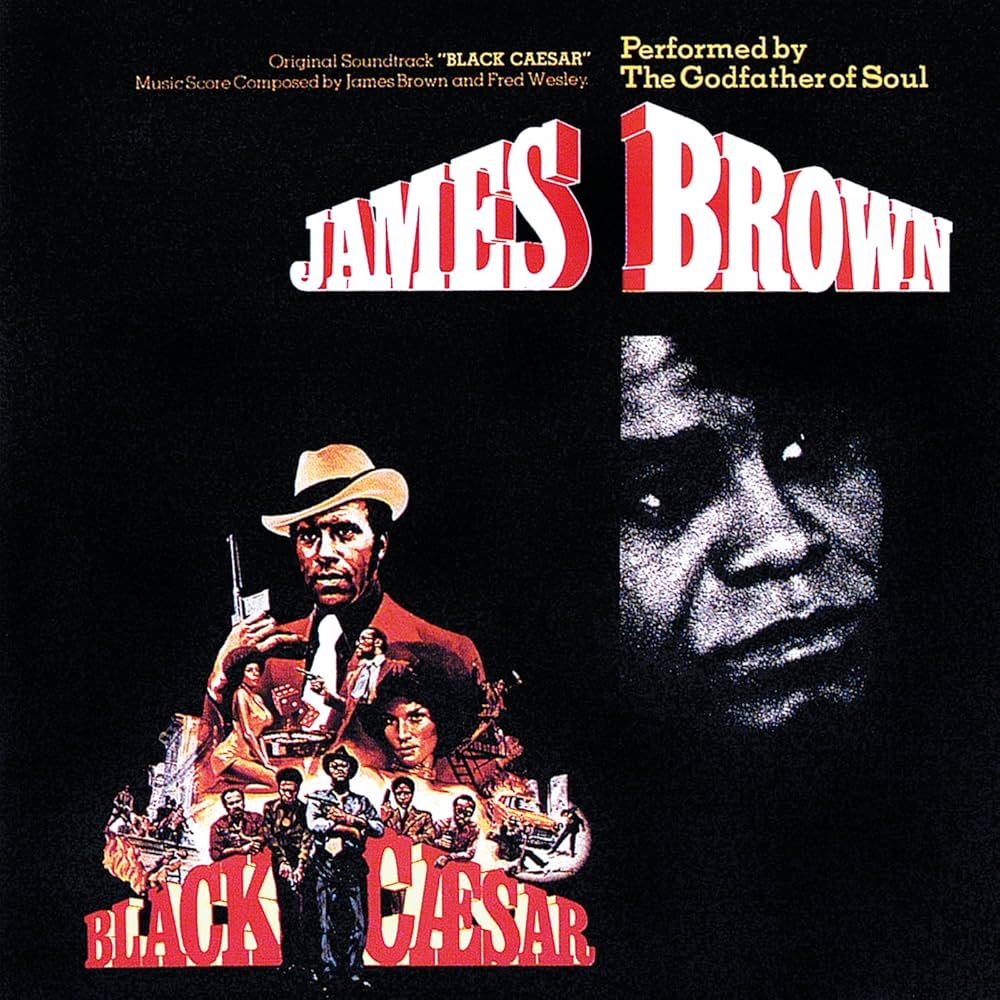
Now, on a very different note, as we’re slowly getting done with the biggest classics, James Brown also participated in the genre and delivered the soundtrack to an action crime film Black Caesar, which reworks the classic gangster film from 1931, Little Caesar, and I’d argue is better than it (you may know this one from Bugs Bunny’s impression of its star, Edward G. Robinson).

Brown’s album gradually became a classic and a trove of countless hip-hop samples (you can explore hundreds of songs that sample it here and here).

Interestingly, it sounds pretty much like a regular James Brown LP – one can easily listen to it and never guess its original purpose. Yet, it’s a great fit for the film’s energy, and for its virile hero played by the athlete Fred Williamson. Brown also accommodated the film’s unexpected depth with a track like Mama’s Dead. Think about it, have you ever seen an action film which score made you want to dance?

Here is where we’re leaving you for now. But if you tune in on a later date, we’ll follow this introduction with plenty more blaxploitation soundtracks, including deep cuts and rarities that are rarely written about, more insights about the genre’s relevance, and, well, more of everything. You’re in for a treat!

About the Author

Mateusz is a Warsaw-based creative and writer, especially keen to explore the intersections of film, music, and literature. He holds degrees in Philosophy and English Studies. His master’s thesis concerned the use of popular music in the films of 1960s and 1970s. Mateusz believes that stories only wait to be discovered, and is developing his first novel where all his interests finally collide.