Alarma: Keeping Paris’ Warehouse Party Culture Moving
Alarma’s first event, numbered #00, took place in an unnamed warehouse on the outskirts of Paris in October 2023, with a line-up of artists rarely seen in France. There were no photographs, no videos and almost no promotional explanation beyond a simple invitation to a new kind of rendez-vous. The door policy was both inclusive and deliberate: 21 and over, selection at the entrance, and zero tolerance for discrimination. From the beginning, Alarma seemed less interested in being seen than in creating a space where people could fully disappear into the music.
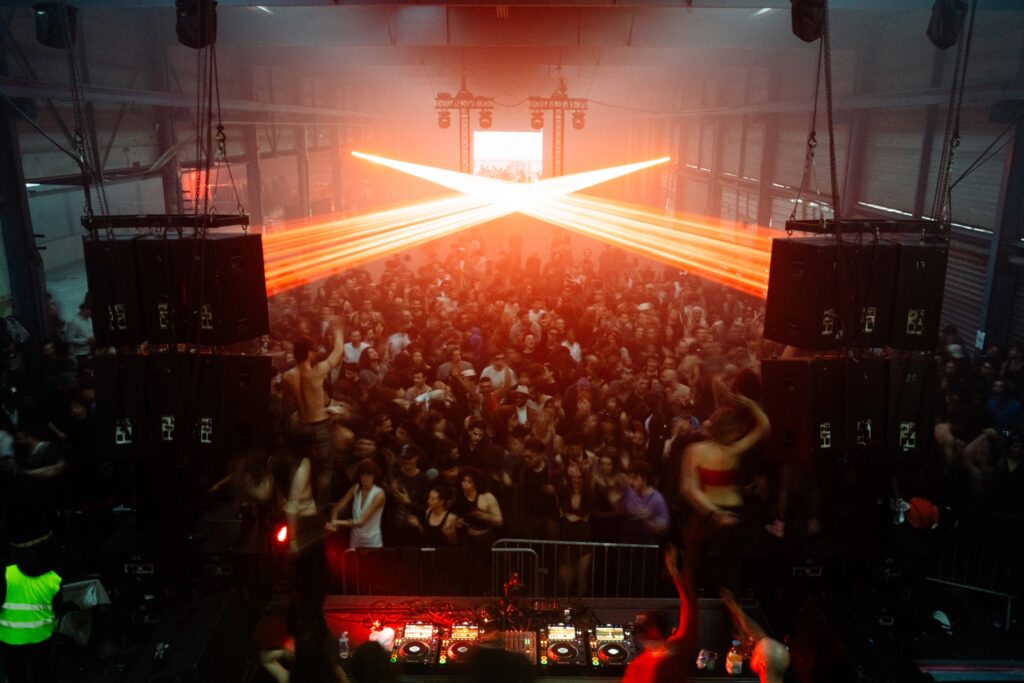
The name itself suggests urgency: an alarm is a signal, a disruption, something that demands attention. Yet Alarma’s approach is more considered than its name might imply. Its events are numbered rather than simply dated, gradually building an archive of experiences rather than a conventional party calendar. Its line-ups move between established and emerging artists.
Behind the events is a group of friends who describe Alarma not as a conventional work project, but as a community built around a shared desire to bring warehouse parties back to Paris. Since its first edition, the collective has moved through warehouses in Montreuil, Saint-Denis and other locations around the city, while continuing to invest heavily in sound, emerging artists, accessibility and the experience of the crowd. Its approach is deliberately non-commercial: ticket prices have been kept low, line-ups are shaped by diversity as well as artistic quality, and the collective sees its audience not simply as consumers but as participants in the wider scene.
This philosophy becomes particularly significant at a moment when Paris’s warehouse culture faces increasing uncertainty. For Alarma, the warehouse is not simply a location but a format that allows the collective to express its ideas about freedom, community and music. At the same time, the instability of these spaces comes with considerable financial and logistical risks, making every event an act of commitment.
We spoke to the Alarma team about the origins of the collective, the friendships behind it, their approach to programming and sound, and what it means to build a more accessible and less commercial space for electronic music in Paris. We also discussed the future of the warehouse scene and what it would take to protect it.
How did Alarma start?
It started in 2023. It was just my group of best friends coming together and wanting to put together a party that looked like us. At that time, three or four years ago, there was a real shortage of warehouse parties in Paris, after the end of Possession and some other warehouse parties that really blew up during COVID. So, it was very frustrating for us and we wanted to bring them back.
And how did the founding members come together? Was it just a friend group?
Yeah, the three co-founders are literally best friends in life, so it was very natural. It doesn’t feel like a work project. It’s more our community of friends creating things together.
Do you remember the day when it became official that you were going to do this?
I don’t think there was a specific moment. We had this idea, looked for information, and tried to build some knowledge about what we needed to do: what the prerequisites were and what we needed to keep in mind. And so, we got started. I think it was probably four months before the actual first party. We launched everything four to six months beforehand.
Can you tell us more about the first party?
It was a test party. Our idea from the beginning was to start big. We didn’t want to start small and then slowly evolve, because that wasn’t our vision. Our vision was to do the party we had in mind from the beginning.
Do you think it was harder than you expected to organise a warehouse party?
It’s a lot of work. It was a very stressful time. We had no idea how it would turn out, but we put our hearts into it. We worked a lot, and it was exhausting. I remember the day of the party. We arrived in the morning and were thinking, “How do we do this?” We had sound people working for us, which made it easier, but all the logistics and everything around it was really learning by doing. And, of course, we implemented some of the ideas we thought were the best of what we had seen at parties around Europe. We found a warehouse and booked artists. Our first line-up was Beau Didier, Bours, Cult, Juicy Romance, and Dissolver.
Did you have any references for warehouse parties that you wanted to base your party on?
Obviously, Possession was the reference in Paris, for sure. Regardless of everything, it’s still one of the most memorable and impactful parties that Paris has ever seen. But we also based our inspiration on what we saw abroad, especially in Amsterdam. We had a really defining moment in our friendship with my co-founders at Levenslang in Amsterdam during ADE. There was a party that started in the evening, around 7 or 8 pm, and everybody had to be there before 9 pm. Then the doors were closed. It created a vibe where people were really there for the music. They came early and really connected. It was one of the best parties we had been to together, and it inspired us a lot.
How did you come up with the name Alarma?
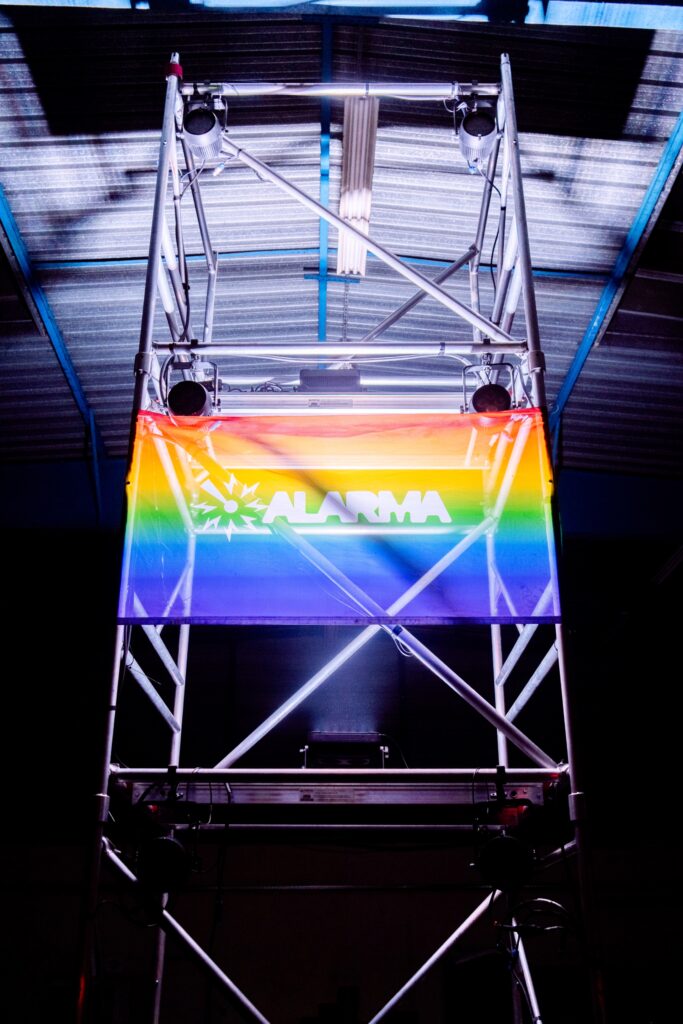
It’s related to a sense of urgency, something that you need to be aware of: alarm. We had everything around that firefighter aesthetic with hazard signs. It’s that feeling of unleashing everything that blocks you in day-to-day life, and having a real space of freedom where you can let go.
What are the roles inside the collective? As you said, there are three co-founders.
There is a larger team. We have what we call a close circle, which is maybe around 10 people in total. We don’t have official tasks or roles, but usually the three co-founders discuss line-ups and the artistic direction in general. We also have a graphic designer who works with us. He’s a very good friend and helps us with everything related to the visual direction. Then we have a photographer who also helps us produce content for our social media promotion, such as interviews and other things. And, of course, we have our close-circle team, who help whenever and however they can. During the parties, for example, one of our friends is responsible for all the entrance fees, handling the influx of people in the queue, everything around door scanning, etc. We also have people responsible for awareness and safety, as well as one friend responsible for artist care in general. But it’s not something that is set in stone. We adapt according to our needs.
Before organising parties together became a kind of work, it was first and foremost a true human connection. That’s what we have with the whole team. Being friends and building this together, trust in each other, is more important than any disagreement we might have about Alarma.
So, in your understanding, the decision-making process is easier and better by being friends first?
Yes, friendship comes first anyway. It’s something that has helped us. It has strengthened and cemented our friendship. When you come to think of it, it’s a very intense experience to share as a group of friends. It’s as if we live through intense moments that would count for years of a regular friendship. We’ve done so many things in such a short time. It feels as though we’ve been friends for decades. And we spend a lot of time together as well, because we need to.
How do you create line-ups and choose artists? Is it a group decision? Is there a specific goal when you’re choosing a line-up, in terms of what direction you want the night to develop?
We do have some preferred styles that we want to have at our parties. I wouldn’t say we’re a one-style party. We let it breathe and have different influences. Sometimes it’s a little darker and sometimes it’s a brighter and happier vibe. We really like to keep the freedom and flexibility of not constraining ourselves to one particular genre. Usually, we make lists of artists that we want to book and try to create a good line-up out of those. We also look for a good combination. One rule we have is that we need to have representation on the line-up. So, you will never see an all-male line-up at Alarma, for example. We try to have as much diversity as possible. We also try to have some local artists. We don’t always manage to, but if we can get local artists to be part of the line-up, we’re happy to do it.
What do you think makes Alarma different from other warehouse parties in Paris?
I mean, it’s hard to tell. I would probably be biased. But this is what I’ve been told, anyway. First is the crowd. To me, my biggest pride in Alarma is the crowd we have, because it’s very authentic, passionate, diverse and open-minded. You can feel that they’re really into the music. When you go into the crowd and make eye contact with anyone, everybody’s smiling at you. It feels very genuine and very safe. So, in a way, what makes our events special is the people.
I don’t know. I think probably all the collectives are very committed and passionate about what they do, so I wouldn’t know exactly what is different. I don’t know, what do you think?
First of all, I just wanted to say that everyone is smiling, myself included, because there’s such a genuine appreciation among everyone here, something that’s surprisingly rare in Paris.
What I also love is that you can tell that you guys are genuinely enjoying the party yourselves. You can see how happy and content you are with how everything has turned out. You’re right there in the crowd, dancing and enjoying the night alongside everyone else. That really creates a different kind of atmosphere. There’s no distance between the people organizing the party and the people attending it. Everyone is sharing the same energy, and you can really feel that throughout the crowd.
Yes, we try to keep in mind that the reason we wanted to do all of this is to party. It makes total sense to me that, during the party, I should actually dance and not just stand there watching. What I love to do is go into the crowd. That’s the best spot for me. Of course, I go in the back sometimes to be close to the artists or maybe to have some chill time. But what I love most is really being in the crowd, facing the sound system. And I think people also feel that we’re all here to have a good time.
I think one of the things you do really well is bringing in big names while also giving space to new and emerging talent. That balance is really well done, because the parties never feel mainstream or overly commercial. It still feels authentic and true to the underground scene. Honestly, it’s one of the best warehouse parties I’ve been to in Paris. The quality is outstanding, from the music to the overall experience, and at no point does it feel like a commercial event.
Actually, what you said about quality is important. We invest a lot in it. The quality of the line-up is essential to us. Of course, it’s key to have emerging artists because we have to and love to support the upcoming scene. And in parallel being able to book our favourite artists is a true luxury and always feels a little surreal! Especially when you connect with them on a human level and get to exchange ideas about music and the scene in general.
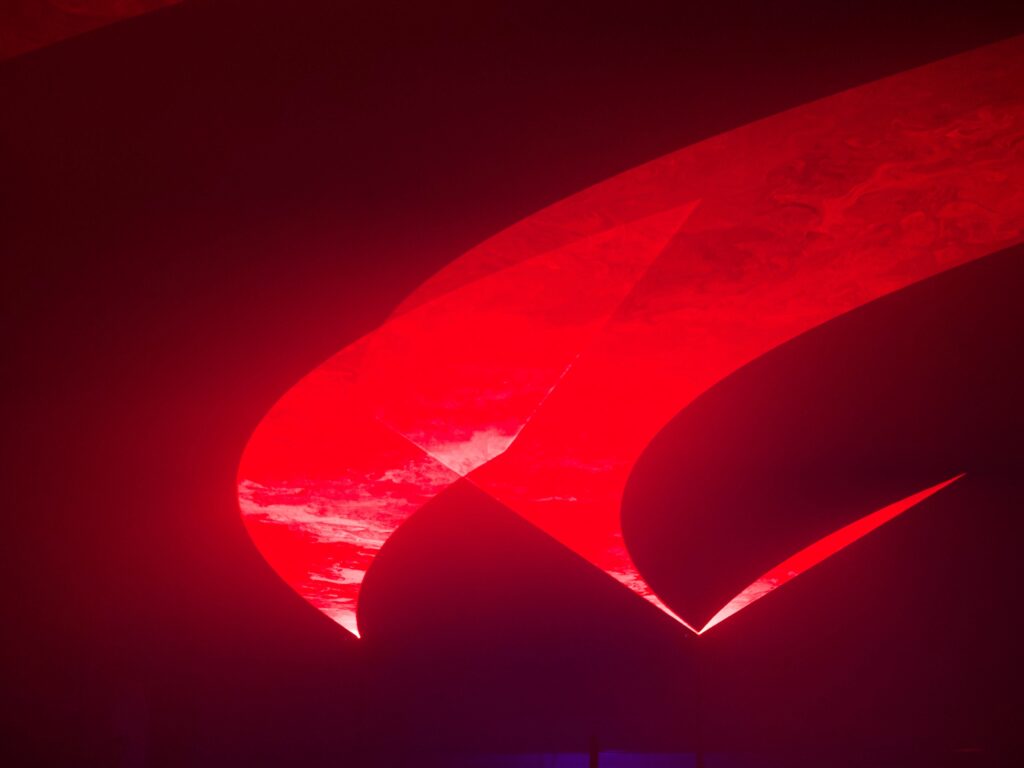
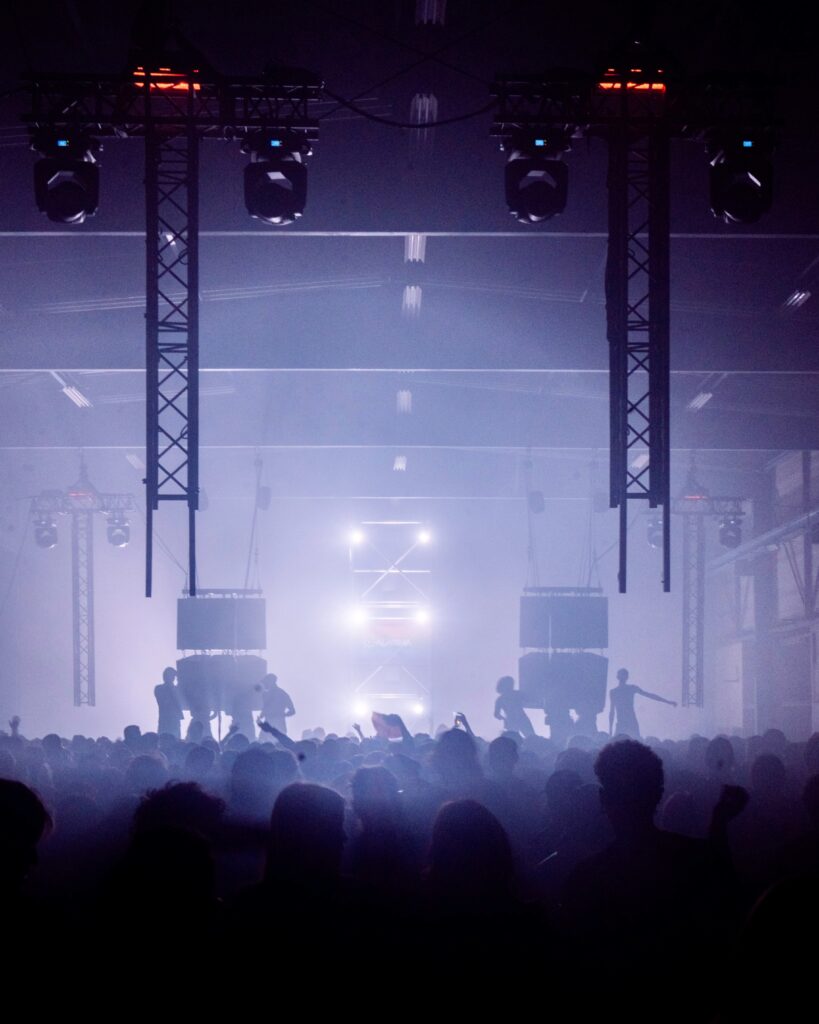
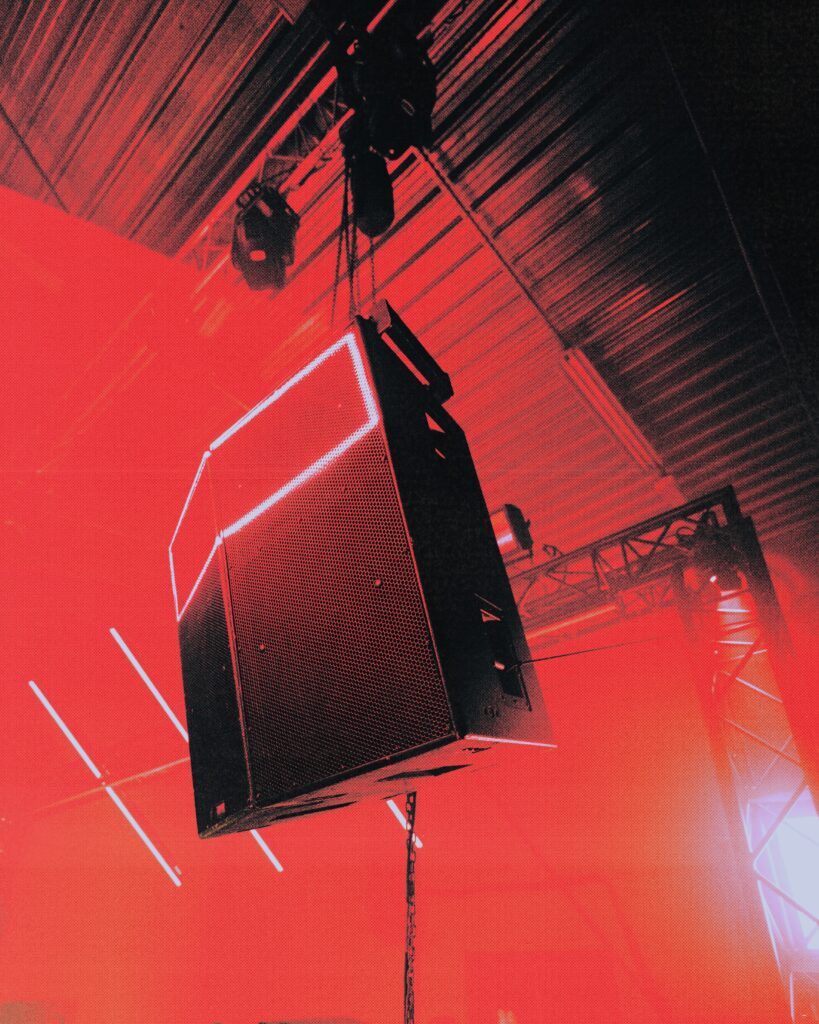
We also invest a lot in the sound system. There are really no savings that we try to make on the sound system. That’s why we put so much time, money and effort into it, because it’s really the heart of what we do.
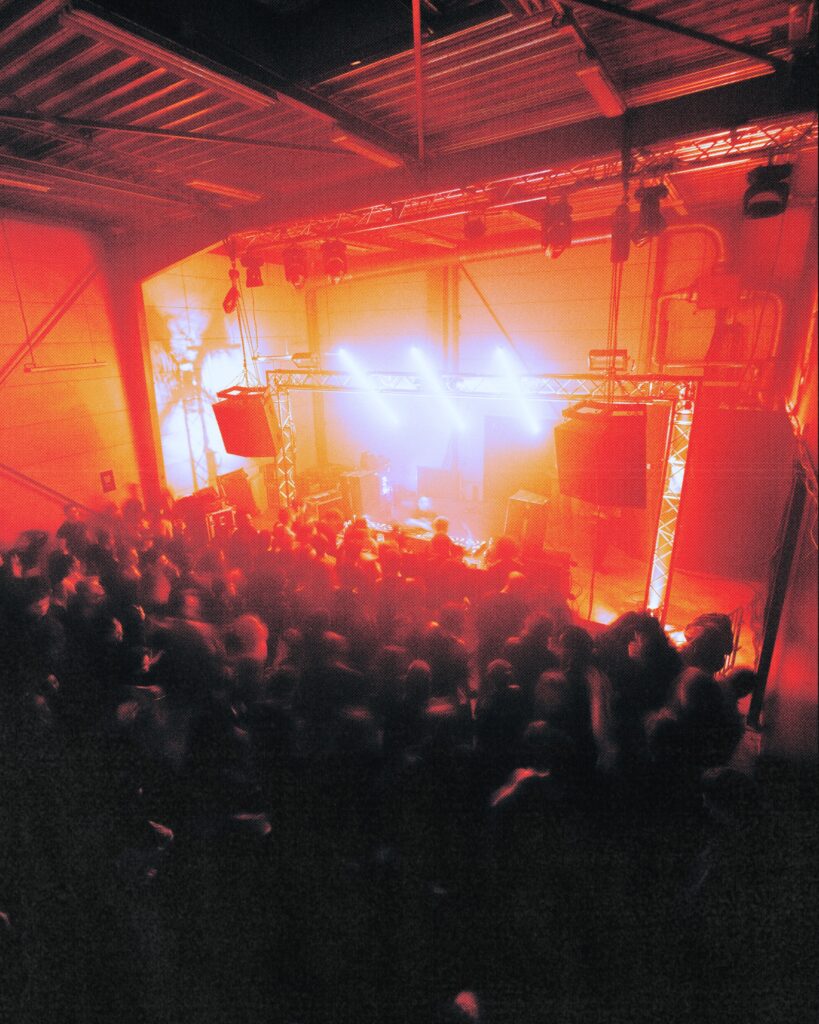
You have been very transparent about the costs you have, how they are distributed and what motivates you to organize these parties. Obviously, it’s not money. Can you share why you decided to be transparent and what message you’re trying to convey?
To us, what we do is not something that we should carry on our shoulders alone, because I feel that what we’re doing is just contributing to the scene. And the scene is not only the promoters like us. It’s also the crowd and the artists. So, to me, being transparent is a call for people to feel involved, to feel that they also have a role to play and something to bring to the table. By being open about it and saying that we’re not here to make money also reassures people that they’re part of something bigger than us and bigger than them.
Another message we want to convey is that we try to make tickets affordable. We have actually reduced our ticket prices since the beginning of the project, and I think we’re the only ones who have done something like that. We see that prices tend to increase a lot. Sometimes you can find a warehouse ticket for more than €30 or €35. But at Alarma, it was important for us to keep tickets affordable. So, the maximum you would pay is €23. I feel that this is how you build a good crowd, because a lot of people unfortunately don’t have financial means to go to a party. By making it more accessible, we also bring in a crowd that may be more excluded from other types of parties.
What are your future plans for Alarma? Is there something new that you want to create, or do you want to keep the existing format?
Obviously, we want to keep improving what we do. But I feel that the warehouse format is really the one that makes the most sense for us and the one in which we’re able to express our vision the most. So, I think we’re going to continue with that.
Of course, we’re bringing in new additions, improving things and making them better. We’re also working on scenography to change it every time and create a surprise effect. But for now, the key concern is finding spaces where we can hold our parties. With the ongoing law and everything, now is unfortunately not the time to start thinking about new concepts. We need to make sure that the existing concept continues.
That was my next question. Can you tell us about the French law and how it endangers the warehouse parties you are organising?
To be honest, we don’t know much more about the law than any regular person. We’re not involved in any way in discussing what this scene would need or how it could improve. I’m very open to saying that there are things to be improved and things that we can help make safer and better. But I don’t think that answering this with a repressive approach is the way we’re going to make it safer for anybody. It’s just going to make illegal things even more illegal, and people will need to take risks.
For example, you really see how Berlin values the cultural impact of techno and the club scene. I think Paris is a very interesting place. A lot of amazing artists come out of here. A lot of good collectives are here. A lot of creativity exists here. I just think that it needs to be protected and fostered. And the thing is, politicians have the opposite approach, which honestly, to me, is reducing the cultural importance of Paris which should be, and has to be, a cultural spearhead for Europe. Maybe sometimes, honestly, it could be better than Berlin in some aspects, because we have more of those raw infrastructures. But there is no realisation from politicians about that.
And the final question is if you had unlimited resources, what would you do with all your money? Is there some kind of dream project that you’re currently limited from doing because of financial constraints?
I would try to find a permanent venue that we could use as a warehouse, but also perhaps as an artistic space. Just having a safe space where we know we can organise parties without fearing cancellations or other risks. Because we carry a very high financial risk every time. We’re talking about tens of thousands of euros that we need to invest in each event. And, you know, we’re not playing Russian roulette.
That’s a good ending. We’re not playing Russian roulette.
We would like to thank Alarma for sharing thoughts and experiences with us.
Follow them on Instagram: @alarma.paris
We would also like to thank Baptiste Zanardi (@zazanas_001) for the photographs.