Bassiani: Before the City Returns
After moving to Paris, I’m rarely in Tbilisi, though I still return during the Christmas and New Year holidays. Shortly after arriving this time, I saw that Bashkka, a DJ I deeply like, was playing at Bassiani in Horoom, under Hydrash, a queer-led event promising intensity, dizziness, and a kind of overwhelming euphoria. It felt timely.
Earlier that night, I had attended the Drag Ball. By the time it ended, exhaustion had already set in, but neither my friend nor I were ready to let the night close. We went back to her place to recharge properly, sitting down to a real dinner at four in the morning. We promised each other, sealing the promise with a proper handshake, not to let tiredness decide how the night would unfold. Dinner, followed by hot coffee, did the job. We ordered a taxi and headed back out.
On the way, our taxi driver, dressed in a crisp white shirt at nearly five a.m., started asking us about clubs in Tbilisi. Which one was the best, he wanted to know. “The one we’re going to now,” I answered, before mentioning others too: TES, Left Bank, Mtkvarze, Khidi, places that, by simply existing, sustain the city’s electronic music ecosystem.
© Daro Sulakauri
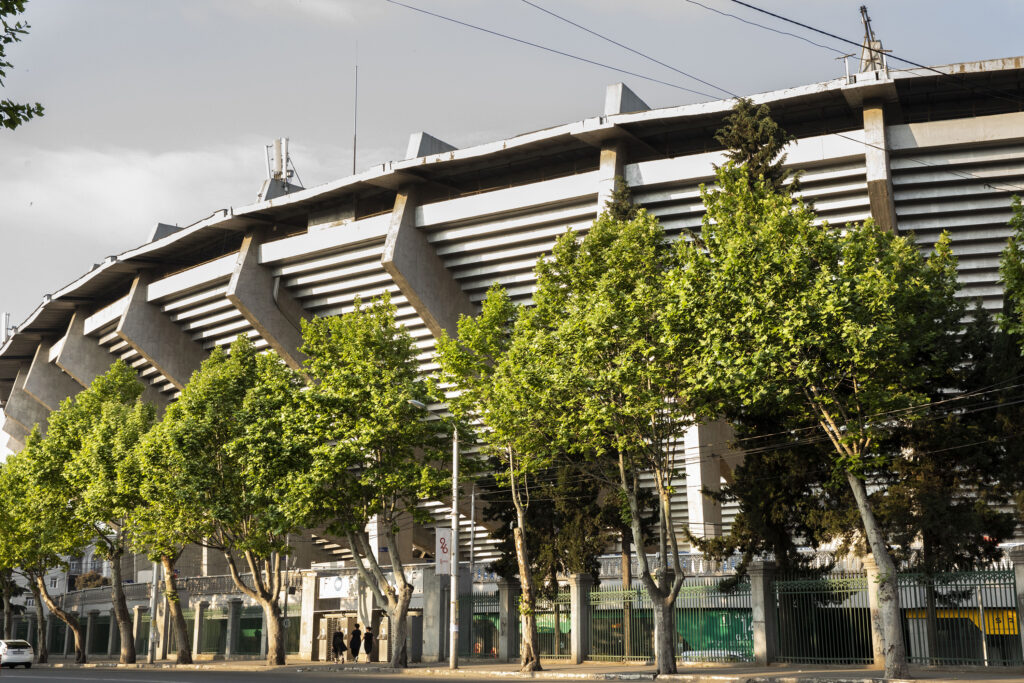
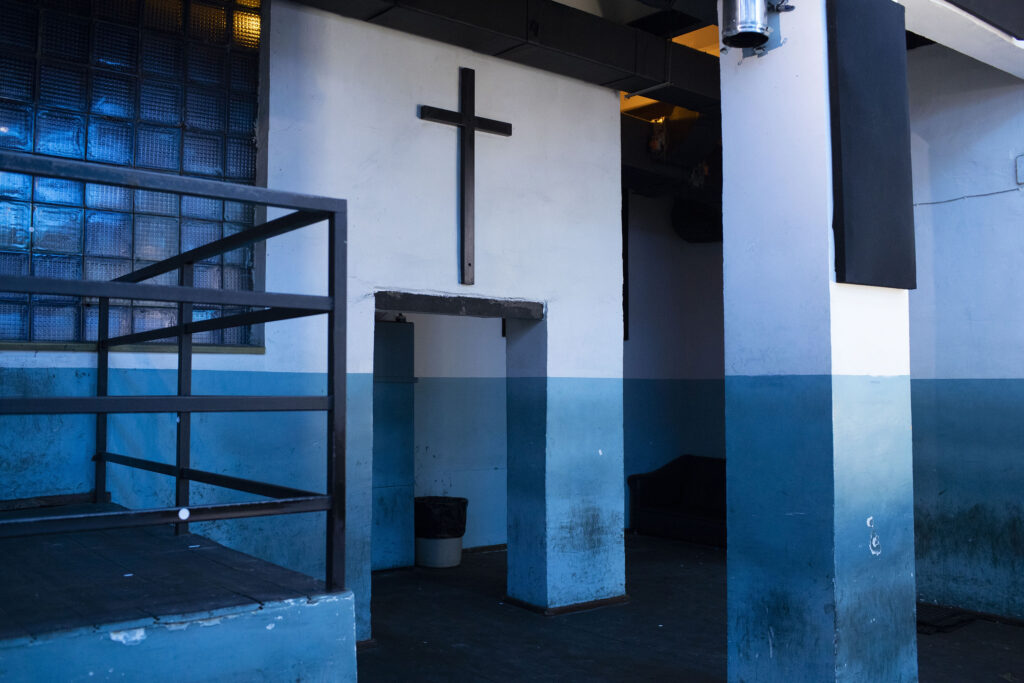
Bassiani is not just a techno club in Tbilisi. It has become one of the places through which Georgia is known internationally: for its underground, industrial atmosphere, its commitment to electronic music, and for the kind of freedom it offers, if only temporarily. The club is located beneath Dinamo Arena, inside a former swimming pool repurposed as the main dancefloor. You enter the city’s largest football stadium and descend underground, into a space repurposed for something else entirely.
© Daro Sulakauri
Founded in 2014, Bassiani operates across two rooms: the main room, Bassiani, and Horoom, a smaller space often dedicated to LGBTQ+ nights and more focused on slower, more experimental programming. The names of these spaces are not arbitrary, they are rooted in Georgian history. Bassiani borrows its name from the Battle of Basiani, a 13th-century conflict that came to symbolize resistance and survival, while also playing on the idea of being “one with the bass.” Horoom takes its name from Khorumi, a traditional Georgian war dance built around collective movement, circling, advancing, and returning. Together, the two names mirror each other: one anchored in confrontation and endurance, the other in choreography and unity. Over the years, it has become a meeting point for local and international artists alike, many of whom first encountered Georgia through this space.
© Daro Sulakauri
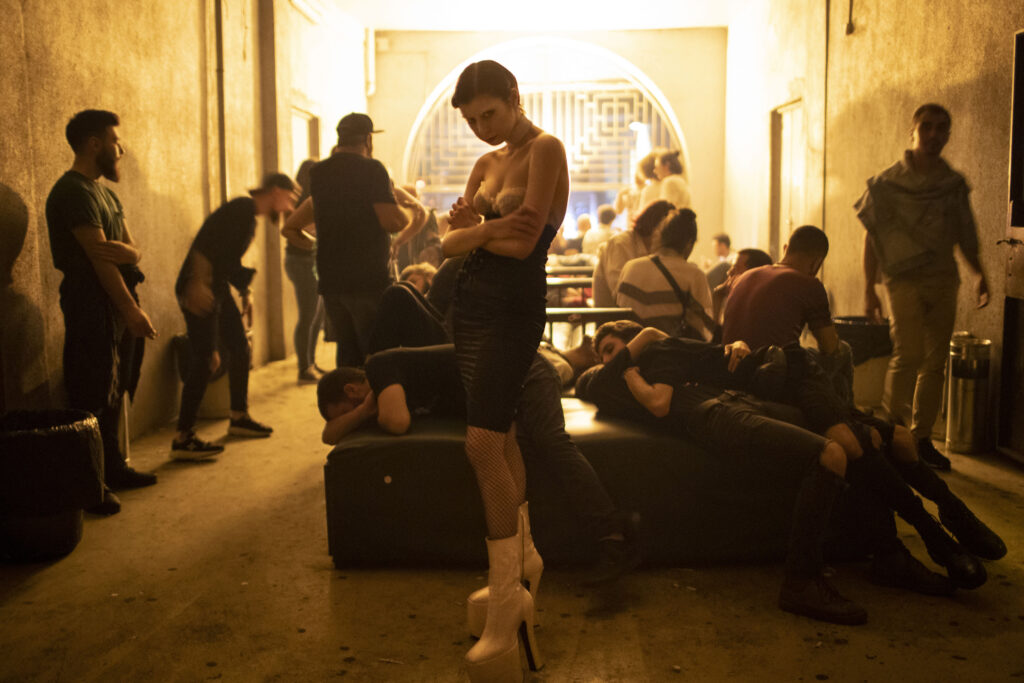
To understand what Bassiani represents for people in Georgia, it’s impossible to separate it from the broader political and social context. Georgia sits in a constant tension between aspiration and reality. Younger generations increasingly align themselves with European values, while homophobia, conservatism, and deep social divisions remain very present. Many queer people are still not open about their identities within their families or workplaces. Against this backdrop, Bassiani functions as more than a venue. For a few hours, it becomes a space where people can exist differently, where trust in the night feels possible.
© Daro Sulakauri
This context also explains the club’s strict door policy. It isn’t about exclusivity for its own sake. Georgia’s drug policy is among the harshest in Europe, with high prices, poor quality, and significant risk involved. Alcohol remains the most accessible substance, which in turn increases the likelihood of aggression in nightlife spaces. Selectivity at the door becomes a form of harm reduction, a way to protect an environment that is meant to be safe for minorities and vulnerable communities.
Any account of Bassiani also has to return to 2018. That year, police raided the club under the pretext of combating illegal drug sales. People were forcibly removed from the space, dragged out of the darkness and into the open. What followed were mass protests in front of the Georgian Parliament, where demands for drug policy reform and outrage over police violence spilled into the streets. I remember those days clearly. The protests turned into daytime raves, dancing becoming a form of resistance. The united movement became political. Bassiani, in that moment, extended far beyond its walls.
That context doesn’t disappear. Arriving at Bassiani always produces a slight disorientation. The scale of Dinamo Arena above ground, and what exists beneath it.
Going back to my night, upon arrival there was no queue. We were quickly in front of the door staff, who questioned us closely about the night we were entering. Given that this was a queer event, the scrutiny felt necessary rather than performative. We were let in.
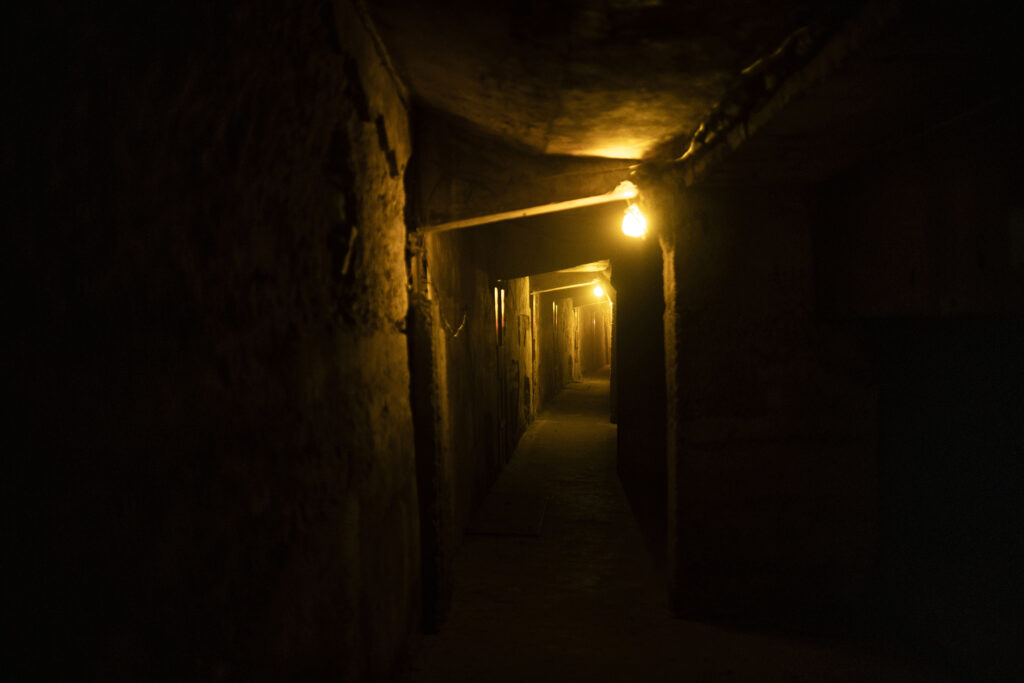
We moved through the familiar dark corridors and up the stairs to Horoom.
The room was dense with darkness. Smoke hung in the air, making it hard to see more than a couple of meters ahead. Darkness on the dancefloor is crucial for me. I don’t shy away from dancing in bright spaces, but there’s something profoundly relieving about not being seen. When the gaze disappears, even the passing one, so does the internal commentary, the self-monitoring. You move without checking yourself.
In Horoom, that darkness creates a specific kind of freedom. It allows anonymity, closeness, and touch without exposure. It offers something rare: the ability to exist, to move, to kiss, without calculation. The darkness doesn’t just hide you. It holds you.
© Daro Sulakauri
We arrived just as Bashkka was starting her set, and it felt like the room shifted the moment she took control. Known for a presence that resists easy categorization, her name literally means “different”. Bashkka brings a sound shaped by years in New York’s queer underground and residencies across Europe, fusing elements of house, techno, and bass-driven rhythms in a way that feels simultaneously physical and intuitive.
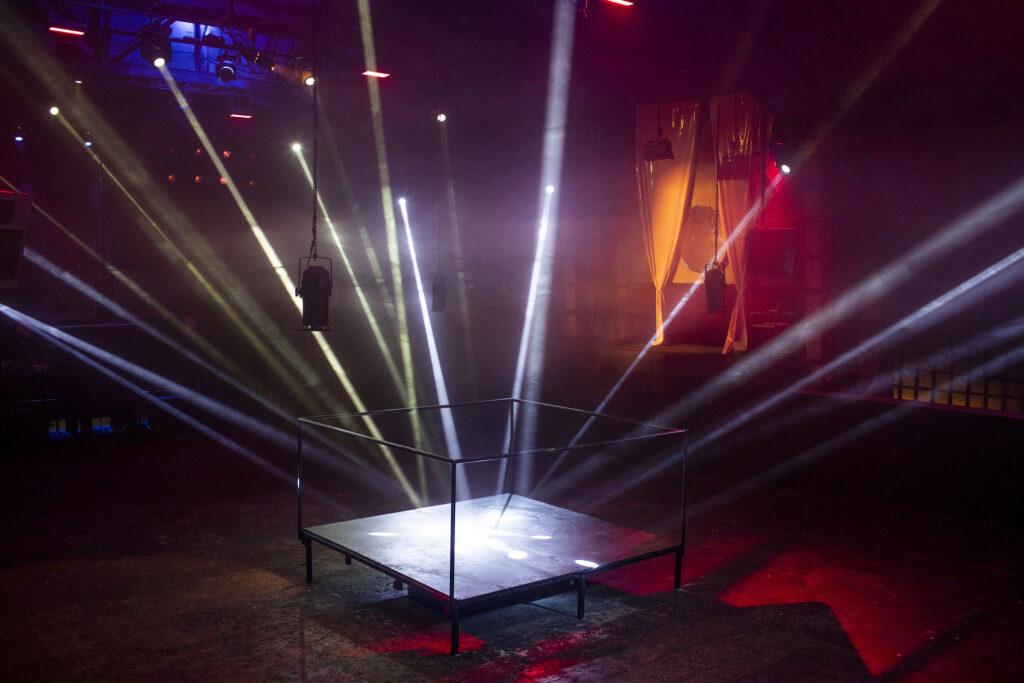
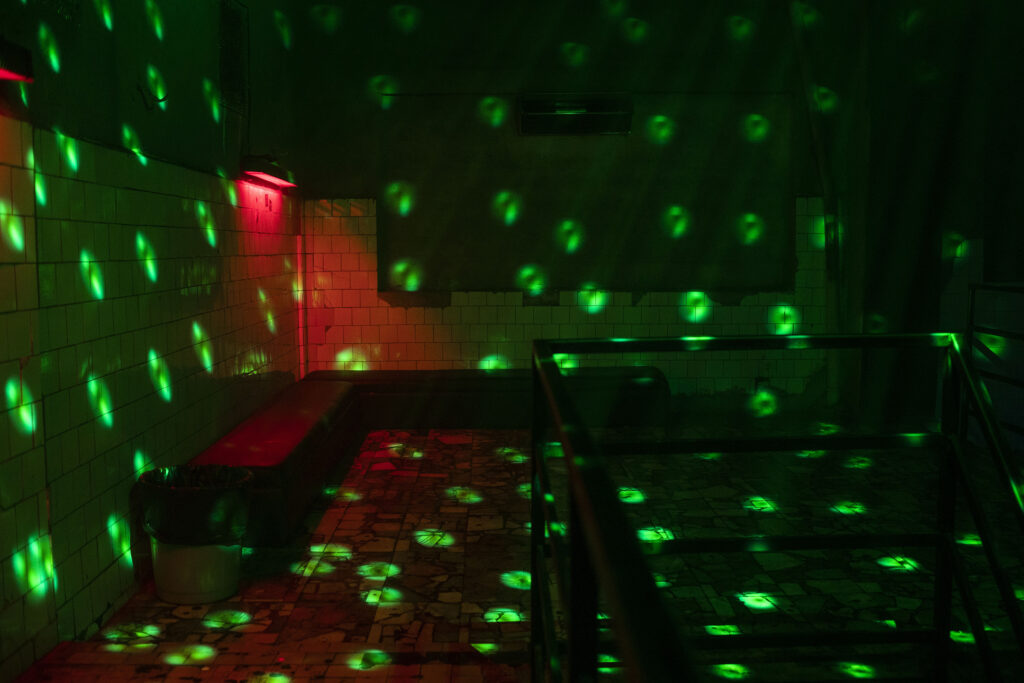
As I started moving, I began to notice the space around me more closely. Elevated platforms punctuated the room, steel pillars rising through them like poles, bodies circling, leaning, twirling. Lights appeared unpredictably, isolating a single dancer for a few seconds before disappearing again, revealing fragments of movement and passing shapes. The atmosphere was undeniably charged.
At one point, I climbed onto one of the elevated platforms, enclosed by steel bars like a loose cage. Warm light fell directly onto me as I danced with my eyes closed, black and bright yellow flashes bleeding through my eyelids, altering how I perceived color and space. When I finally opened my eyes, slightly dizzy, I was met with something quietly overwhelming: people moving free of all judgement, liberated to their cores. I stopped dancing for a moment, just to let the emotion sink in with the almost involuntary smile of joy on my face.
Eventually, I stepped out to rest and went to the bar next to Horoom. The space opened up dramatically. Leather benches arranged in a wide U-shape, an orange-lit bar at the far end, surrounded by black walls. The space felt decadent in a restrained way, industrial but still softened by the orange warmth.
After sitting for a while and talking with friends, we went back in. Dancing resumed, alone and together, drifting between bodies without friction. Despite the absence of phone stickers, no one took out their phones. No one talked on the dancefloor. It felt like an unspoken agreement, a shared understanding that privacy, presence, and the experience itself were to be respected. It gave me a quiet sense of pride. I rarely see this kind of collective awareness in Paris, and its absence there sometimes pulls my pretentious thoughts back to Georgia, where this kind of agreement seems to surface naturally.
© Daro Sulakauri
As the hours passed, we eventually had to leave. I still regret not staying until the end, until the lights came up and morning made itself visible. But my body was exhausted. Outside, waiting for a taxi, we saw two men leave just ahead of us, one Georgian, the other clearly a foreigner. The foreigner wrapped his arms around and almost kissed the Georgian one, who gently pulled away and said, “Don’t hug me like that. This isn’t Europe. This is Georgia. We don’t do that outside.”
Out of the club, the violent reality hit me. Just a few words exchanged, a gesture interrupted, and the city returned all at once. The boundary between inside and outside reasserted itself immediately. The contrast was immediate, sobering, and impossible to ignore. Bassiani closed behind us, and Tbilisi, in all its unresolved tensions, stepped forward again.
Thanks to Daro Sulakauri for amazing photographs. Explore more of Daro’s work on Instagram: @darosulakauri